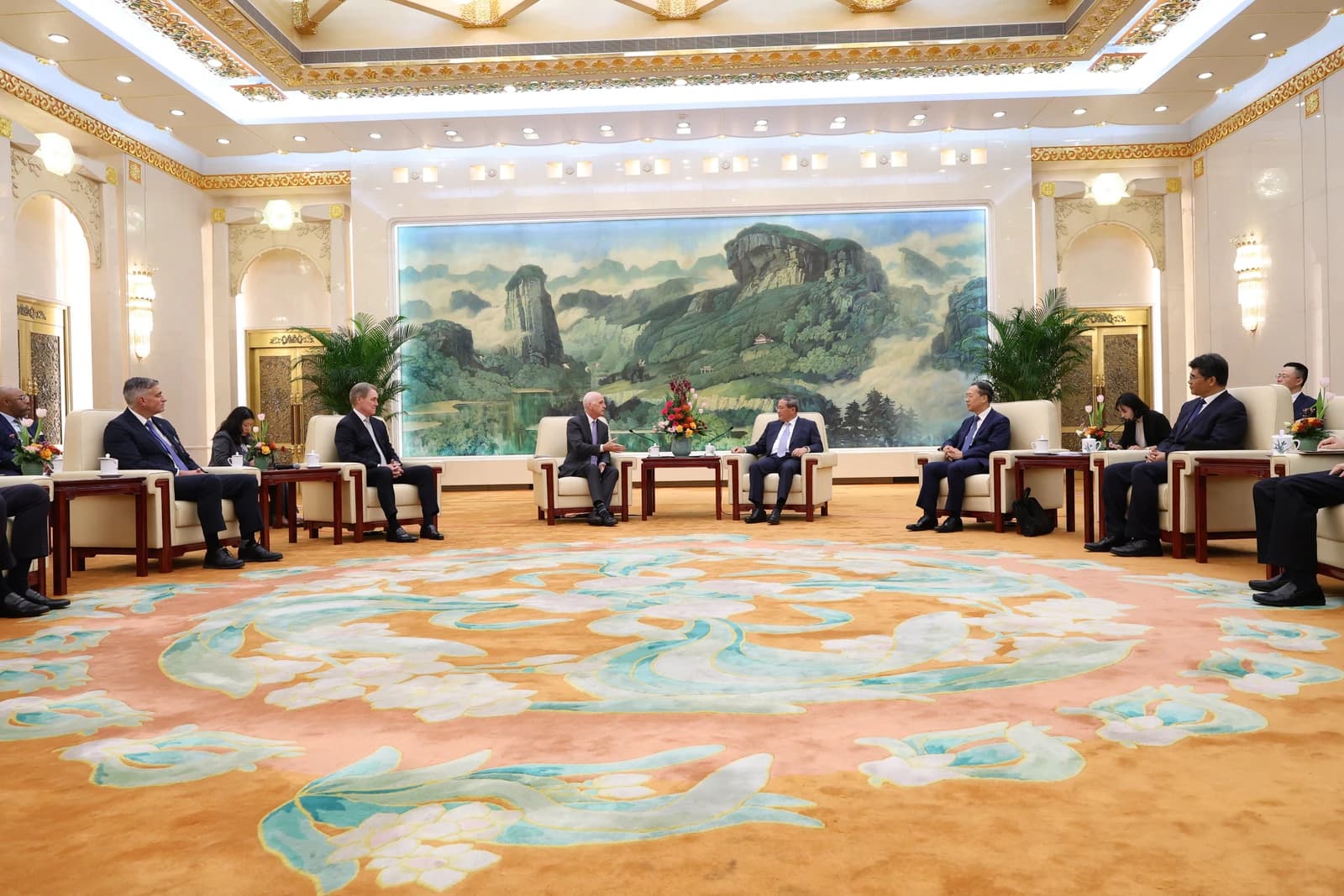
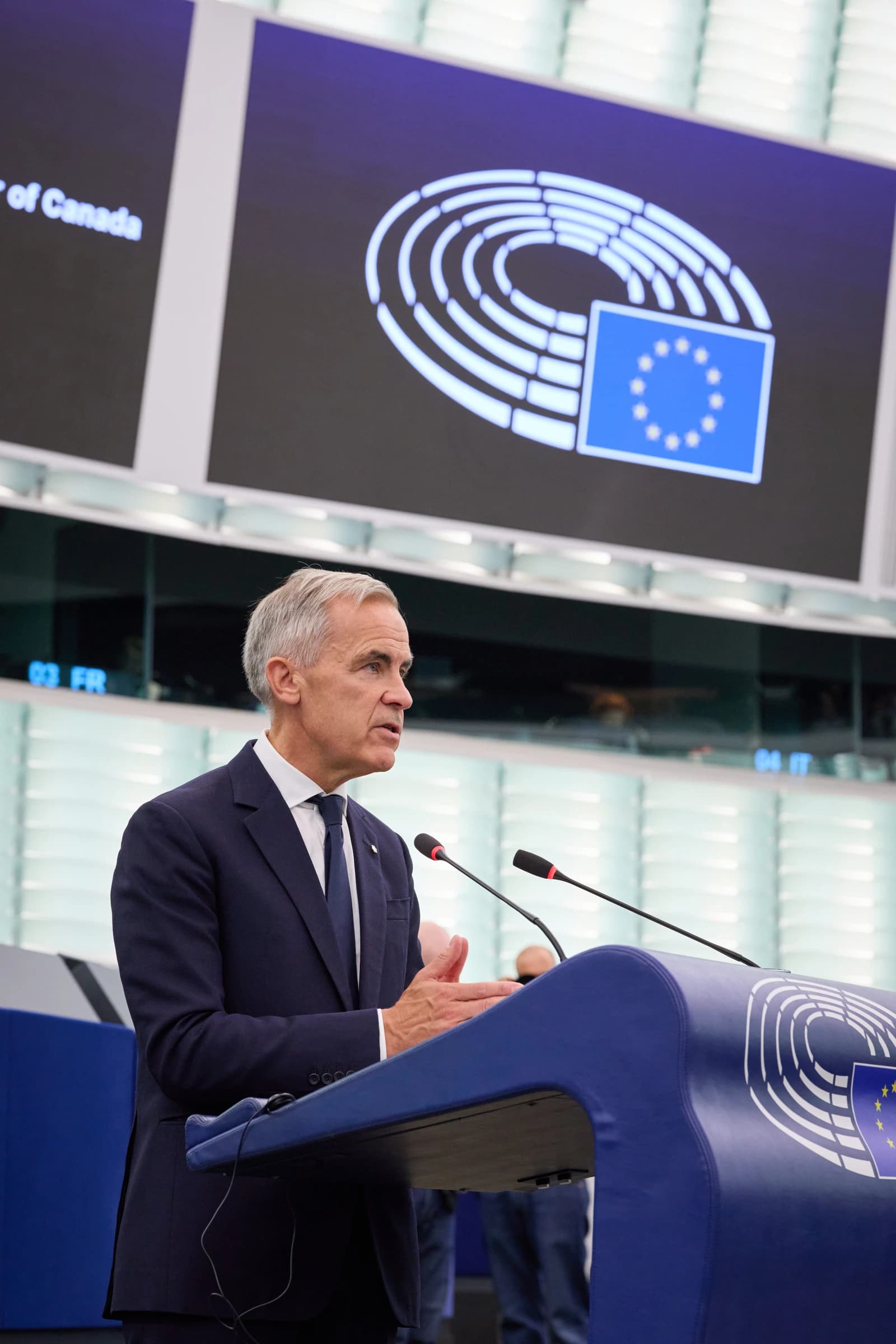
The United States has to interact with China even as the two powers remain strategic rivals, Secretary of State Marco Rubio said, underscoring Washington’s need to keep diplomacy and commerce moving while tensions over trade, technology and security remain unresolved.
US-China Relations Improve as Rubio Says Ties Continue
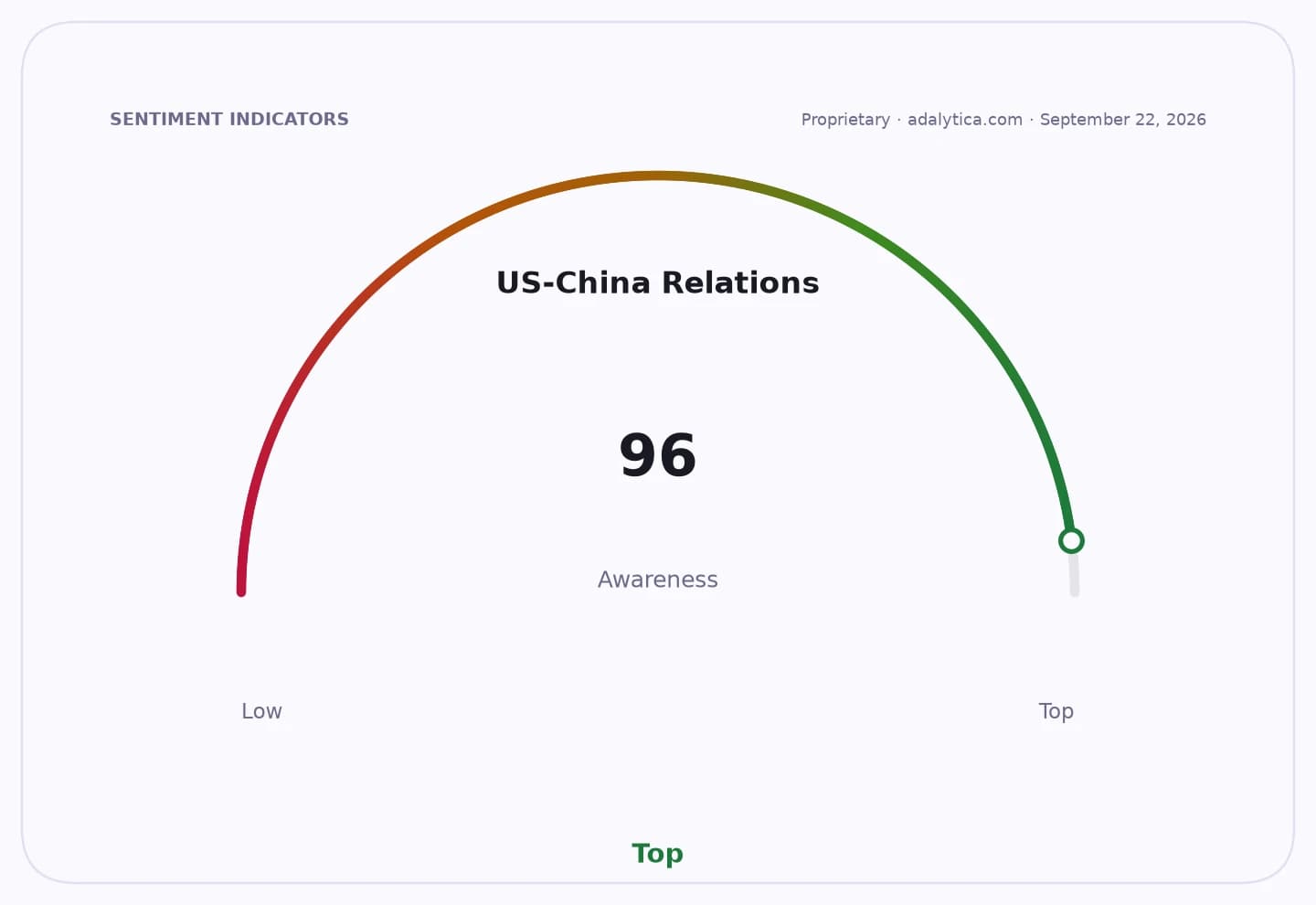
Rubio’s comments land at a moment when the bilateral relationship is showing a rare burst of calm. Adalytica’s US–China Relations Sentiment gauge is at 100, or “Extreme Greed,” with awareness near the top of its range at 96, while its 30-day reading has jumped 75 points, suggesting the market and policy backdrop have both shifted sharply toward expectations of engagement.
Sentiment IndicatorsⓘProprietary · adalytica.com · September 28, 2026
This is a snapshot — live sentiment, awareness and momentum for 130+ markets update continuously in the dashboard.Open AlphaPulse
That matters economically because the world’s two largest economies are deeply intertwined across supply chains, tariffs, capital flows and currency markets. A more functional relationship reduces the odds of new trade shocks, supports cross-border business planning and can ease pressure on sectors exposed to China, from semiconductors and industrials to consumer goods and agriculture.
The tone also matters for investors because any sign of sustained dialogue can steady risk assets and weaken demand for the dollar as a haven. Adalytica’s US dollar trade signals show neutral sentiment but extreme fear on awareness, with a 56-point drop over the past week, reflecting how quickly currency positioning can shift when U.S.-China headlines turn less confrontational.
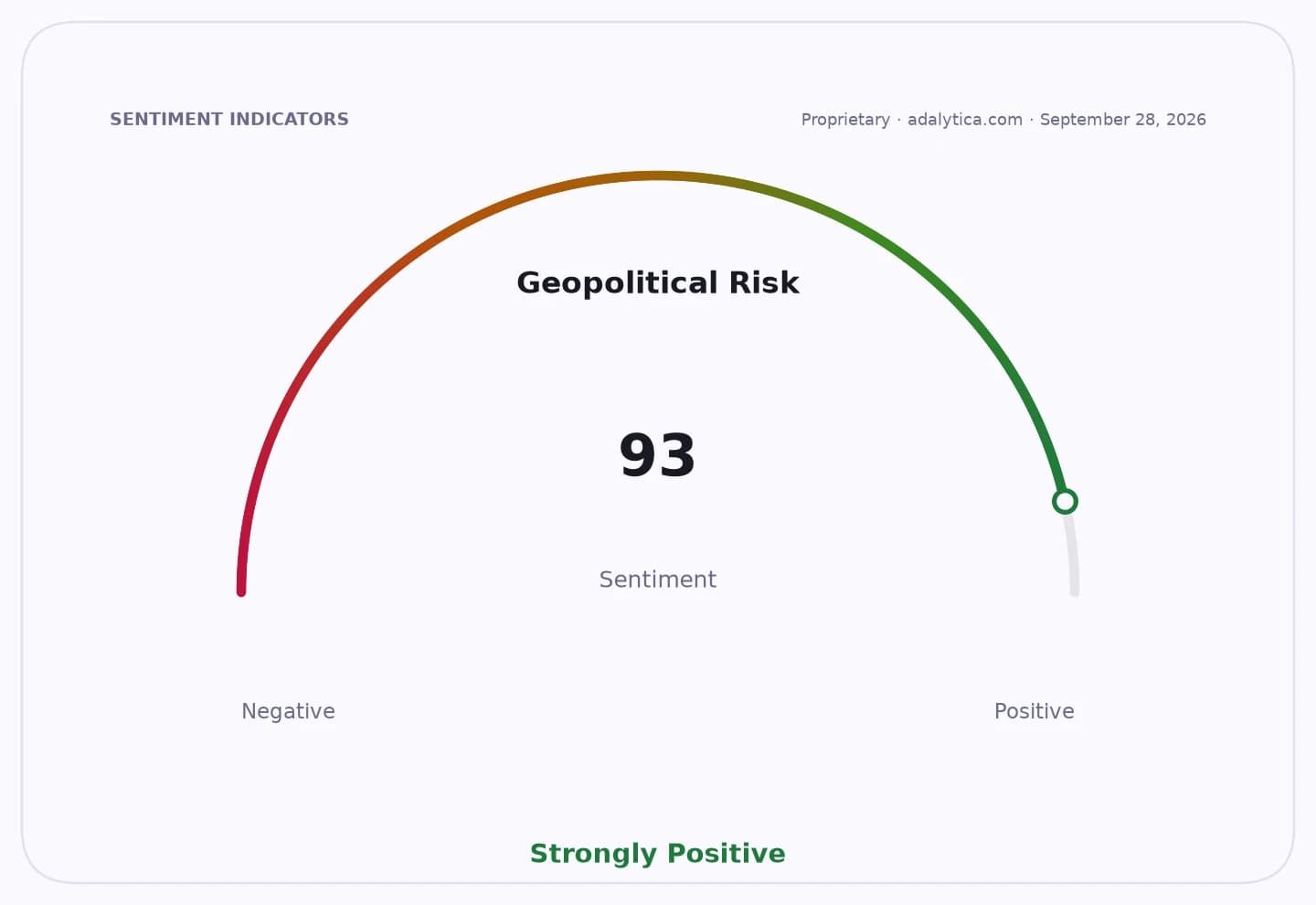
The broader geopolitical signal is that neither side appears willing to sever ties, even if competition remains the defining feature of the relationship. Global stability sentiment is still elevated at 93, but with awareness plunging to 4, indicating a market environment that is priced for progress yet remains vulnerable to policy reversals, export controls or tariff escalation.
For investors, the key question now is whether this thaw turns into durable policy coordination or just another tactical pause. The next catalyst will be follow-up talks, trade implementation and any new guidance from Washington or Beijing on technology restrictions, investment rules and tariff enforcement.
| Entity | Gains | Losses |
|---|---|---|
| U.S. exporters | ▲Better access, fewer trade frictions | ▼Less leverage if talks stall |
| Chinese exporters | ▲Improved U.S. demand visibility | ▼Vulnerability to future restrictions |
| Global equities | ▲Lower policy-risk premium | ▼Volatility if rhetoric turns hawkish |
| Dollar bulls | ▲Short-term stability | ▼Haven demand fades on thaw hopes |