China’s foreign minister is trying to frame a potential U.S.-China-Russia leaders’ summit as a path to peace, but Beijing’s own messaging on Taiwan shows the diplomatic opening remains tightly bounded by core sovereignty demands.
China Taiwan Stance Limits U.S.-Russia Summit

The split matters because any thaw among the three powers would have immediate implications for war risk, sanctions policy and global trade, but Taiwan remains the issue most likely to blow up talks before they start. For investors, that means geopolitical risk around China is not easing, even as Beijing seeks to project a stabilizing role.
Sentiment Indicators

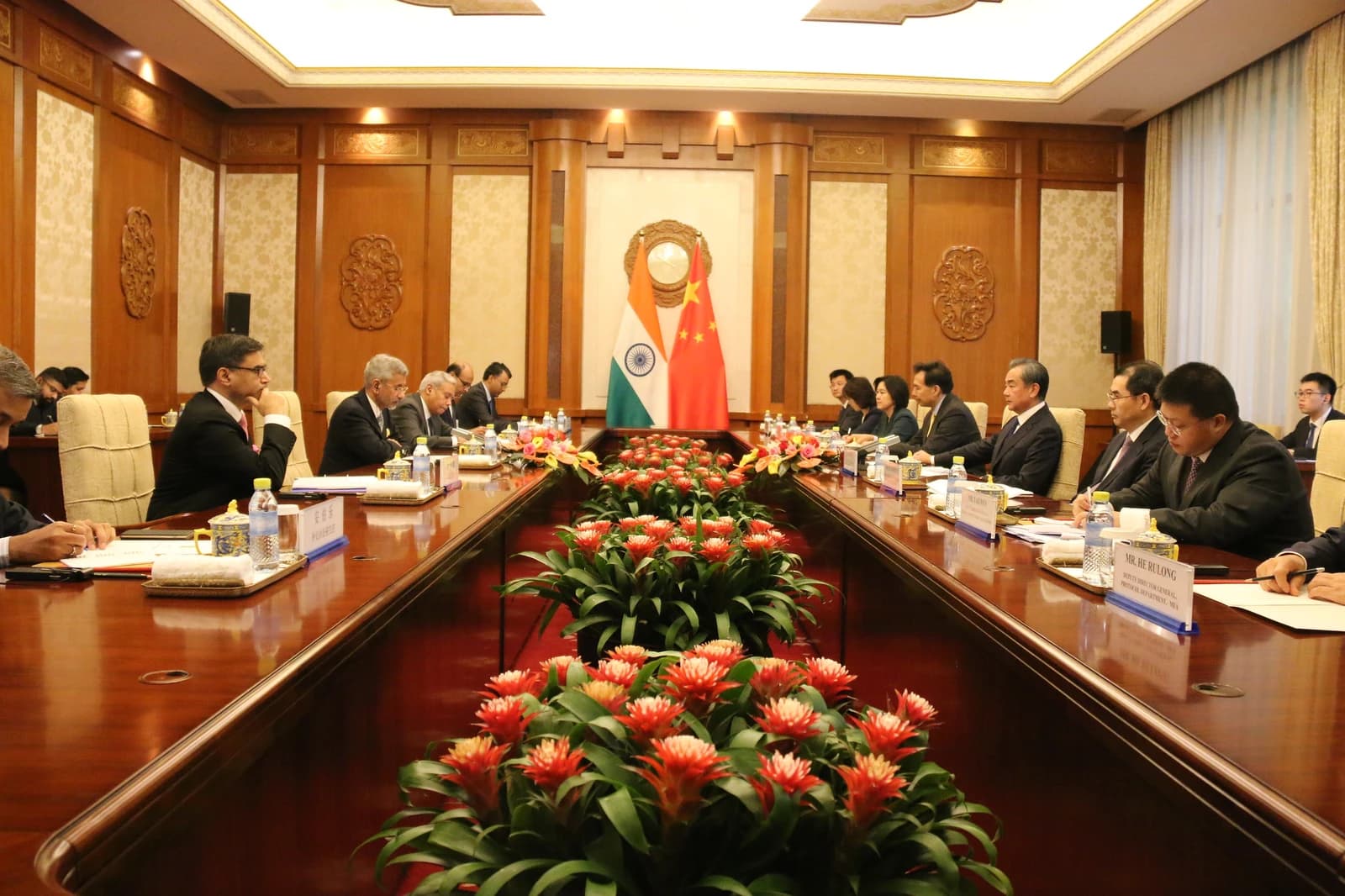
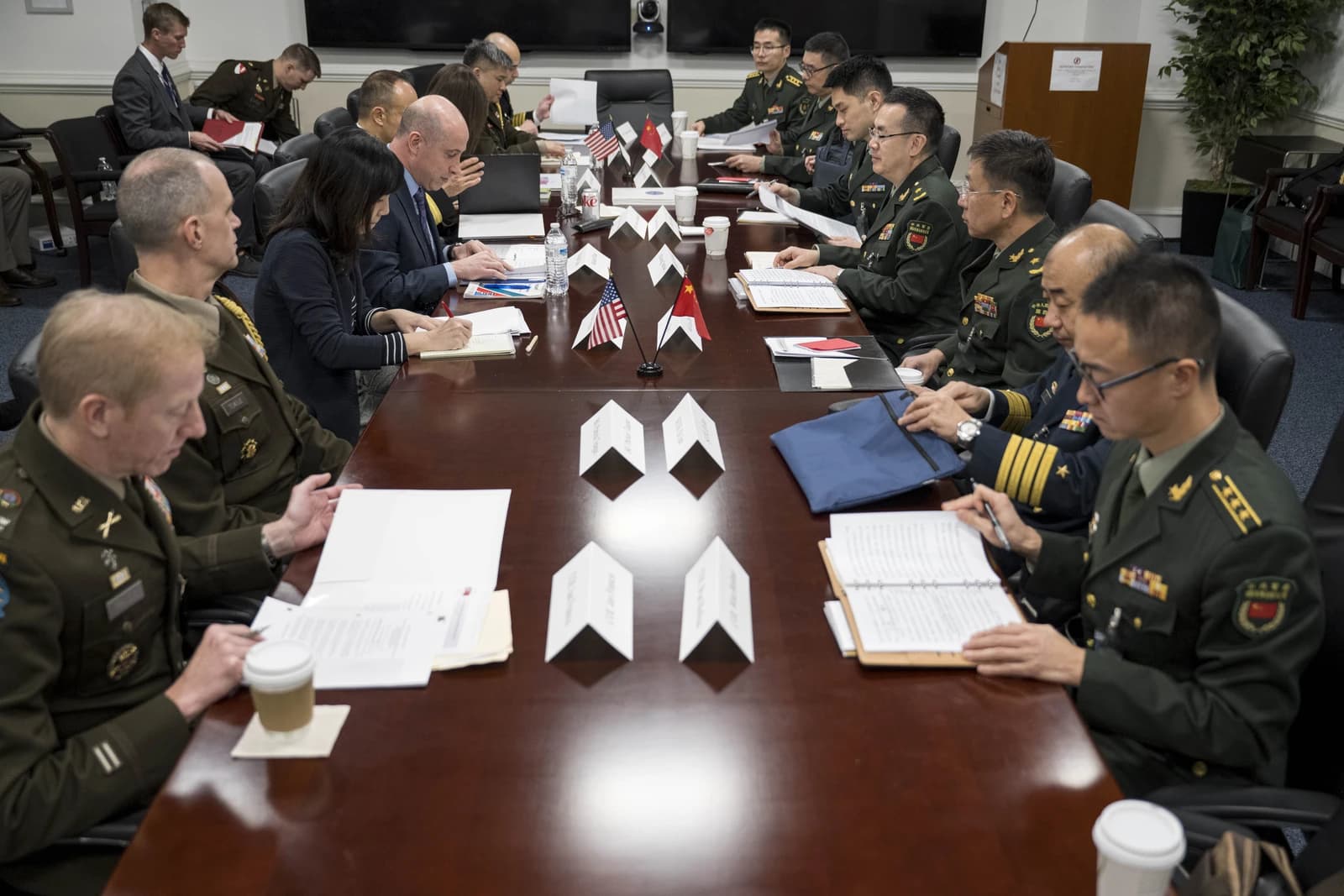
Wang Yi said the proposed U.S.-China-Russia summit should be a “peace summit,” underscoring Beijing’s effort to cast itself as a broker at a time of fractured great-power relations. But a Chinese Communist Party newspaper drew a hard red line over Taiwan, calling the island a “first line that no country should cross,” a reminder that territorial issues still define the limits of any diplomatic reset.
That tension is landing in markets that are already sensitive to the next turn in U.S.-China relations. The Adalytica Global Stability Sentiment gauge is sitting at 11, labeled “Extreme Fear,” after dropping 39 points over the past week, while its China CCP Policy Direction sentiment is also at 11, reflecting deep uncertainty around Beijing’s next move.
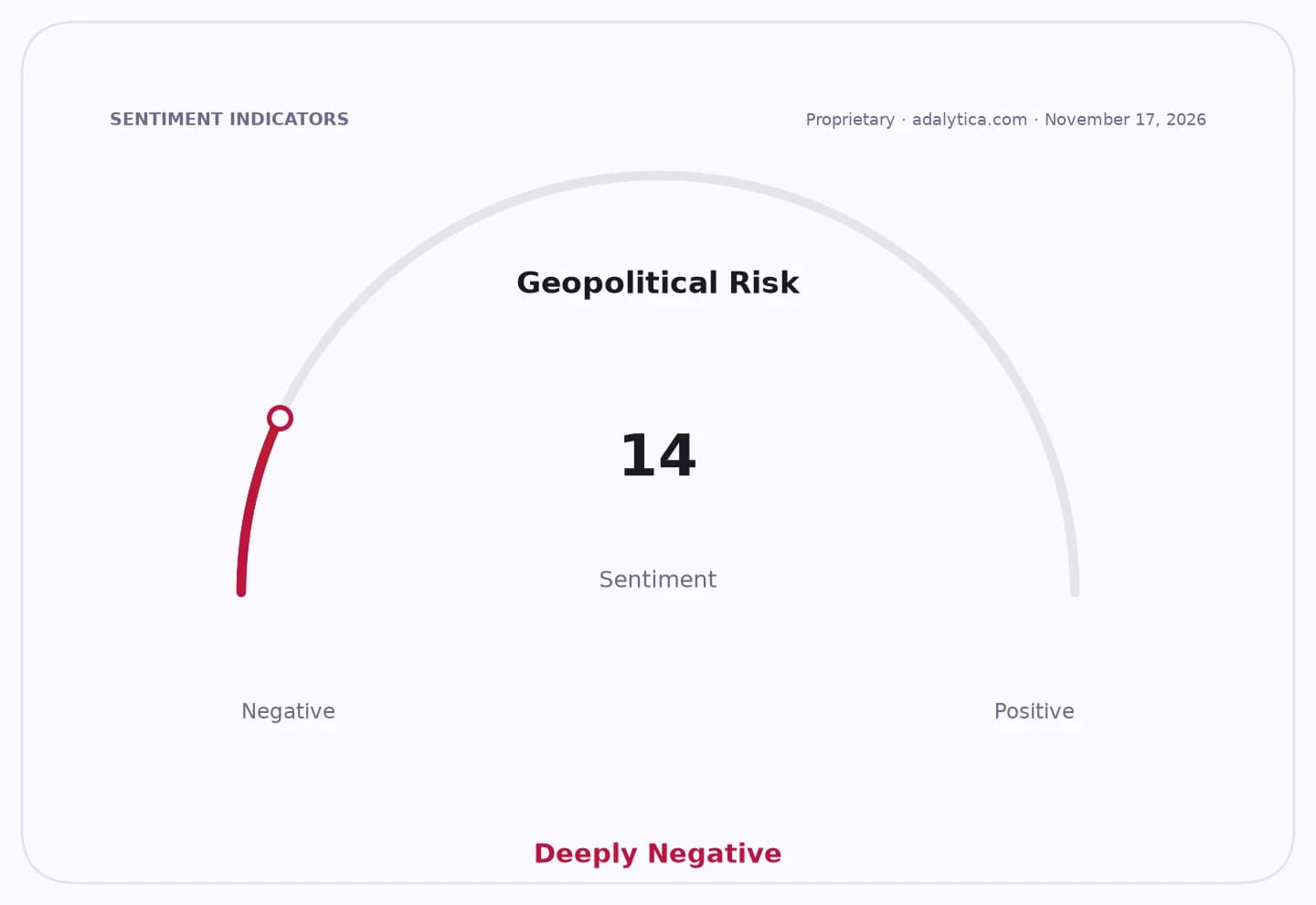
Geopolitical Risk — 30-day sentimentadalytica.com
Explore this data interactively — full history, time series and cross-market comparisons.
Geopolitical Risk
Taiwan remains the most combustible variable in the relationship, especially as regional military activity and diplomatic pressure keep rising. Any sign that Washington, Beijing and Moscow can coordinate on broader security issues could support risk assets, but a sharper dispute over Taiwan would quickly overwhelm that narrative and could spill into chips, shipping and Asian equities.
Chinese market proxies are already showing the strain. The FXI China ETF has fallen to $31.79 from $34.26 on Oct. 15, with the 50-day moving average now above the price and RSI readings at 37.3, while the EWT Taiwan ETF has dropped to $83.96 from above $110 in September and remains well below its 50-day average of $106.01.
For investors, the message is that geopolitics is still driving the trade. Any future summit talk may ease immediate fears, but unless Beijing softens its Taiwan posture, the market is likely to keep treating U.S.-China relations as a volatile risk premium rather than a durable détente.
| Entity | Gains | Losses |
|---|---|---|
| Beijing | ▲summit diplomacy | ▼Taiwan ambiguity |
| U.S.-China-Russia dialogue | ▲lower war risk | ▼harder bargaining |
| Taiwan | ▲none | ▼diplomatic pressure |
| FXI/EWT bulls | ▲peace rhetoric | ▼escalation risk |