China has escalated its campaign to squeeze Taiwan’s remaining diplomatic allies, sanctioning officials from Belize and Paraguay in a move that deepens geopolitical friction and adds another layer of risk for China-facing assets.
China sanctions Belize and Paraguay officials over Taiwan
The targeted measures — including asset freezes and visa bans against Belize Foreign Minister Francis Fonseca and officials tied to Paraguay’s Taiwan relationship — are meant to punish governments that maintain formal ties with Taipei. Economically, the action matters less for the direct commercial impact on Belize or Paraguay than for what it says about Beijing’s willingness to use financial and administrative tools as instruments of statecraft, widening the range of geopolitical shocks investors must price into Asian supply chains, China-linked equities and emerging-market risk more broadly.
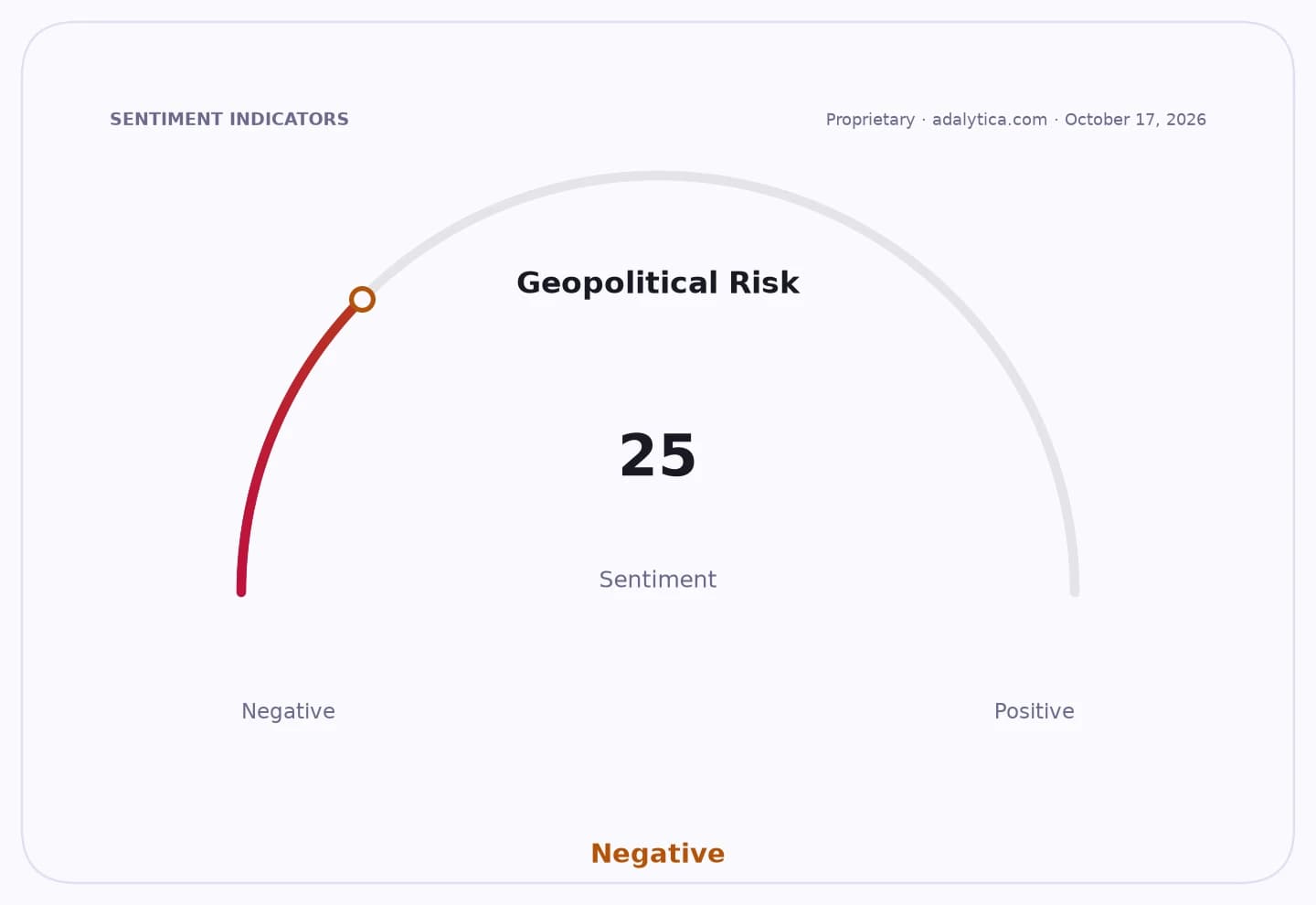
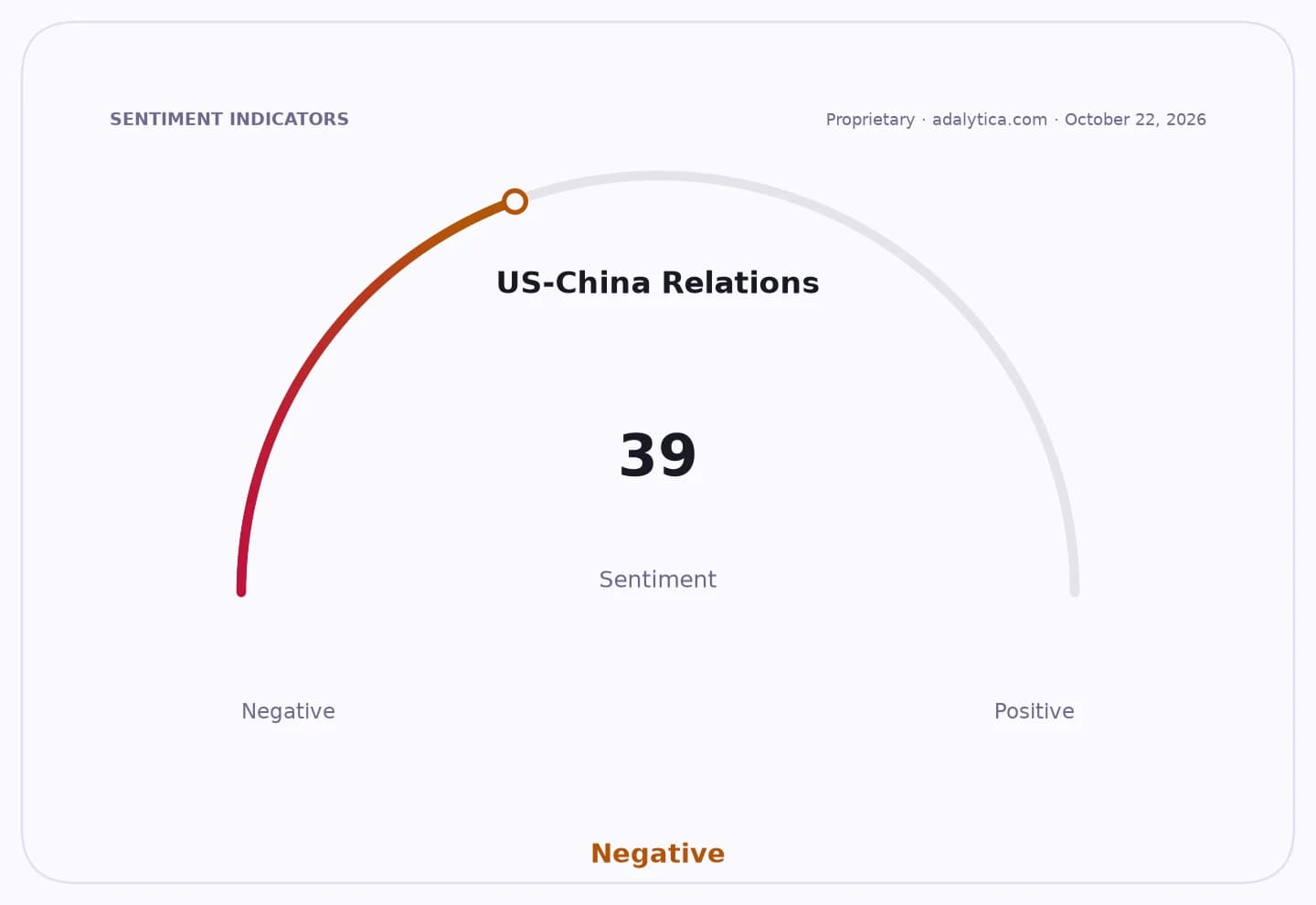
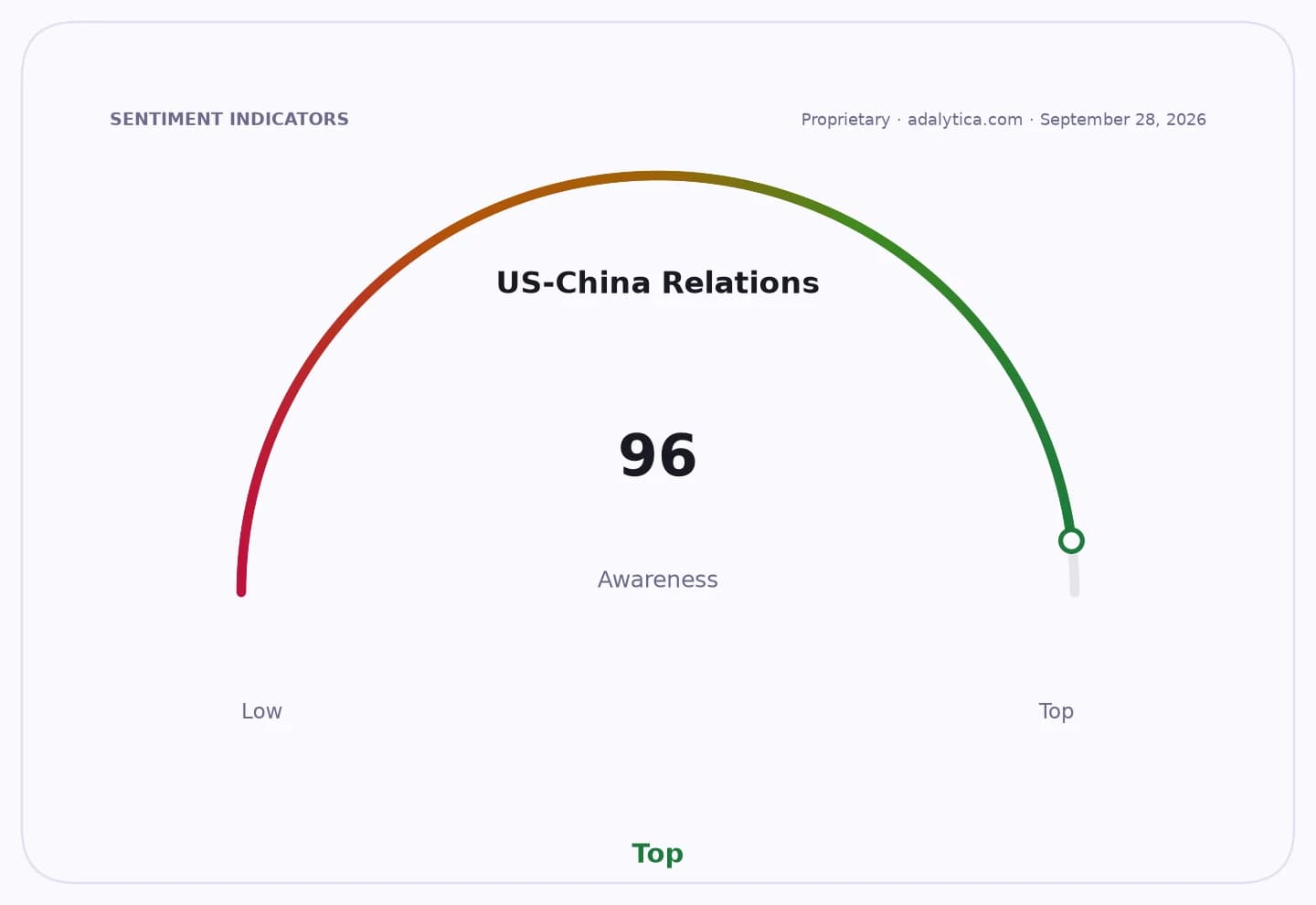
Sentiment IndicatorsⓘProprietary · adalytica.com · October 21, 2026
This is a snapshot — live sentiment, awareness and momentum for 130+ markets update continuously in the dashboard.Open AlphaPulse
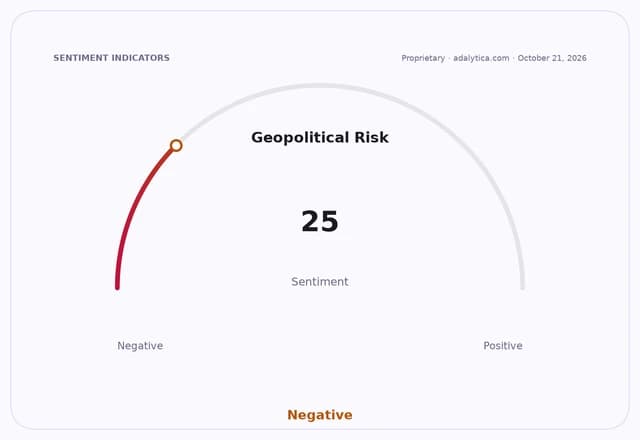
Belize’s prime minister called the sanctions “uncalled for,” “unjustified” and “illegal,” and said they would only reinforce support for Taiwan. That response underscores the central market risk: instead of isolating Taipei’s partners, the move can harden positions and prolong the standoff. For Beijing, the sanctions are part of a broader effort to narrow Taiwan’s international space. For investors, they reinforce the probability that China will continue to mix diplomacy, trade leverage and punitive measures in pursuit of strategic goals, raising the tail risk of additional restrictions, retaliatory rhetoric and policy spillovers.
The market backdrop is already cautious. Adalytica’s Global Stability Sentiment is in “Fear” at 25, with “Extreme Fear” awareness, while its China CCP policy-direction gauge sits at 43, a neutral reading that suggests policy intent remains active but not yet broadening into a larger market repricing. Chinese equities listed in the U.S. have been under pressure: the iShares China Large-Cap ETF, FXI, closed at $33.51 on Oct. 20, below its 50-day moving average of $34.61 and its 200-day average of $35.8, a sign that investors remain reluctant to re-rate China exposure. The broader MSCI China ETF, MCHI, ended at $50.96, also below both its 50-day and 200-day moving averages, reinforcing the view that geopolitical uncertainty is still a headwind for sentiment.
For now, the direct economic impact of the sanctions is limited. Belize and Paraguay are not major trade or investment counterweights in China’s economic orbit. But the signal is more important than the arithmetic. The campaign against Taiwan’s partners can complicate Beijing’s relations with Latin America and the Caribbean, where China has spent years building commercial and diplomatic influence. It also keeps alive a broader investor concern: that geopolitical disputes increasingly bleed into financial channels, with sanctions, export controls and access restrictions becoming part of the policy toolkit.
The next test is whether China widens the campaign or uses the sanctions as a warning shot. If the pressure is sustained, markets could start to assign a higher premium to countries and companies exposed to diplomatic retaliation, especially where trade, infrastructure finance or commodity flows intersect with strategic rivalry. If it remains contained, the immediate market effect may stay muted. Either way, the message for investors is clear: China’s rivalry with Taiwan is not just a diplomatic contest, but a persistent source of policy risk that can spill into assets far beyond the Taiwan Strait.
| Entity | Gains | Losses |
|---|---|---|
| China | ▲diplomatic leverage | ▼international goodwill |
| Taiwan | ▲support from allies | ▼diplomatic space |
| Belize and Paraguay | ▲political backing from Taiwan allies | ▼exposure to Chinese retaliation |
| China-linked equities | ▲none | ▼higher geopolitical risk premium |