Taiwan’s military says it drove away 16 Chinese ships involved in what it called “maritime harassment,” a fresh reminder that the island’s supply chains and semiconductor exports remain exposed to geopolitical risk that investors cannot afford to dismiss.
Taiwan Reports 16 Chinese Ships Near Strait
That matters because Taiwan is not just a flashpoint on a map; it is the center of the world’s most important chipmaking ecosystem. Any rise in tension across the Taiwan Strait raises the odds of shipping disruption, insurance costs and investment caution around companies that depend on Taiwan’s fabs and suppliers. The immediate market impact may be muted, but the economic stakes are enormous.
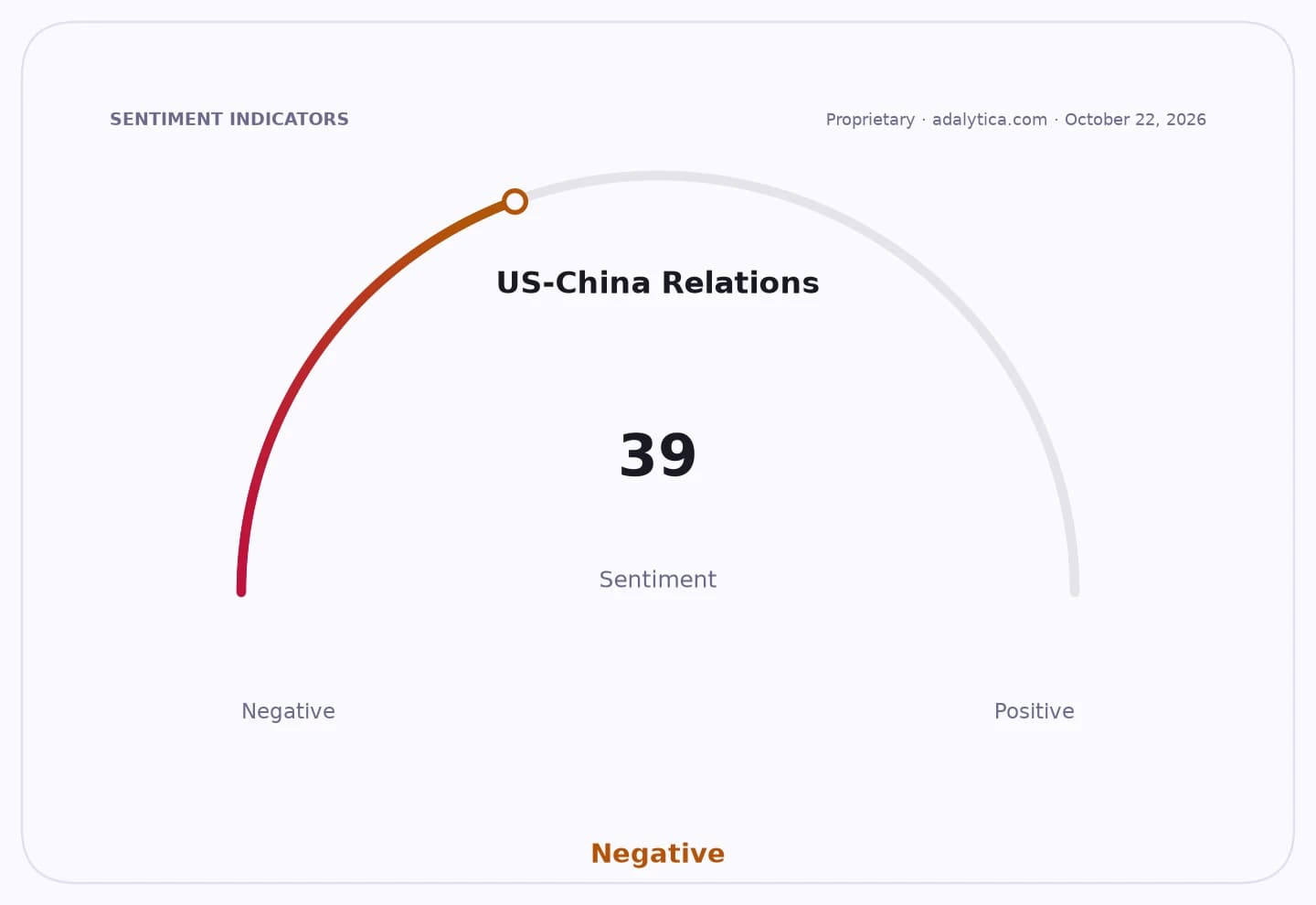
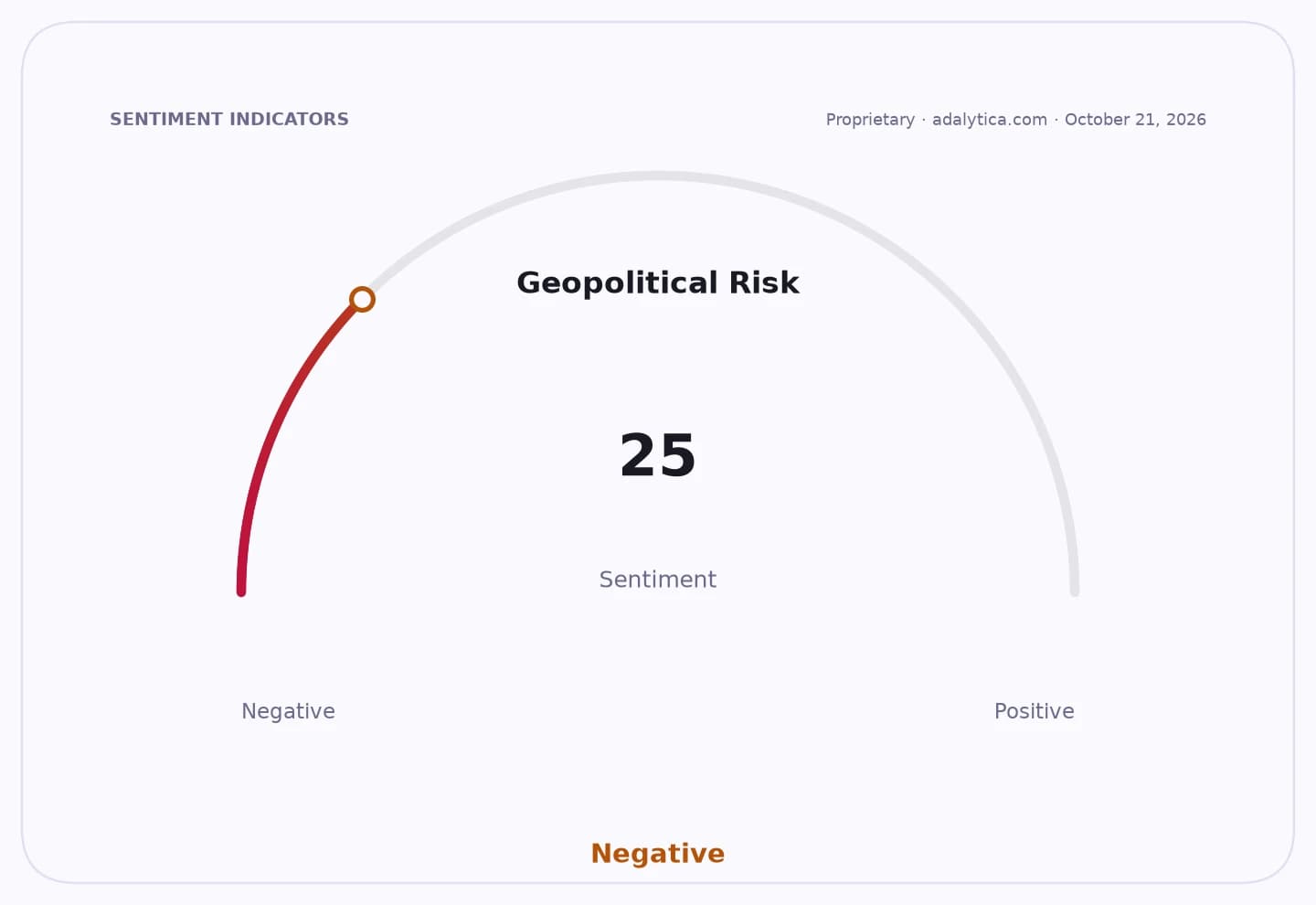
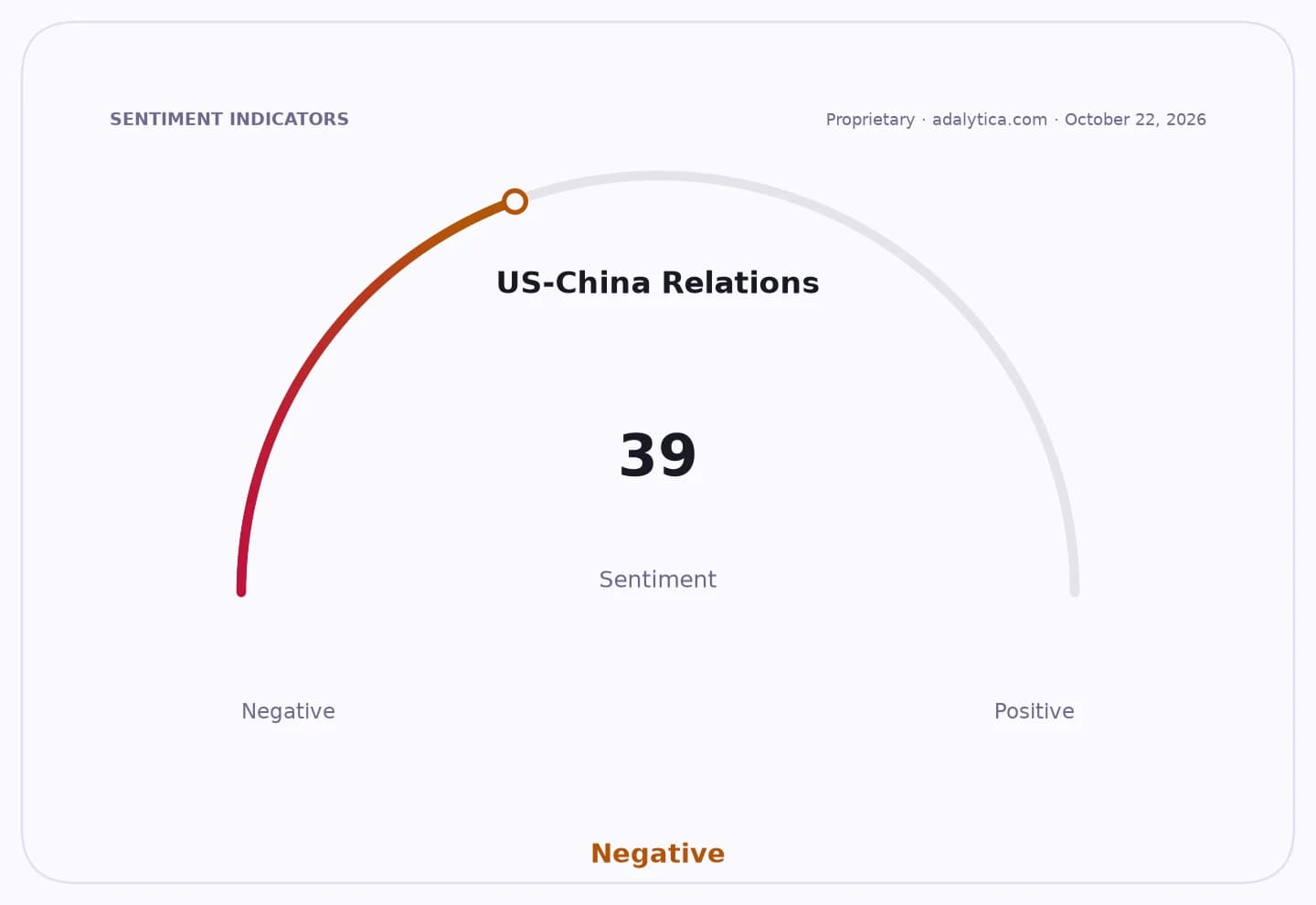
Sentiment IndicatorsⓘProprietary · adalytica.com · October 22, 2026
This is a snapshot — live sentiment, awareness and momentum for 130+ markets update continuously in the dashboard.Open AlphaPulse
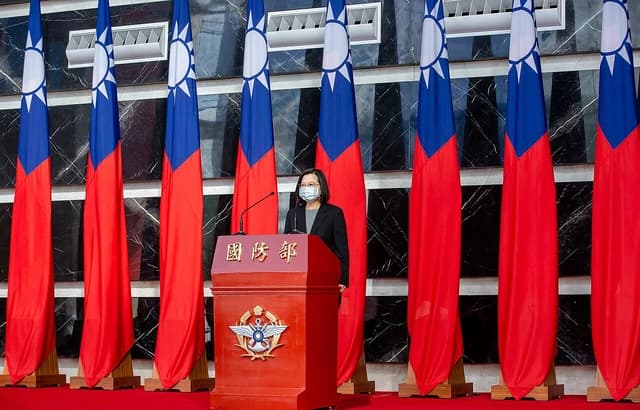
For investors, the episode is another reason to treat Taiwan exposure as a long-term risk factor, not a headline to scroll past. Taiwan Semiconductor Manufacturing, Apple and Nvidia all sit in the orbit of Taiwan-linked production, and their businesses would feel even a limited disruption in shipping lanes or logistics. Qualcomm has already warned that prolonged military conflict involving China and Taiwan could severely limit supply from foundry partners in Taiwan.
The latest friction also lands at a time when U.S.-China relations remain fragile. Adalytica’s U.S.-China Relations Sentiment gauge is in neutral territory, but awareness is at “extreme fear,” showing that market participants are highly alert to another escalation even if day-to-day sentiment has steadied. That combination often keeps a lid on risk appetite for sectors with heavy Asian supply-chain exposure.
Taiwan has responded to the pressure by boosting military spending and seeking closer ties with the U.S. and Europe, a strategy aimed at protecting the island’s role as a trusted high-tech supplier. For investors, that matters because the island’s stability is part of the investment case for everything from AI infrastructure to consumer electronics. A durable peace premium is baked into the valuations of the chip giants more than many portfolios acknowledge.
The long-term takeaway is simple: the Strait remains one of the most important geopolitical risks in global markets. Investors should not try to time every flare-up, but they should understand which holdings are most exposed and stay diversified across sectors and geographies. Taiwan’s ability to keep shipping, producing and deterring pressure remains a key question worth watching.
| Entity | Gains | Losses |
|---|---|---|
| Taiwan | ▲Deterrence message | ▼Near-term security costs |
| China | ▲Pressure leverage | ▼Diplomatic trust |
| Chipmakers in Taiwan | ▲Stability premium if tension eases | ▼Supply-chain risk |
| U.S. tech investors | ▲Clarity on exposure | ▼Higher geopolitical risk |