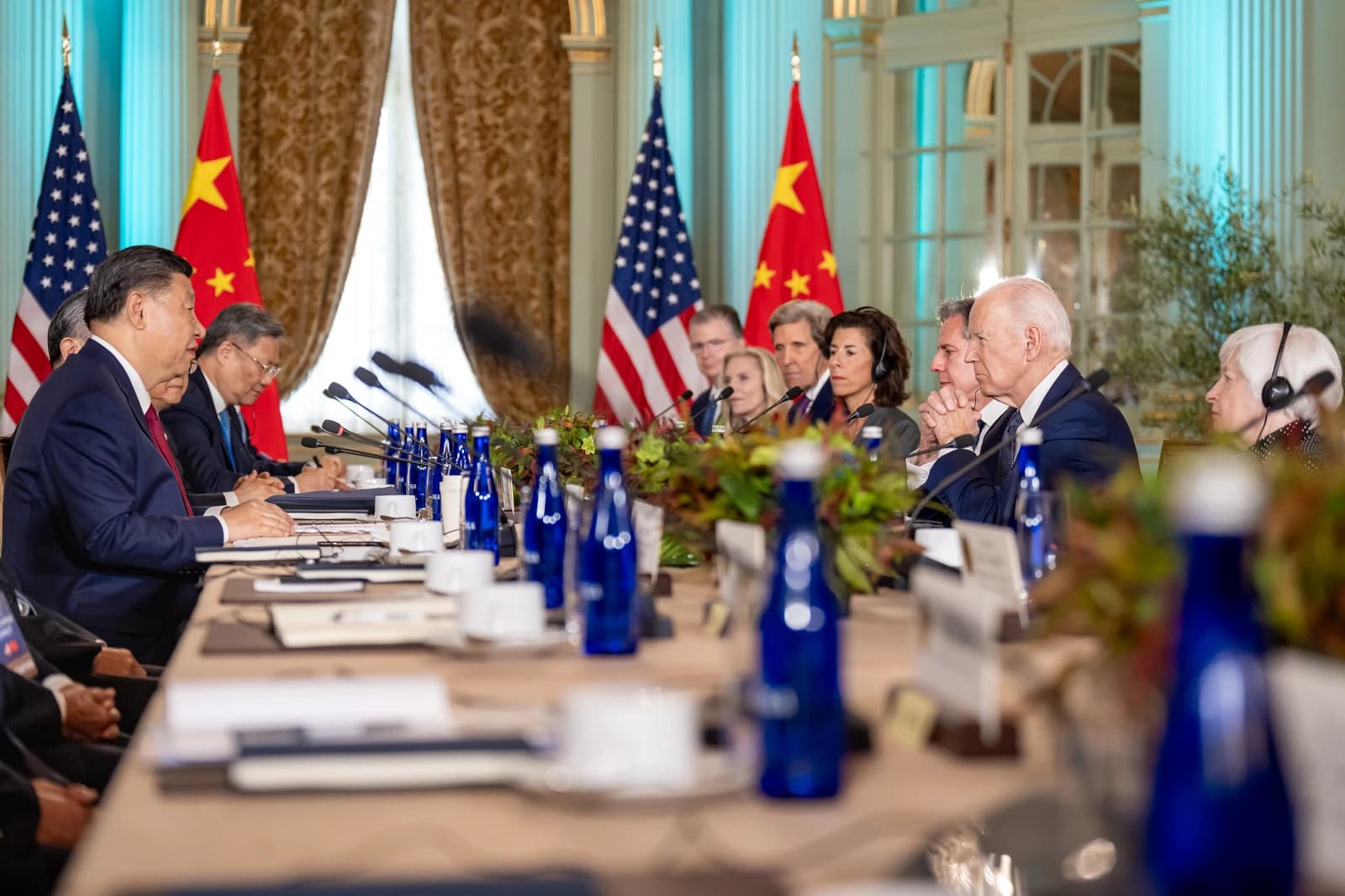
Europe’s dependence on China is becoming a strategic vulnerability, Taiwan said, sharpening a warning that now carries direct economic and market implications as Brussels tries to reduce exposure without destabilizing supply chains, exports and industrial costs.
Europe China dependence raises trade and policy risk
The message matters because Europe’s relationship with China has shifted from a trade question into a sovereignty issue: the more embedded the region is in Chinese manufacturing, components and downstream demand, the less room it has to maneuver on security, industrial policy and sanctions. That tension is showing up in the data. China’s trade surplus has kept widening, while countries including Germany and Poland are seeing deeper deficits with China, underscoring how difficult it remains for Europe to rebalance trade flows even as political rhetoric hardens.
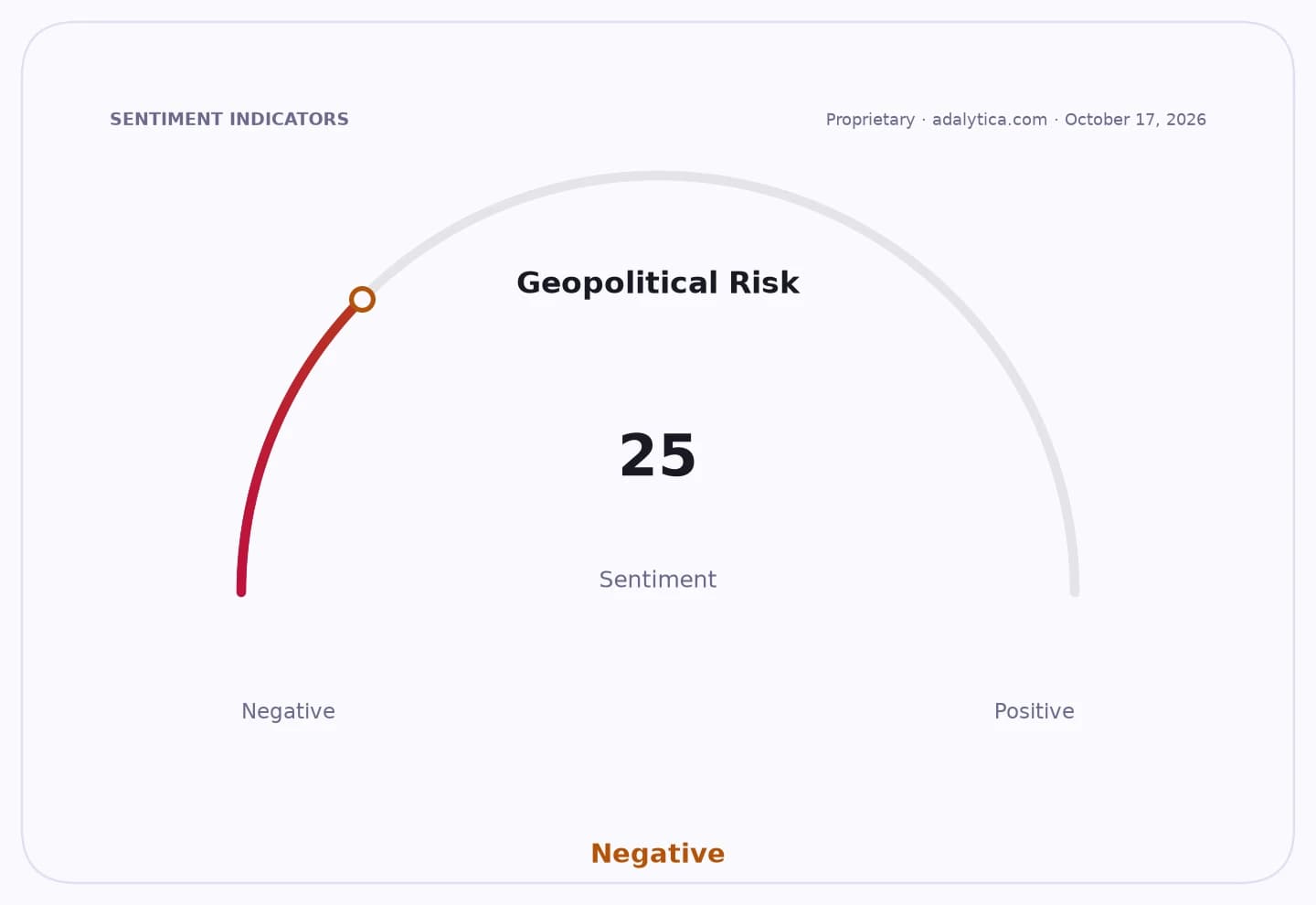
Sentiment IndicatorsⓘProprietary · adalytica.com · October 17, 2026
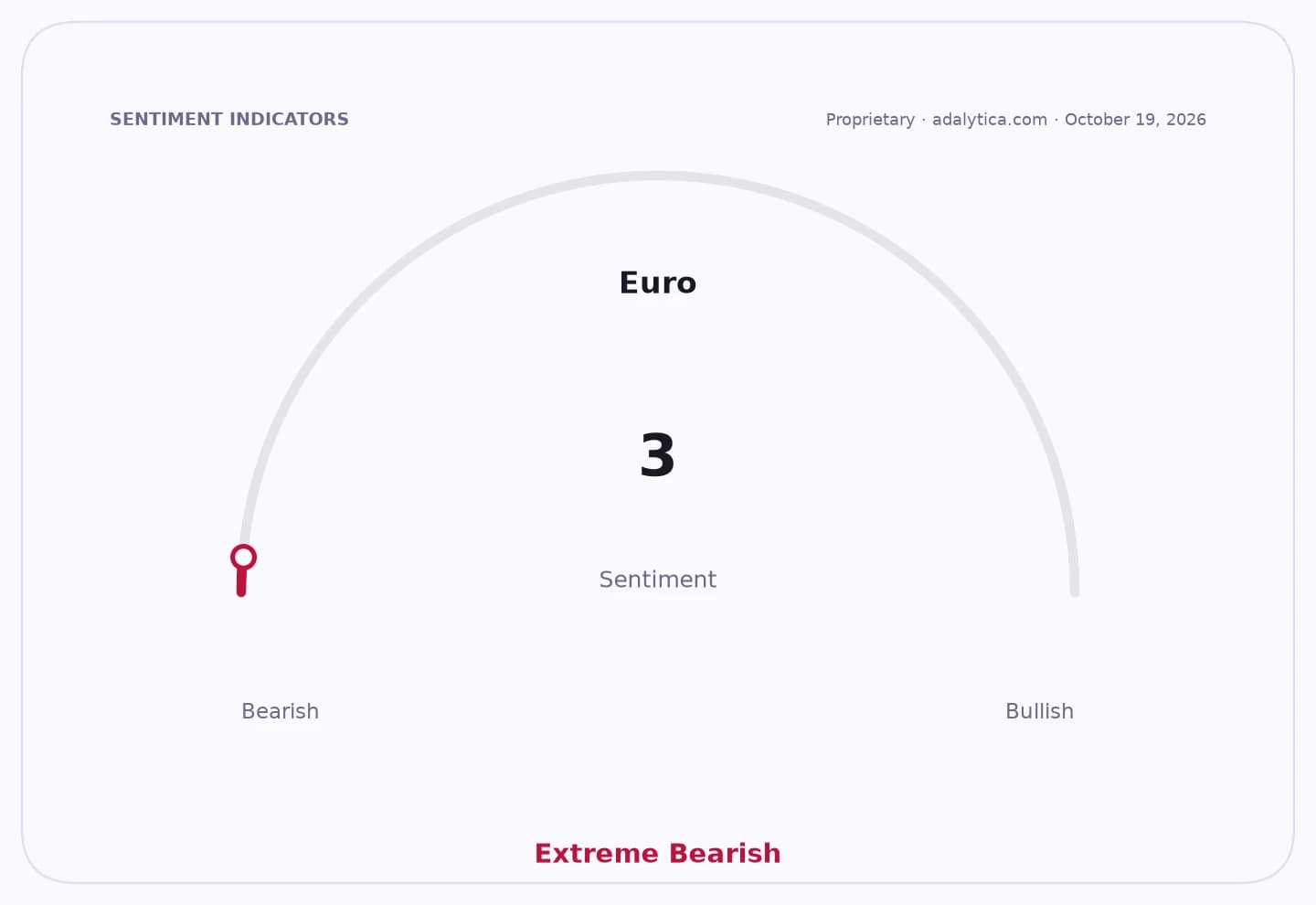
This is a snapshot — live sentiment, awareness and momentum for 130+ markets update continuously in the dashboard.Open AlphaPulse
For investors, that leaves Europe caught between competing risks. Firms tied to Chinese inputs face margin pressure if policymakers move toward tighter screening, tariffs or “de-risking” rules. At the same time, exporters with meaningful China exposure face demand risk if Beijing retaliates or if European sentiment turns more restrictive. The current market setup reflects that uneasy balance: China-focused equities tracked by FXI remain below their recent highs, while Europe-focused funds such as EWU and EZU have held firmer even as technical indicators point to a softer short-term trend in some cases, suggesting investors are still pricing policy uncertainty rather than a clean break.
The broader economic issue is that dependence cuts both ways. Europe relies on China for critical industrial goods, but China also depends on Europe for technology, capital goods and premium consumption. That interdependence has so far limited the scope for a full decoupling, which is why the more likely path is selective de-risking rather than outright separation. Still, Taiwan’s warning lands at a sensitive moment, when trade imbalances, supply-chain resilience and geopolitical alignment are increasingly moving together.
Adalytica’s US–China relations sentiment gauge is at extreme greed, while global stability sentiment has dropped into fear, a combination that points to markets becoming more alert to headline risk even if they have not fully repriced the economic fallout. The investor takeaway is that Europe’s China exposure is no longer just a trade statistic: it is a valuation, policy and supply-chain variable that could determine where margins, multiples and capital spending go next.
| Entity | Gains | Losses |
|---|---|---|
| Europe’s industrial exporters | ▲Market access, lower input costs | ▼Policy backlash, supply-chain risk |
| China’s suppliers and manufacturers | ▲Sticky European demand | ▼Higher scrutiny, de-risking pressure |
| European policymakers | ▲Leverage to reshape trade policy | ▼Short-term growth and inflation trade-offs |
| Taiwan | ▲Strategic relevance, diplomatic visibility | ▼Limited direct economic upside |