The US has stepped up its warnings over Chinese maritime activity off Taiwan’s east coast, calling the manoeuvres “deeply destabilising” at a moment when investors are already pricing a wider geopolitical premium into the semiconductor supply chain.
US warns on China maritime activity near Taiwan
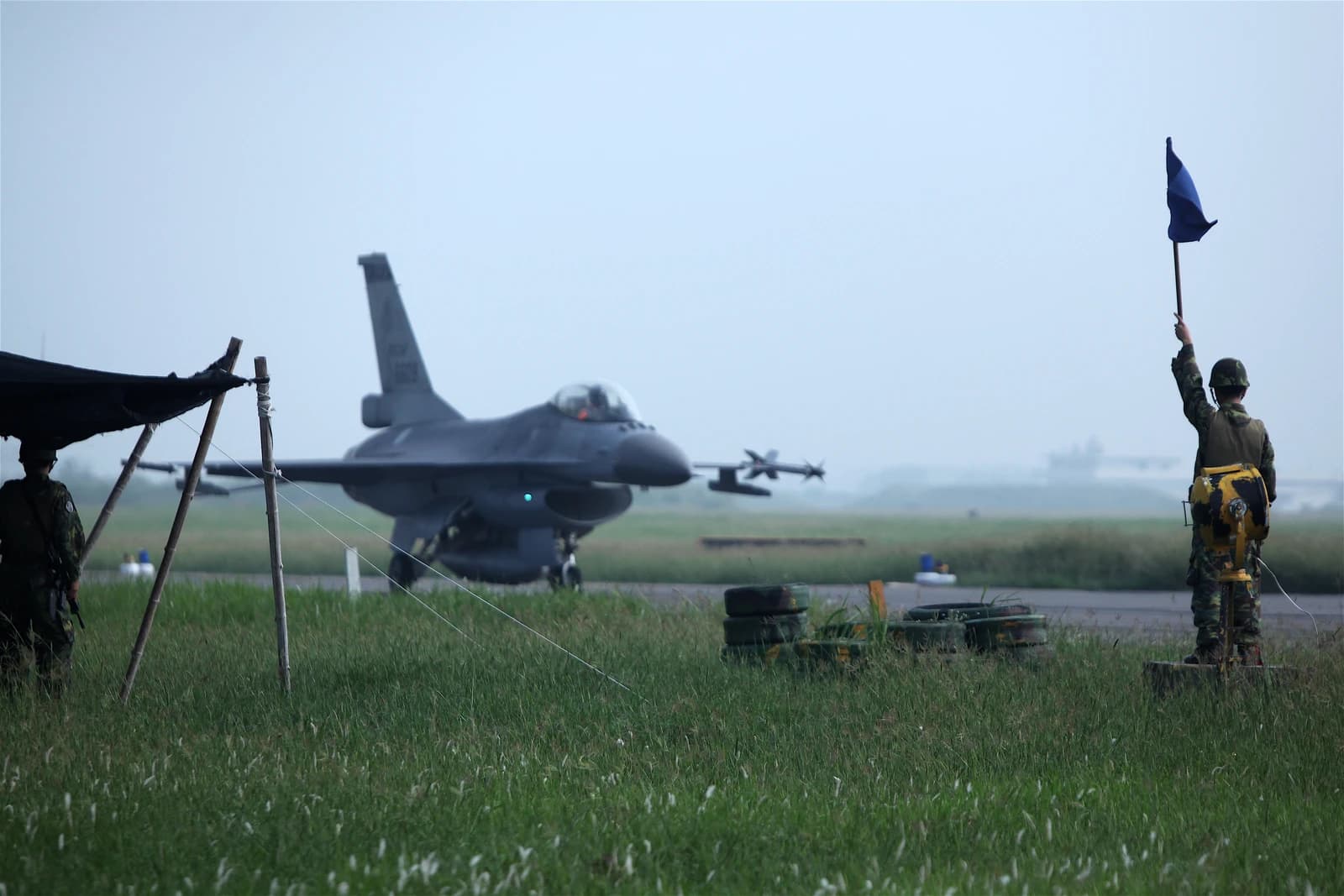
The State Department’s language matters because the waters east of Taiwan are not just another flashpoint in the long-running dispute over sovereignty. Taipei considers the area a critical route for wartime resupply from allies, and Taiwanese officials believe Beijing is rehearsing for a blockade using coast guard ships, maritime militia and other civilian assets. That raises the stakes well beyond symbolism: any sustained disruption around Taiwan would threaten shipping lanes, insurance costs, logistics and the flow of advanced chips that underpin everything from artificial intelligence systems to consumer electronics.
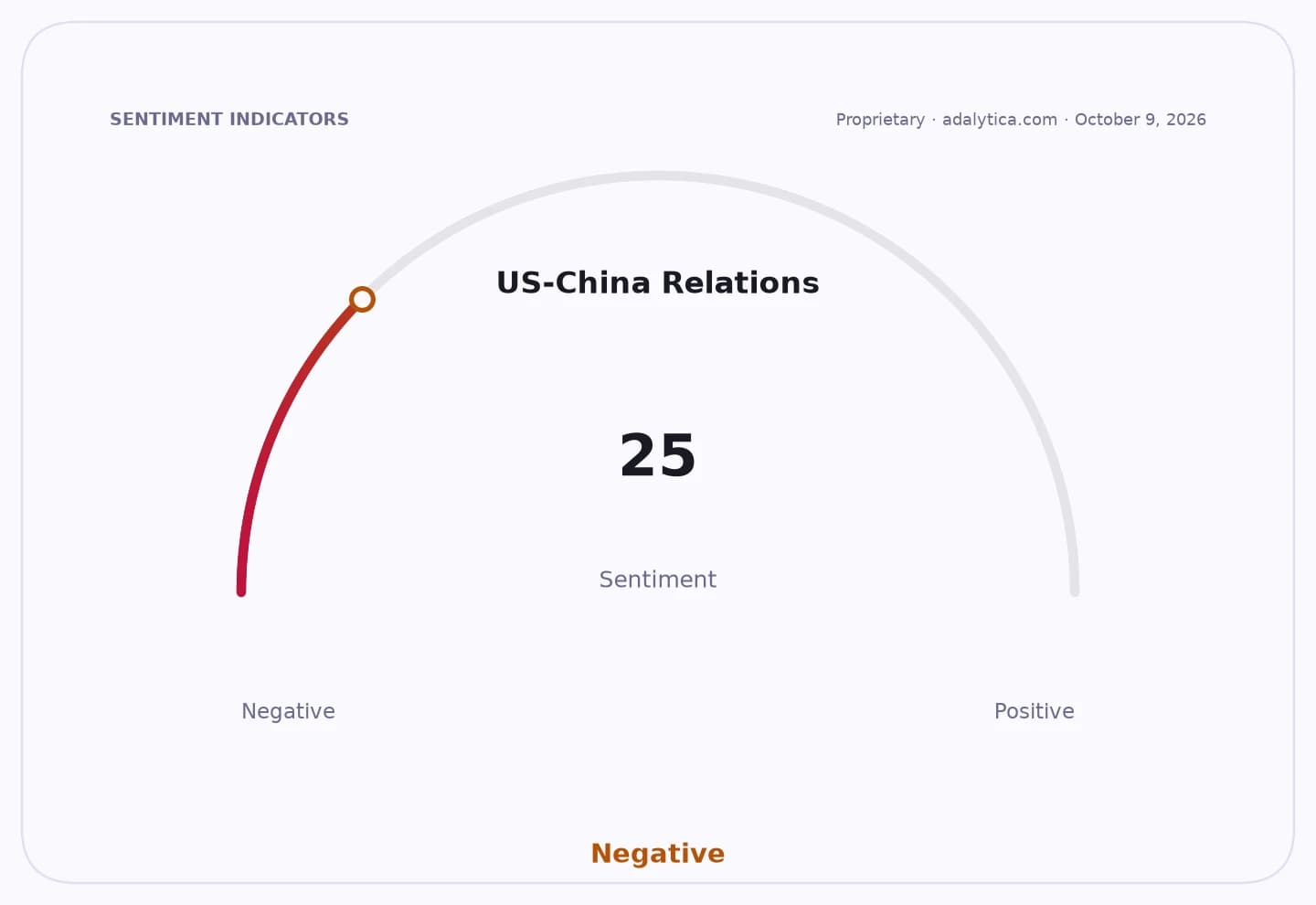
Sentiment IndicatorsⓘProprietary · adalytica.com · October 12, 2026
This is a snapshot — live sentiment, awareness and momentum for 130+ markets update continuously in the dashboard.Open AlphaPulse
For markets, the issue goes straight to Taiwan Semiconductor Manufacturing Co, Nvidia and ASML, the three names most exposed to any escalation in cross-strait tensions. TSMC, the world’s dominant contract chipmaker, closed at $446.67 on Monday, still above its 50-day moving average of $432.62 and its 200-day average of $390.83, but recent price action shows investors remain alert to geopolitical risk even as the stock has rallied sharply this year. Nvidia, which relies on TSMC for advanced chip production, ended at $226.46, also above both key averages. ASML, whose lithography tools are essential to leading-edge chip manufacturing, finished at $1,758.83, with technical readings pointing to a market that remains constructive but sensitive to headlines.
The economic significance is broader than individual shares. Taiwan sits at the centre of the global semiconductor supply chain, and any move that complicates access to the island or its surrounding waters would ripple through manufacturing, inventories and capex plans worldwide. That is why the US warning, coupled with earlier concern from Britain, France, Germany and Washington over Chinese activity off Taiwan’s east coast, matters for corporate planning as much as diplomacy. A blockade scenario remains a tail risk, but even incremental pressure can affect freight routes, risk premia and supplier diversification efforts by chipmakers and their customers.
US-China Relations — 30-day sentimentadalytica.com
Explore this data interactively — full history, time series and cross-market comparisons.Open AlphaPulse
The latest US comments also underline how Washington is trying to deter Beijing without committing to a sharper military response. President Donald Trump has yet to approve a new $14 billion arms package for Taiwan, a reminder that the deterrence calculus remains politically fluid. For China, the use of maritime militia and coast guard vessels allows pressure below the threshold of open conflict; for Taiwan and its backers, that ambiguity makes the challenge harder to counter and easier to normalize if left unanswered.
Investors are likely to treat the issue less as a one-day headline than as another reason to maintain exposure to companies that can absorb geopolitical shocks, while demanding a higher risk premium from those most dependent on Taiwan. The immediate market risk is not a full-blown selloff, but a gradual re-rating of supply-chain resilience, insurance costs and the strategic value of diversified manufacturing footprints. If Chinese patrols intensify, scrutiny will turn to whether Washington, Taipei and allies can move from statements of concern to practical deterrence.
| Entity | Gains | Losses |
|---|---|---|
| Taiwan / TSMC | ▲Strategic importance rises | ▼Geopolitical risk premium |
| Nvidia / ASML | ▲None immediate | ▼Supply-chain uncertainty |
| China | ▲Tactical pressure leverage | ▼International pushback |
| US / Taiwan allies | ▲Stronger case for deterrence | ▼Higher policy tension |