North Korea’s criticism of Washington over arms deliveries to Taiwan adds another layer of pressure to already fragile US-China relations, at a moment when investors are closely watching how geopolitical friction could spill into trade, defense spending and supply chains across Asia.
North Korea Criticizes US Taiwan Arms Deliveries
Kim Myong Chol, described as an unofficial spokesman and international affairs analyst for Pyongyang, said US military support for Taiwan was heightening tension in the Taiwan Strait and undermining peace and stability in the region, Reuters reported. His remarks came after the first two F-16V Block 70 fighters from Taiwan’s 66-jet order placed in 2019 arrived last week, underscoring how delayed but ongoing weapons deliveries continue to draw sharp responses from Beijing’s allies.
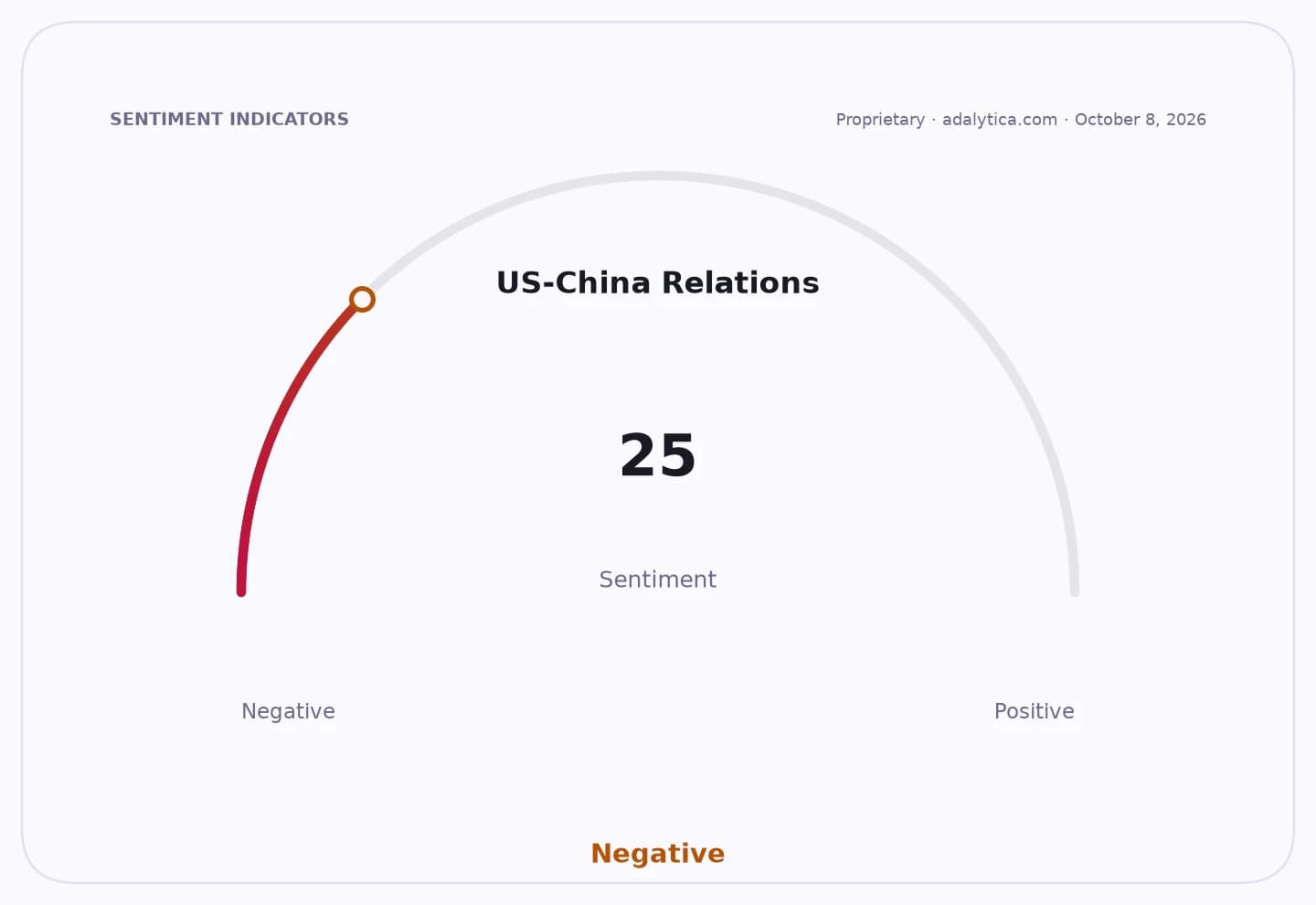
Sentiment IndicatorsⓘProprietary · adalytica.com · October 8, 2026
This is a snapshot — live sentiment, awareness and momentum for 130+ markets update continuously in the dashboard.Open AlphaPulse
The immediate economic relevance is not North Korea itself, but the signal that strategic competition around Taiwan remains active and multi-front. The island sits at the center of global semiconductor production and one of the world’s busiest shipping corridors, so any escalation in cross-strait tensions has implications far beyond diplomacy. For markets, the concern is whether repeated arms sales and retaliatory rhetoric gradually raise the risk premium on Asian assets, complicate supply-chain planning and keep defense spending elevated across the region.
The comments also fit a broader alignment. Kim Jong Un separately sent birthday greetings to Vladimir Putin and pledged continued support for Russia’s war effort, saying Pyongyang would expand cooperation under their strategic partnership. Ukraine and South Korea estimate North Korea has sent roughly 14,000 to 15,000 troops to support Russia since 2024, after Moscow and Pyongyang signed a mutual security treaty in June 2024. That reinforces the view that North Korea is working in concert with Russia and, indirectly, with Beijing’s opposition to US pressure in Asia.
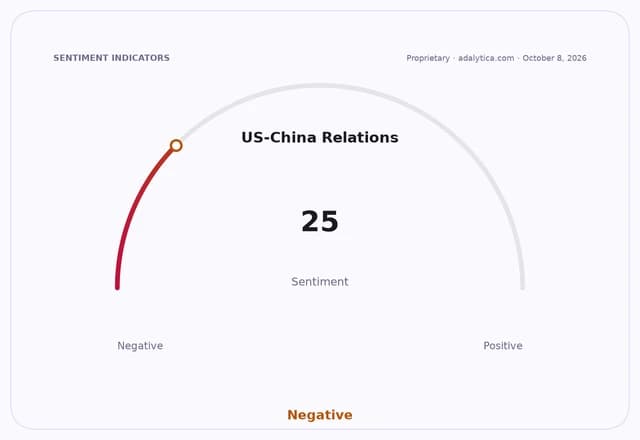
For investors, the key question is less whether this specific statement moves markets today and more whether it keeps geopolitical risk elevated around Taiwan, where even incremental military deliveries can feed into broader US-China frictions. Taiwan equities, regional defense contractors and semiconductor names tend to be most sensitive to any sign that the cross-strait standoff is hardening rather than easing. Adalytica’s US-China Relations Sentiment gauge remains in “fear,” while its Global Stability metric shows “extreme greed” in risk terms but with “extreme fear” in awareness, highlighting how markets are being forced to price a more unsettled backdrop.
The latest exchange suggests the Taiwan issue will remain a recurring flashpoint, with North Korea echoing the line of US adversaries at a time when Washington is already balancing support for Ukraine, deterrence in the Indo-Pacific and domestic constraints on foreign policy. Any further acceleration in Taiwan arms deliveries, Chinese military activity or allied retaliation would likely keep volatility elevated in regional defense, technology and shipping-related assets.
| Entity | Gains | Losses |
|---|---|---|
| Taiwan | ▲Military deterrence | ▼Lower regional calm |
| US defense suppliers | ▲Higher order visibility | ▼Greater geopolitical scrutiny |
| China and North Korea | ▲Political alignment narrative | ▼More US-led pressure |
| Semiconductor and Asian investors | ▲None | ▼Higher risk premium |