China’s pressure in the South China Sea is accelerating a quiet but economically meaningful realignment between the Philippines and Taiwan, with Manila and Taipei deepening practical ties even as Beijing warns against any move that looks like diplomatic recognition.
Philippines and Taiwan deepen practical ties
That matters because the relationship is no longer just about symbolism. It is becoming a corridor for trade, labor, maritime coordination and supply chains in one of Asia’s most strategically important lanes. For investors, the shift points to a broader re-routing of capital and industrial links away from a China-centric regional order and toward a tighter U.S.-aligned network spanning the Philippines, Taiwan and Japan.
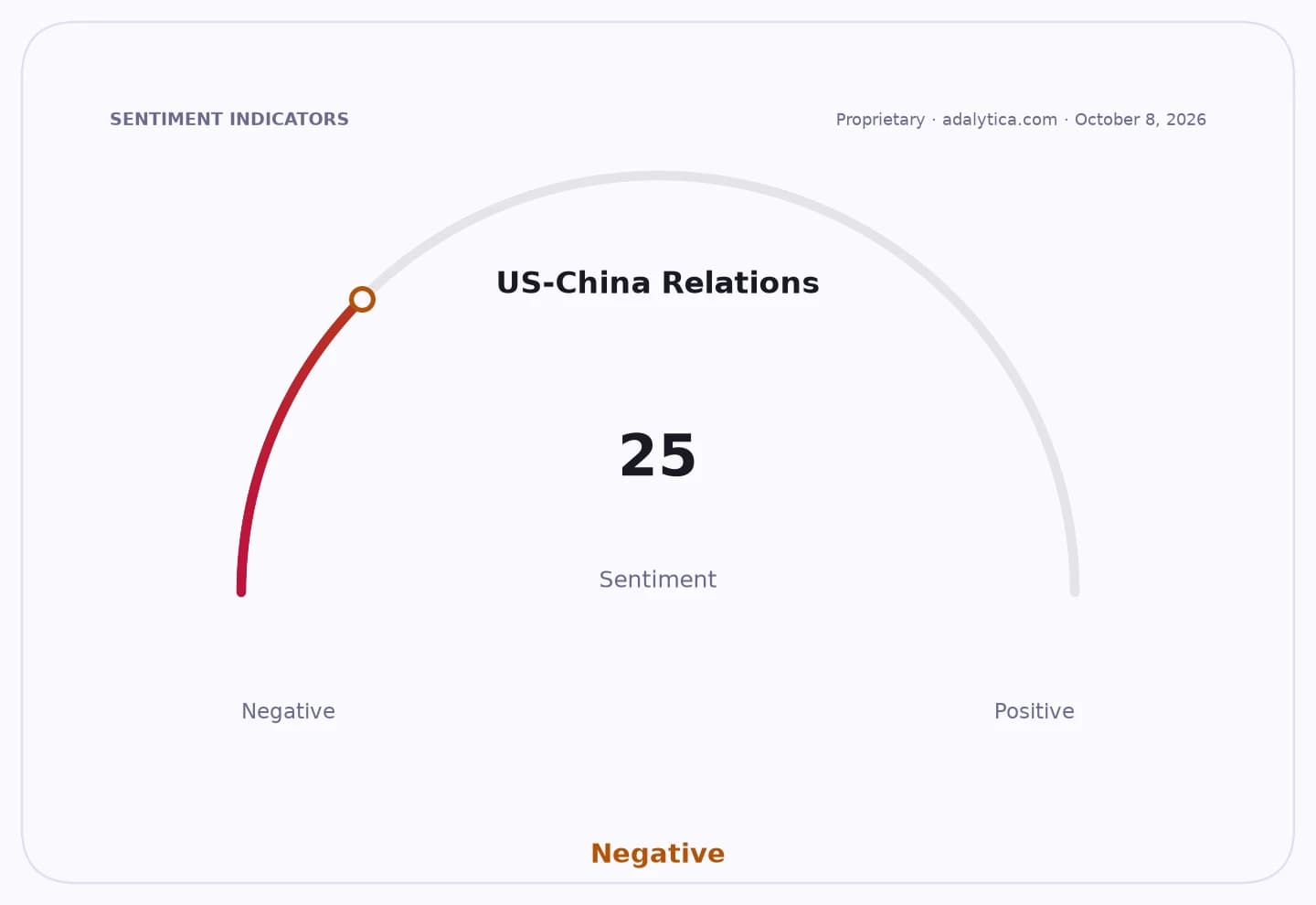
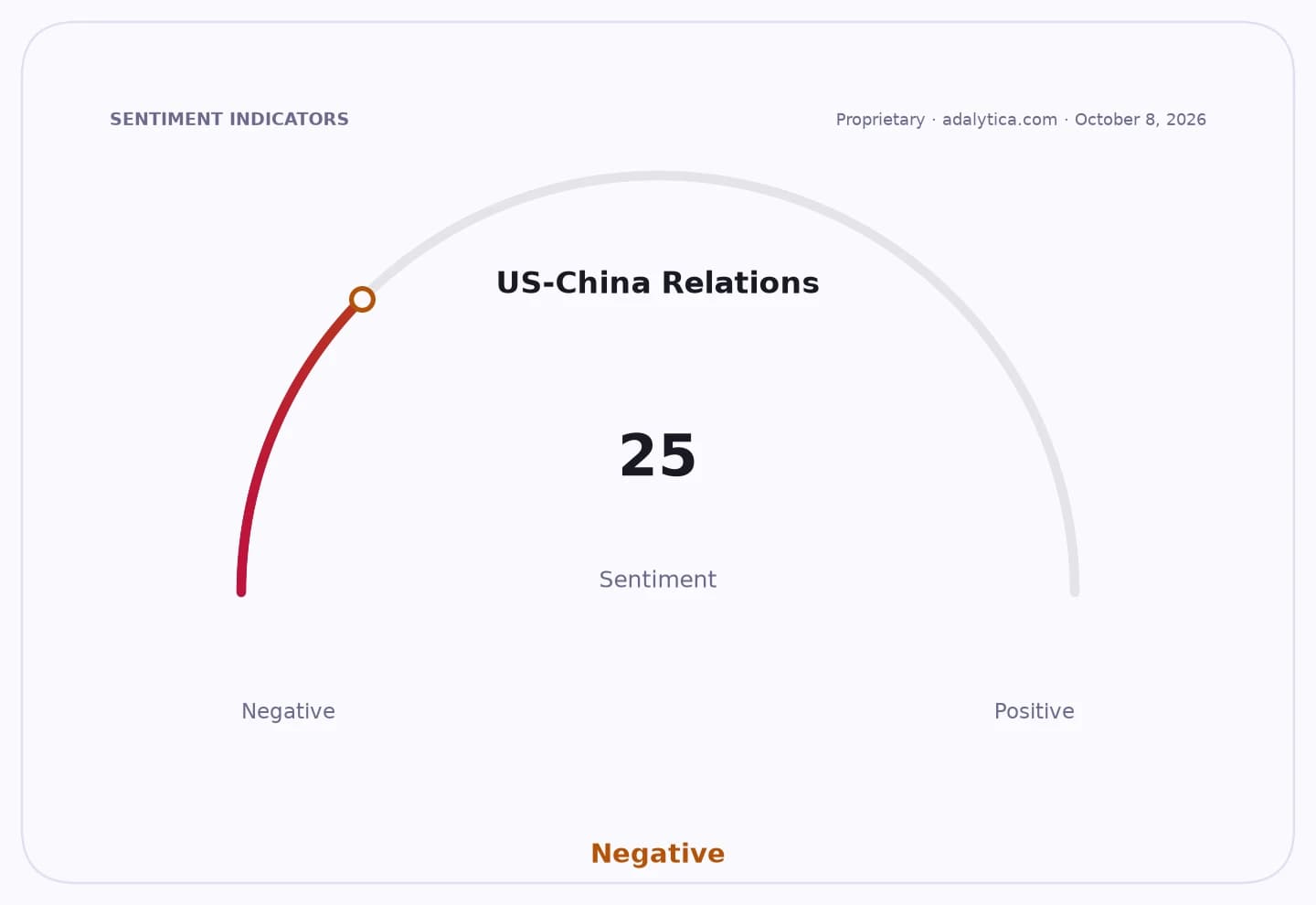
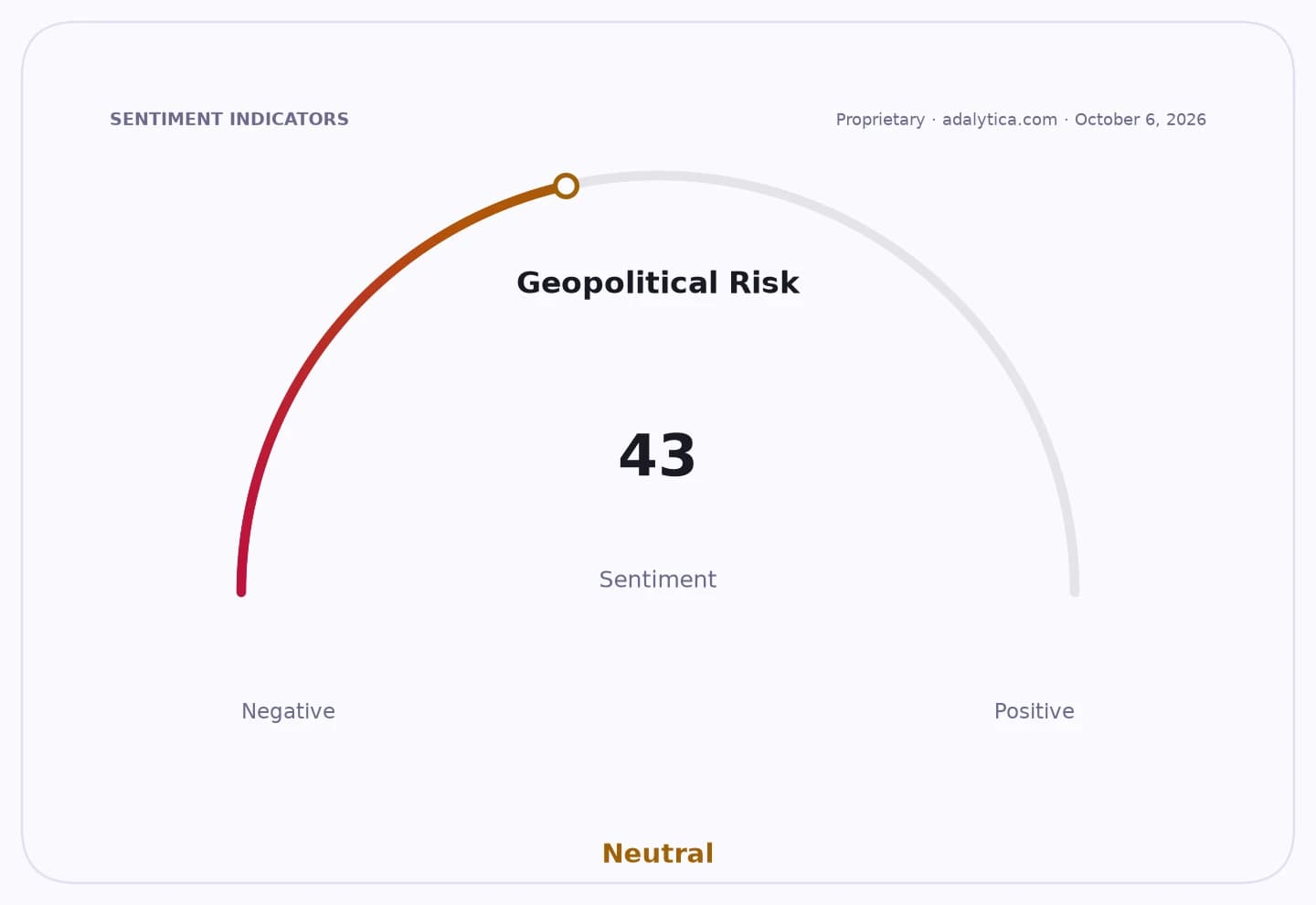
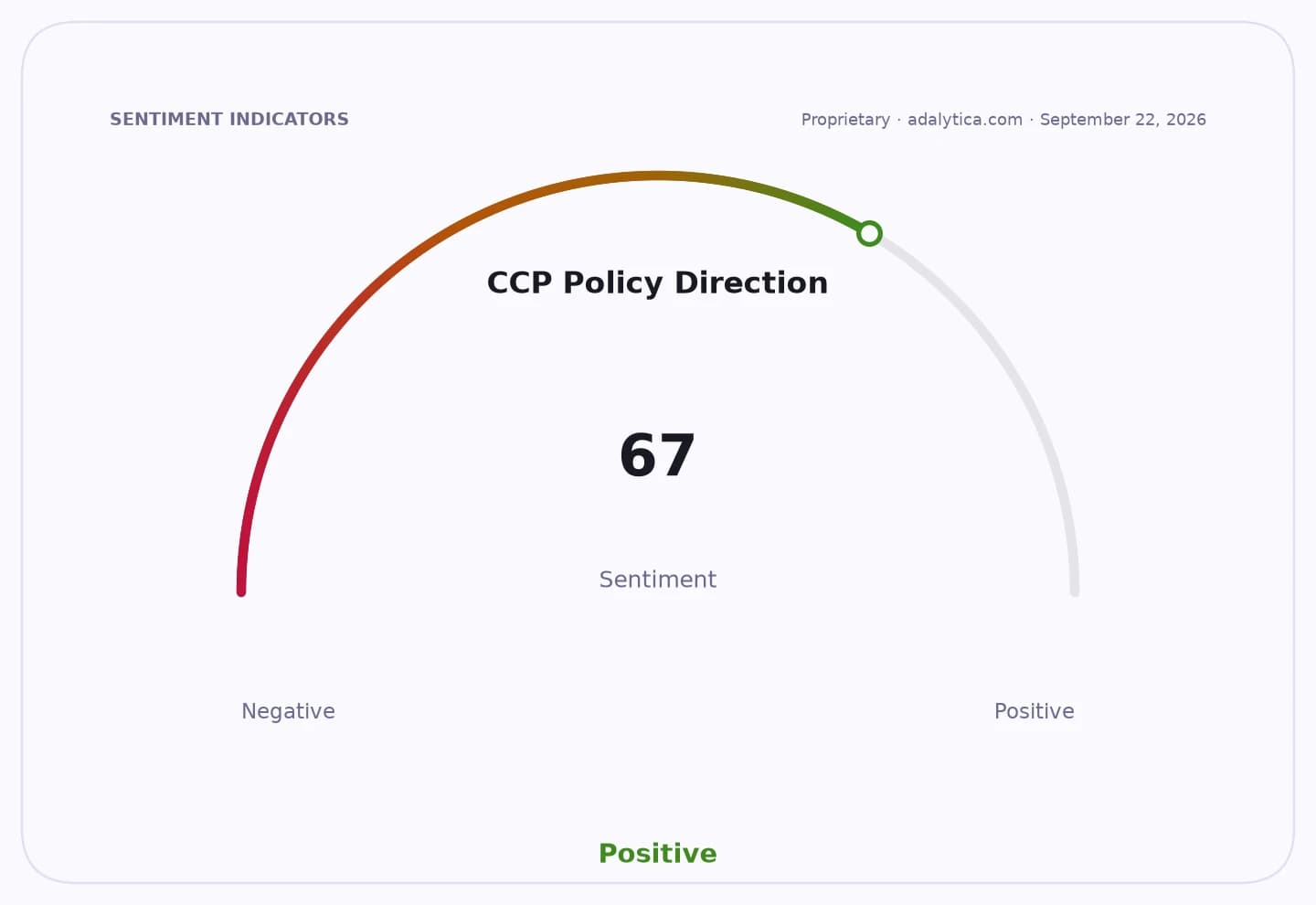
Sentiment IndicatorsⓘProprietary · adalytica.com · October 9, 2026
This is a snapshot — live sentiment, awareness and momentum for 130+ markets update continuously in the dashboard.Open AlphaPulse
Taiwan’s plan to open a second representative office in the Philippines, in Cebu, is the clearest sign yet of that momentum. Taiwanese Foreign Minister Lin Chia-lung said the office was moving ahead smoothly and would serve travelers and businesses in central Philippines while supporting a proposed Taiwan-Philippines Economic Corridor. Days later, Taipei also confirmed it had donated a decommissioned patrol vessel to the Philippine coast guard.
The message from Manila is equally important: it is keeping its one-China policy on paper, but widening the room for unofficial engagement in practice. Philippine officials now can travel to Taiwan for economic and investment purposes under relaxed rules introduced in April, while senior leaders remain restricted. Defense Secretary Gilberto Teodoro’s blunt line — “We define the one-China policy. We define it. Not them” — captures how far Manila is willing to push back.
This is where China’s coercion turns into an investable theme. Analysts say Beijing’s pressure in the West Philippine Sea has made the Philippines less inclined to defer to Chinese demands on Taiwan policy, even as smaller regional states such as Papua New Guinea and Malaysia have shown more caution toward Taipei. In other words, Chinese brinkmanship is not isolating Taiwan; in the Philippines’ case, it is helping normalize ties.
The economic logic is strong. More than 200,000 Filipinos work in Taiwan, the two sides already enjoy visa-free entry, and Taipei is leaning harder into trade, tourism and supply-chain cooperation. If the proposed corridor links to the U.S.-Japan-Philippines-backed Luzon Economic Corridor, investors should think in terms of logistics, ports, industrial parks, shipping and manufacturing suppliers that benefit from friend-shoring across the first island chain.
That is why this story matters beyond diplomacy. The market is underestimating how geopolitical friction can create durable infrastructure and supply-chain winners. The Philippines gains as a maritime and labor hub. Taiwan gains redundancy and regional reach. The U.S.-backed corridor gains strategic depth. China, by contrast, risks pushing neighbors into tighter coordination with Taipei and Washington.
For investors, the playbook is straightforward: watch Taiwan-linked exporters, Philippines infrastructure and logistics names, and the broader semiconductor supply-chain ecosystem that benefits from a more diversified regional operating map. Taiwan Semiconductor Manufacturing Co. remains the central bellwether for the island’s industrial gravity, while the Taiwan ETF EWT and China-focused FXI highlight the diverging market narrative. EWT has held well above its 50-day and 200-day moving averages, while FXI remains stuck below both, underscoring how capital continues to favor Taiwan-linked exposure over China.
The bigger takeaway is that the market is only beginning to price the second-order effects of a more fragmented Asia. If Manila keeps expanding functional ties with Taipei, and if Beijing keeps leaning harder on its neighbors, the winners will be the companies and funds exposed to defense, ports, supply chains and non-China Asian manufacturing. The Cebu office is not the story by itself. The story is that China’s pressure is helping build a new regional trade architecture — and that is where the asymmetry now sits.
| Entity | Gains | Losses |
|---|---|---|
| Philippines | ▲More trade options | ▼Beijing pressure |
| Taiwan | ▲Regional legitimacy | ▼Diplomatic isolation |
| China | ▲Regional leverage | ▼Neighbor trust |
| EWT / Taiwan-linked assets | ▲Capital inflows | ▼China-exposed peers |