China has rejected Tokyo’s attempt to soften a diplomatic row over Prime Minister Sanae Takaichi’s remarks on Taiwan, underscoring how quickly the dispute is evolving into a broader test of bilateral ties with economic and security consequences for both sides.
China Rejects Japan's Taiwan Row Overture
Former Foreign Minister Taro Kono’s account of his talks in Beijing shows that Chinese Foreign Minister Wang Yi did not accept Japan’s argument that the government’s position had not changed, and instead insisted the issue be “resolved” by the Japanese leader who made the original statement. That response matters because it suggests Beijing is treating the matter not as a semantic dispute over wording, but as a political concession it wants from Tokyo before relations can stabilize.
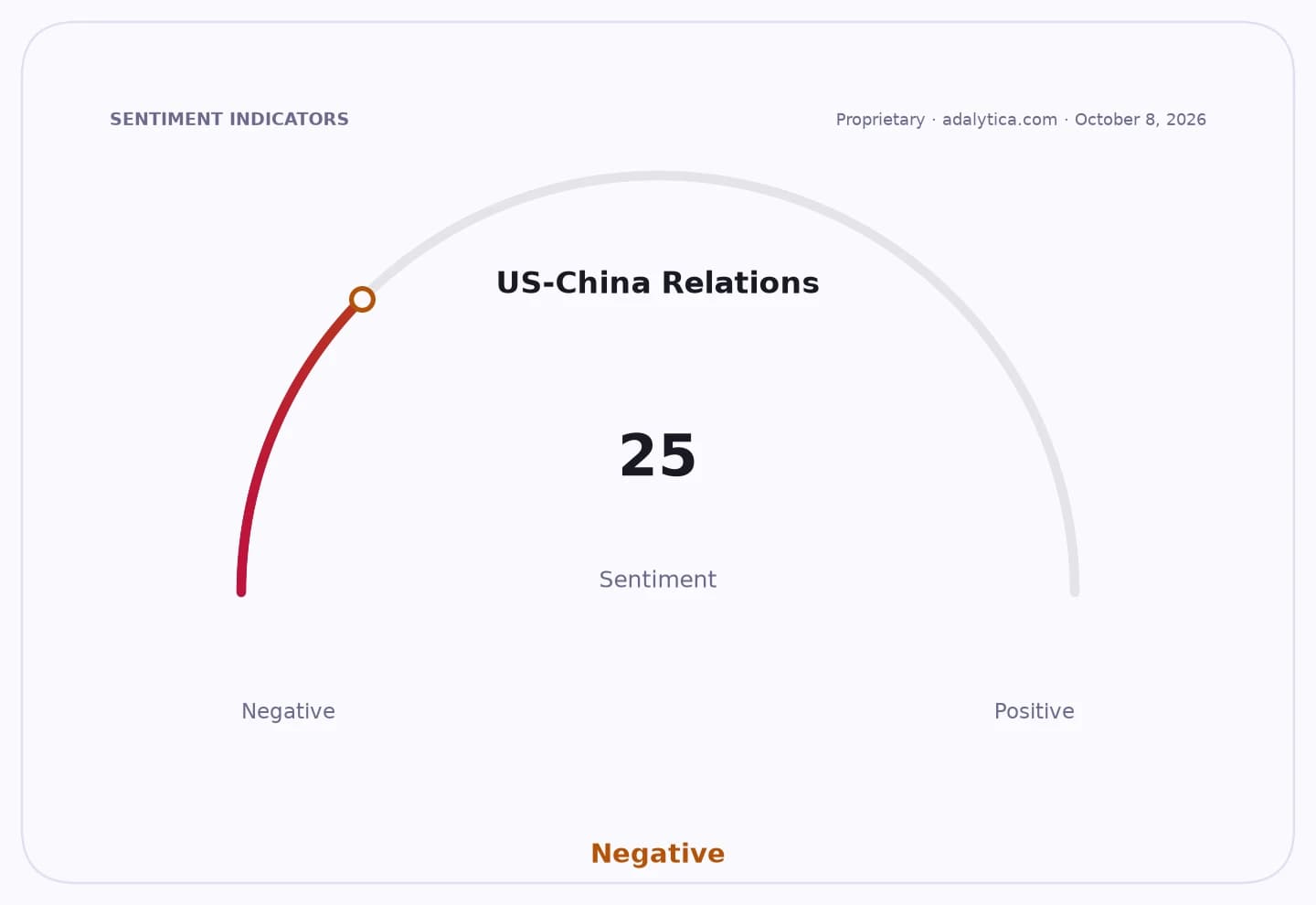
Sentiment IndicatorsⓘProprietary · adalytica.com · October 8, 2026
This is a snapshot — live sentiment, awareness and momentum for 130+ markets update continuously in the dashboard.Open AlphaPulse
For investors, the significance is less about diplomatic theater than about the risk that the dispute spills into trade, supply chains and market access. Japan and China are deeply intertwined through tourism, manufacturing and critical materials, and even limited retaliation can hit sectors exposed to Chinese demand or regulation. The fact that Chinese Vice Premier He Lifeng separately signaled willingness to keep discussing rare-earth export controls for civilian uses suggests Beijing is trying to keep one economic channel open even while applying pressure on the political front.
That split message is important. On one hand, Beijing’s hard line on the Taiwan statement raises the probability of prolonged friction, including consumer boycotts, travel disruption or slower approvals in areas where Japanese firms rely on the Chinese market. On the other, China’s interest in maintaining economic cooperation shows it does not want to damage the relationship beyond repair, especially at a time when both economies face their own growth challenges.
The market reaction will likely depend on whether the row stays at the level of rhetoric or moves into policy. The Adalytica US–China Relations Sentiment gauge is deep in “fear” territory, while a separate global stability measure has swung to “extreme greed,” reflecting the wider sensitivity of markets to geopolitical shocks and the uneven pricing of risk. For Japan-focused investors, that means the headline risk around Chinese retaliation remains elevated even if near-term economic spillovers are limited.
The broader narrative is that Beijing is using a diplomatic dispute to pressure Tokyo while preserving enough economic dialogue to avoid a full rupture. That leaves Japanese policymakers balancing domestic security politics against the costs of antagonizing their largest trading partner, and it leaves investors watching for any signs that the disagreement starts to affect autos, industrials, tourism or critical-mineral supply chains.
| Entity | Gains | Losses |
|---|---|---|
| China | ▲Diplomatic leverage | ▼Trust with Tokyo |
| Japan government | ▲Domestic security stance | ▼Bilateral stability |
| Japanese exporters | ▲Rare-earth dialogue | ▼Retaliation risk |
| Investors | ▲Clarity on risk asymmetry | ▼Near-term volatility |