Tsai Ing-wen used a U.S. visit to cast Taiwan as both a strategic chokepoint and a supply-chain asset at a moment when Beijing is stepping up military, cyber and economic pressure and Washington and Beijing are still searching for guardrails.
Taiwan Risk, EWT Weakness, and China Pressure
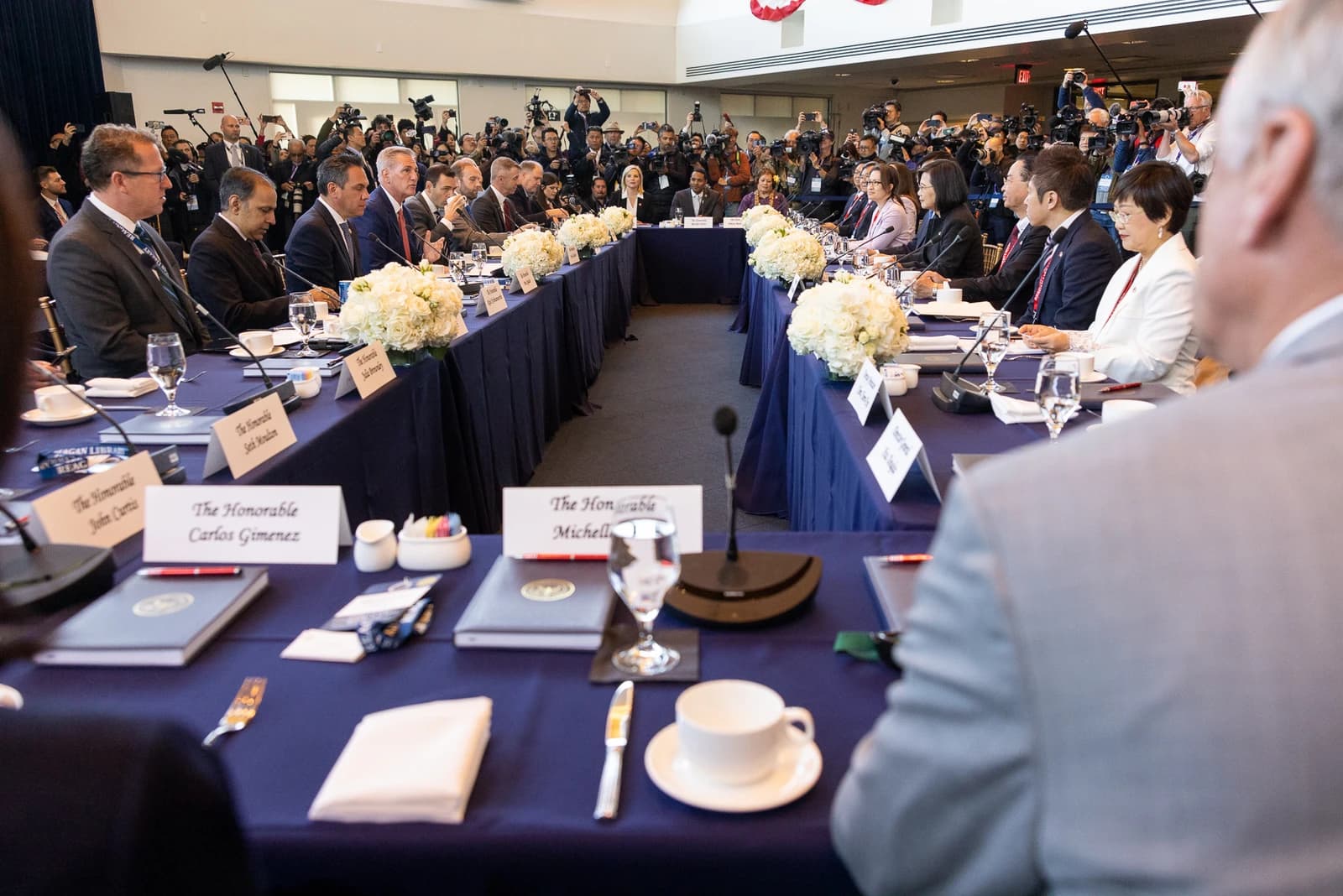
The former president’s remarks matter because they frame Taiwan’s security not as an isolated cross-strait dispute, but as a systemic risk to global technology manufacturing and Indo-Pacific stability. Taiwan sits at the center of advanced semiconductor supply chains, and any escalation around the island would reverberate through electronics, autos, cloud infrastructure and defense spending.
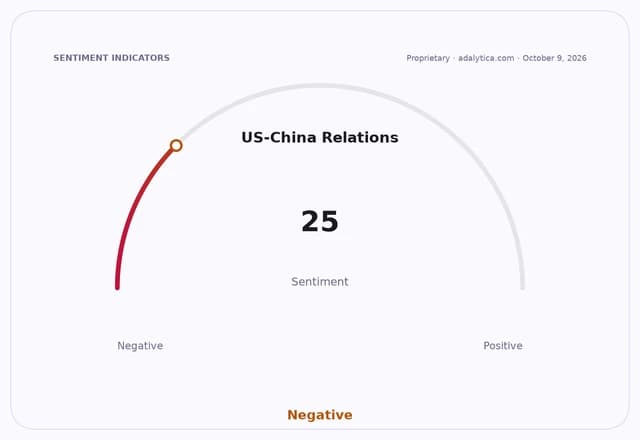
Sentiment IndicatorsⓘProprietary · adalytica.com · October 9, 2026
This is a snapshot — live sentiment, awareness and momentum for 130+ markets update continuously in the dashboard.Open AlphaPulse
Tsai said Taiwan faces daily cyberattacks, cognitive warfare, disinformation, economic coercion and attempts to damage critical infrastructure, while Chinese aircraft, naval vessels and coast guard assets operate more frequently around the island. She argued these actions are designed to stay below the threshold of open conflict — the classic “grey-zone” approach that raises the cost of defence without forcing a direct military response.
That matters for investors because grey-zone pressure is harder to price than a conventional crisis, but just as capable of disrupting trade, shipping, procurement and capital flows. The risk premium tends to show up first in semiconductor valuations, Taiwan-linked equities and regional risk assets, then broader Asia exposure if tensions intensify.
US-China Relations — 30-day sentimentadalytica.com
Explore this data interactively — full history, time series and cross-market comparisons.Open AlphaPulse
The market backdrop underscores that point. Shares linked to Taiwan have been volatile, with the iShares MSCI Taiwan ETF, EWT, still well above its summer lows but slipping from recent highs. EWT closed at $114.32 on Oct. 9, above its 50-day moving average of $108.91, though momentum had cooled as its RSI fell to 46.4 from overbought levels earlier in the year. The KraneShares CSI China Internet ETF, FXI, was trading at $34.31, below its 200-day moving average of $35.96, reflecting a market still cautious on China exposure even after recent rebounds.
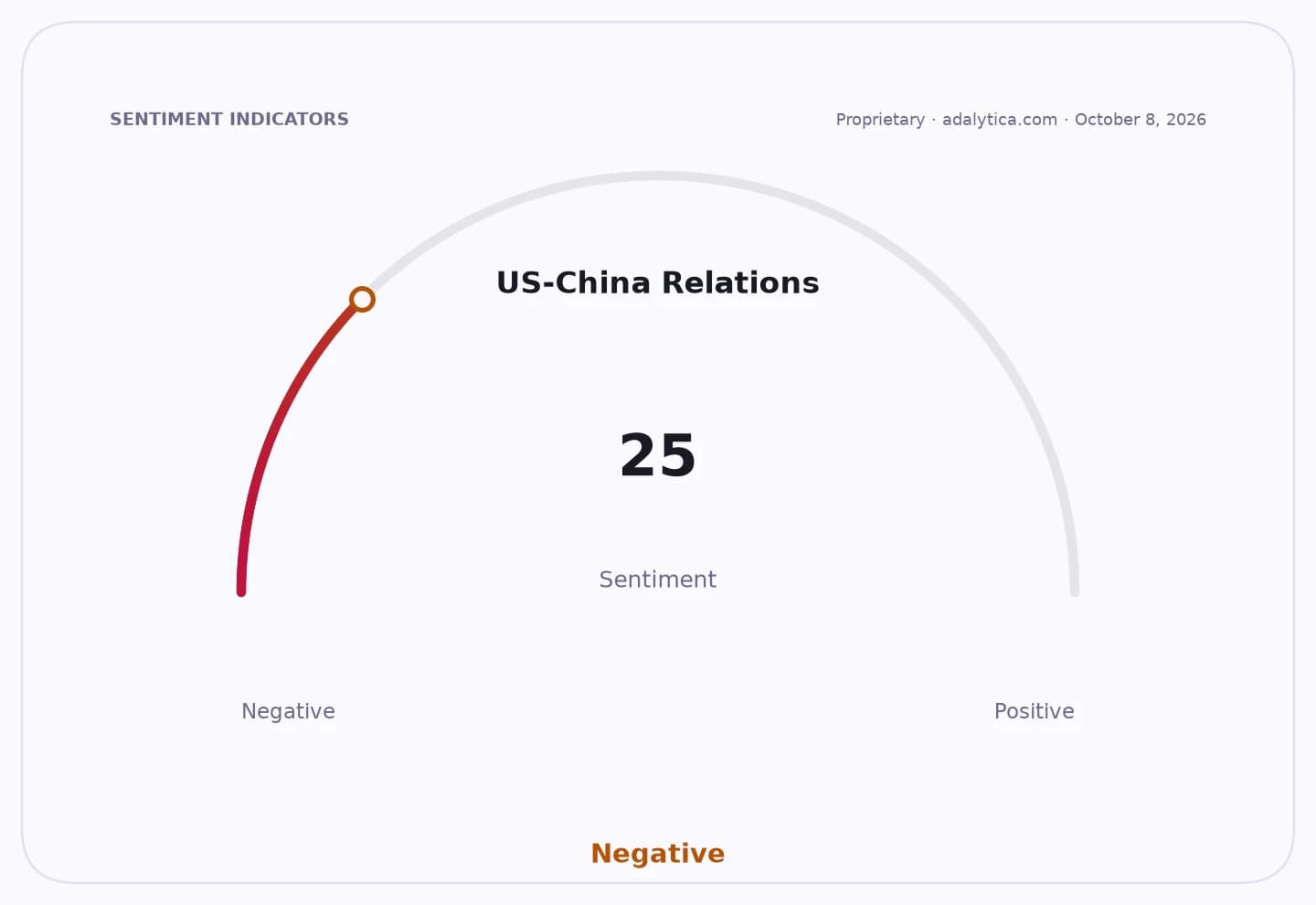
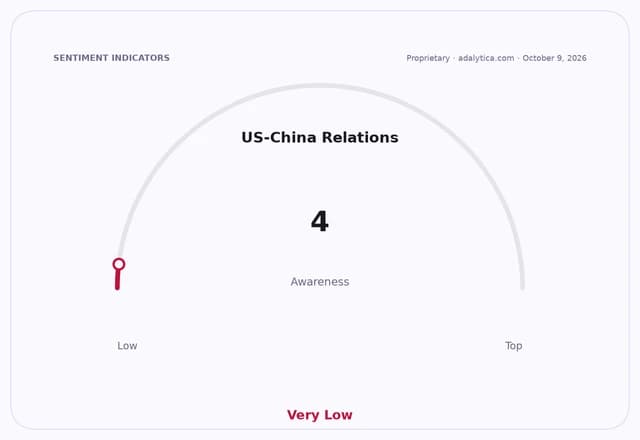
At the same time, the Adalytica US–China Relations Sentiment gauge remains in fear territory, showing sentiment at 25 with extreme fear on awareness, after a sharp drop over the past week. That aligns with a broader pattern: investors have become more sensitive to geopolitical shock risk even when spot market moves are modest.
Tsai’s emphasis on Taiwan as an “indispensable partner” in global supply chains is also a reminder of why the island’s security is a macro issue, not just a diplomatic one. Any prolonged disruption would hit the semiconductor ecosystem first, but the second-order effects would spread to capital expenditure plans, inventory management and inflation-sensitive manufacturing sectors worldwide.
Her comments come after the Trump-Xi summit, where Beijing pressed Washington to oppose Taiwan independence, suggesting little sign of a near-term easing in rhetoric. For investors, the main takeaway is not immediate escalation, but persistent uncertainty: the more Beijing relies on grey-zone tools, the more Taiwan assets trade with a structural geopolitical discount, and the more any U.S.-China thaw remains vulnerable to a single flashpoint.
| Entity | Gains | Losses |
|---|---|---|
| Taiwan | ▲Strategic visibility | ▼Security premium |
| China | ▲Pressure leverage | ▼Diplomatic trust |
| U.S. allies | ▲Supply-chain awareness | ▼Geopolitical calm |
| Taiwan equity holders | ▲Defensive demand | ▼Higher risk discount |