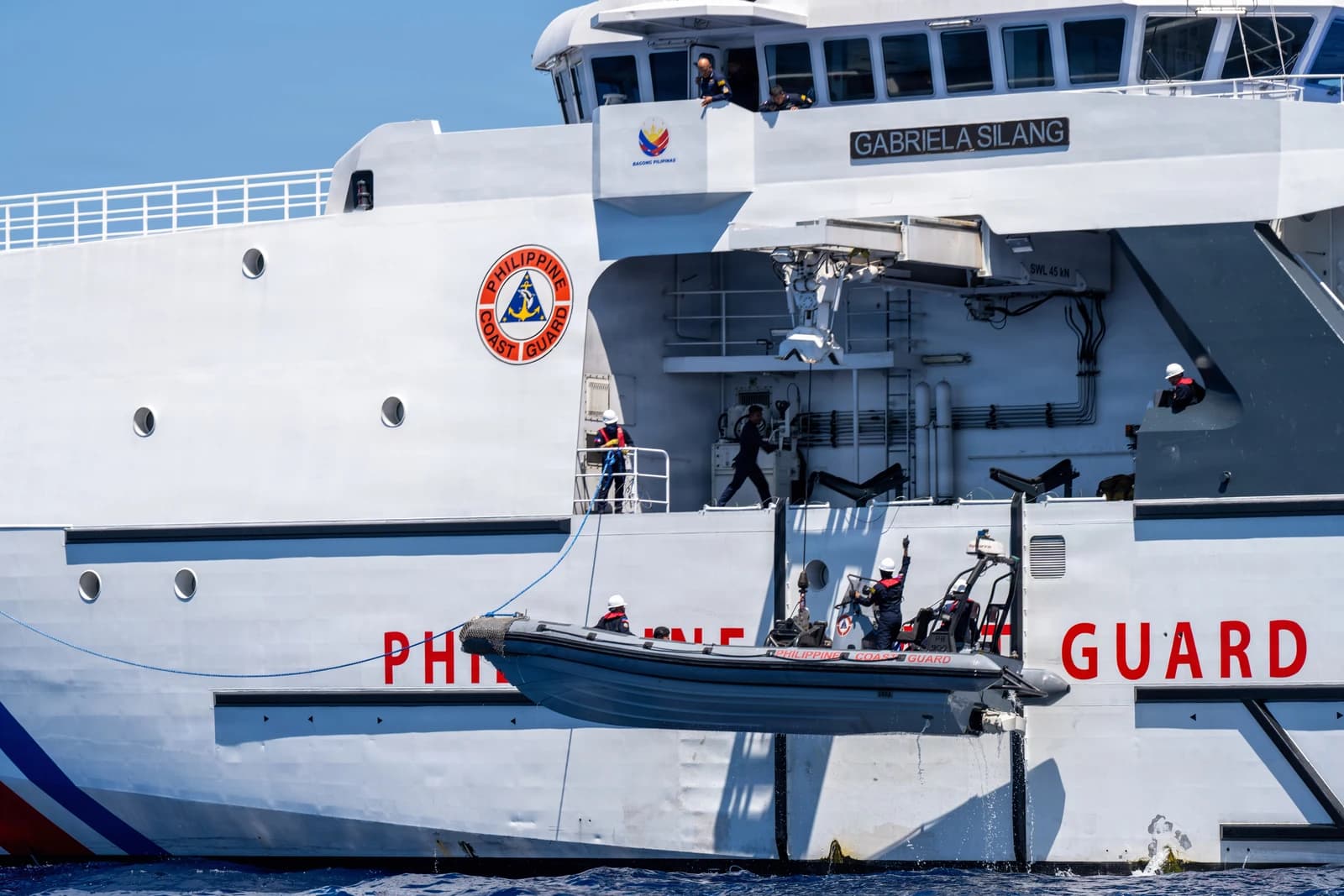
China sharply increased its maritime presence around disputed South China Sea flashpoints in September, raising the risk of a wider confrontation with the Philippines and putting fresh pressure on the U.S. security commitment to Manila.
China increases South China Sea vessels around shoals
The Armed Forces of the Philippines said it tracked 101 Chinese navy and coast guard vessels around four contested areas last month, almost double August’s 56 and up from 48 in July. The biggest concentration was at Scarborough Shoal, where 39 Chinese vessels were observed, underscoring how Beijing is using a heavier mix of coast guard and naval assets to press its claims.
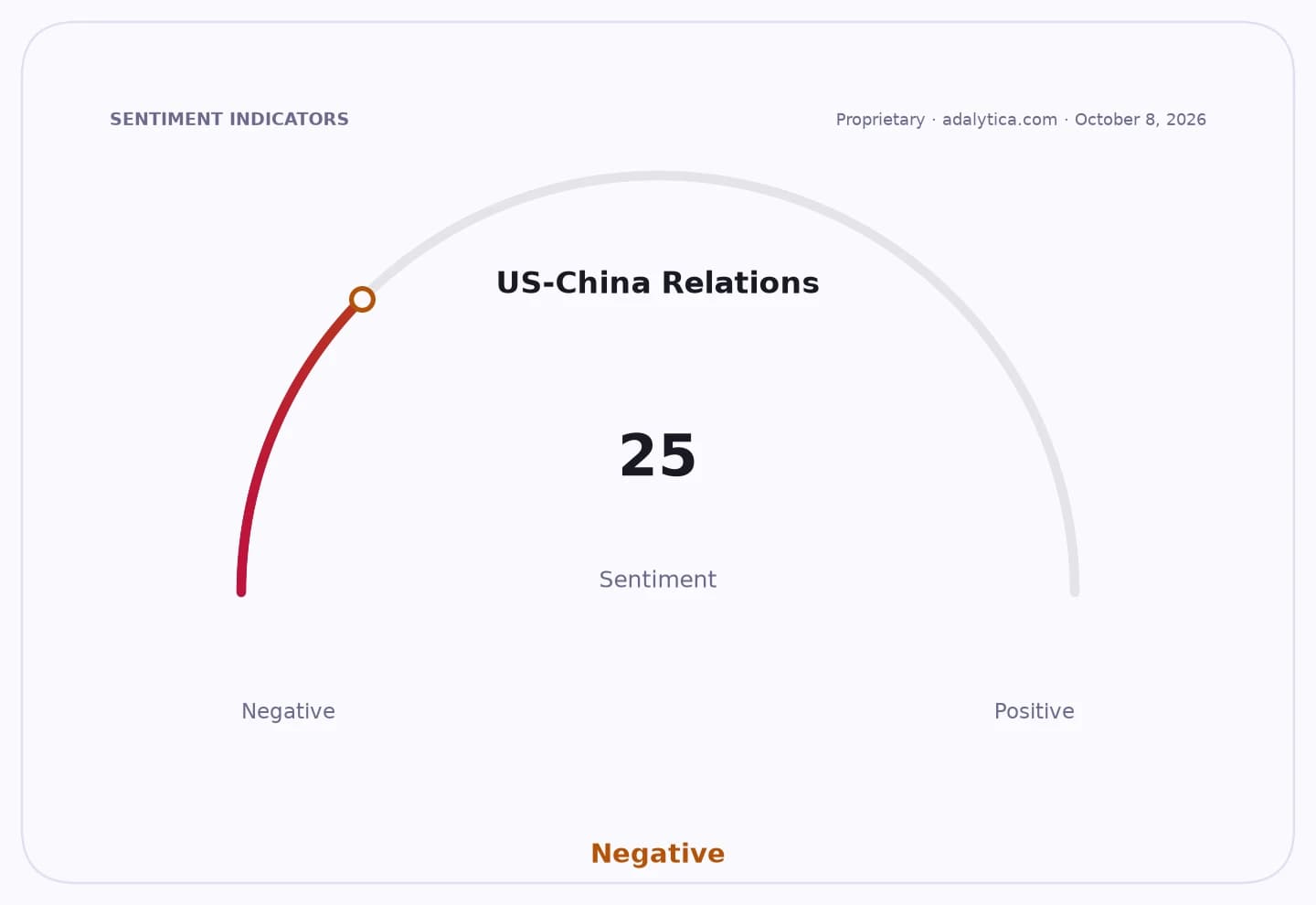
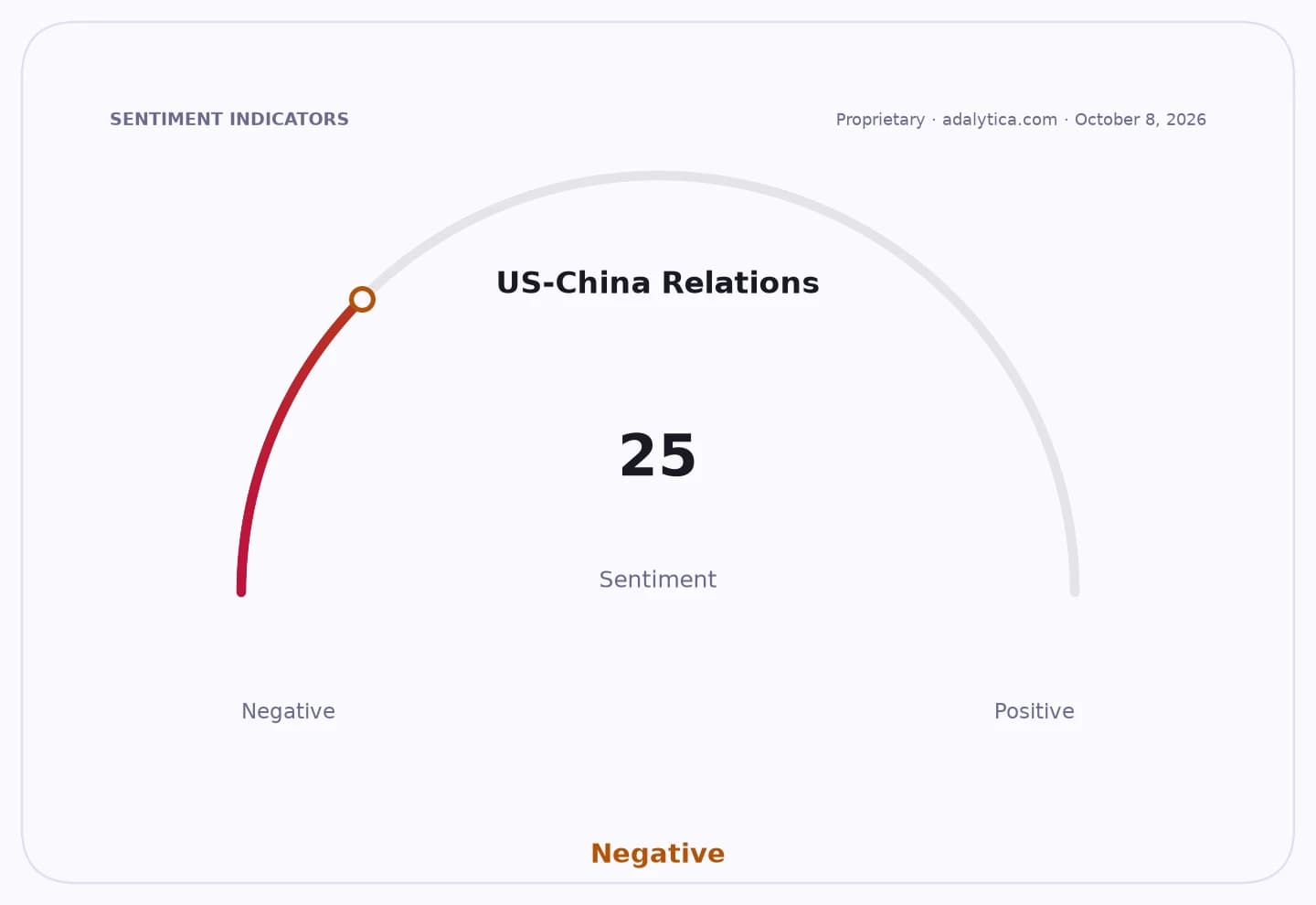
Sentiment IndicatorsⓘProprietary · adalytica.com · October 8, 2026
This is a snapshot — live sentiment, awareness and momentum for 130+ markets update continuously in the dashboard.Open AlphaPulse
The spike matters economically because the South China Sea is one of the world’s most important trade corridors and a critical route for energy, commodities and manufactured goods moving through Asia. Persistent military friction there raises the risk of shipping disruption, insurance costs and a broader chill in regional investment at a time when global markets are already sensitive to geopolitical shock.
For investors, the immediate market readthrough is not a direct earnings hit so much as a rise in tail risk. Any miscalculation between Chinese and Philippine forces could draw in the United States under the 1951 Mutual Defense Treaty, complicating Washington’s broader relationship with Beijing and adding another layer of uncertainty to Asian risk assets, defense spending and maritime logistics.
Geopolitical Risk — 30-day sentimentadalytica.com
Explore this data interactively — full history, time series and cross-market comparisons.Open AlphaPulse
The latest flare-up included a weekend encounter over Scarborough Shoal, where Manila said a Chinese J-16 fighter repeatedly maneuvered dangerously close to an unarmed Philippine patrol plane. Beijing said the Philippine aircraft entered airspace over Huangyan Dao without permission and that its forces took “necessary measures” in response.
Scarborough, about 120 miles west of Luzon, has been controlled by China since a 2012 standoff, though the Philippines says it lies inside its exclusive economic zone. Tensions are also running high at Second Thomas Shoal, where Chinese vessels recently blocked a Philippine resupply mission to troops stationed aboard the grounded BRP Sierra Madre.
The escalation comes despite recent diplomatic efforts to stabilize U.S.-China ties, highlighting how bilateral thaw in one channel has not prevented military pressure in another. With both sides continuing patrols and resupply missions, the next incident around Scarborough or Second Thomas remains a key catalyst for investors watching regional stability, defense risk and the durability of the U.S.-Philippines alliance.
| Entity | Gains | Losses |
|---|---|---|
| China | ▲stronger pressure on claims | ▼higher confrontation risk |
| Philippines | ▲U.S. backing spotlight | ▼patrol and resupply hazards |
| U.S. | ▲alliance relevance reinforced | ▼treaty entanglement risk |
| Shipping/insurers | ▲more demand for cover | ▼higher geopolitical risk premia |