China says it is willing to use its dialogue channels with the European Union to coordinate macro policy and improve communication on global economic governance, a sign Beijing wants to keep the bloc engaged even as trade imbalances widen and pressure builds for tougher European defenses.
China EU Trade Talks After Beijing Macroeconomic Pledge

Finance Minister Lan Foan made the remarks in Bangkok on Friday after meeting European Commissioner for Economy and Productivity Valdis Dombrovskis, European Central Bank President Christine Lagarde and Eurogroup President Kyriakos Pierrakakis. The message is aimed at preventing a worsening of China-EU economic frictions from spilling further into markets and supply chains.
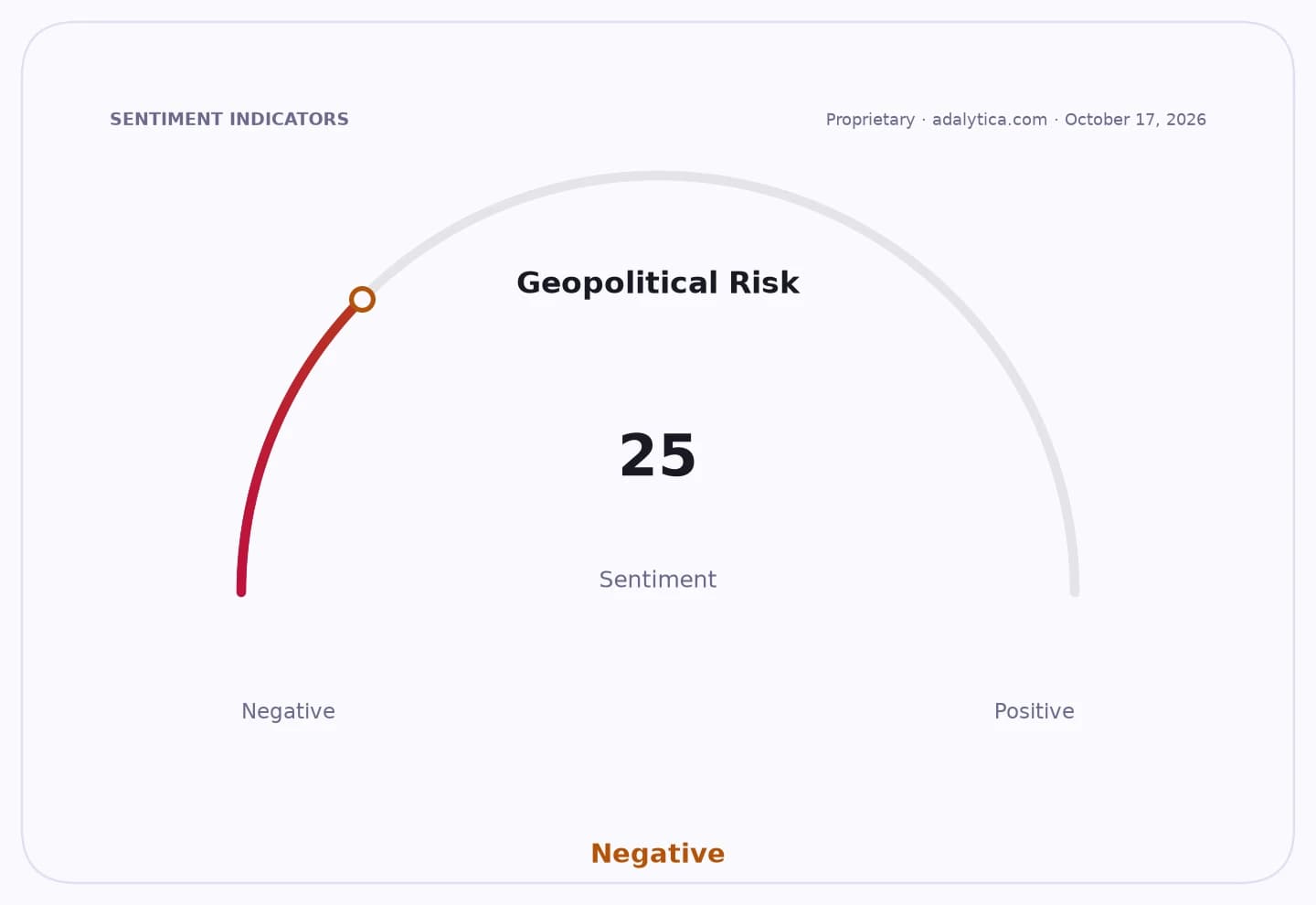
Sentiment IndicatorsⓘProprietary · adalytica.com · October 18, 2026
This is a snapshot — live sentiment, awareness and momentum for 130+ markets update continuously in the dashboard.Open AlphaPulse
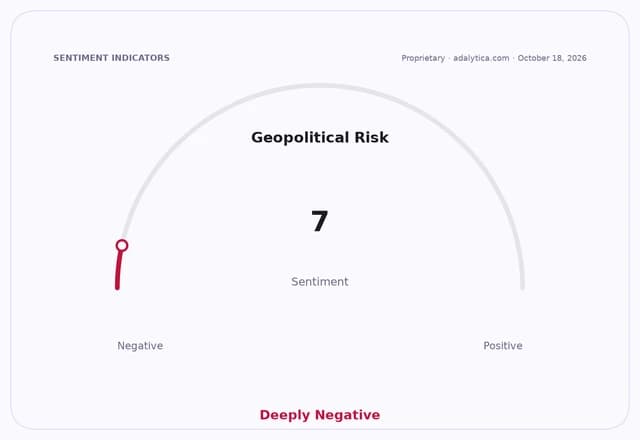
The timing matters because China’s trade surplus has surged this year, with exports accelerating sharply in September and the EU facing a deficit with China that is expected to top 100 billion euros by 2026. That backdrop raises the stakes for any talks on policy coordination: Europe wants rebalancing and protection for key industrial sectors, while China is seeking to preserve access to one of its most important export markets.
For investors, the remarks are another reminder that China’s external demand story remains tied to geopolitics, tariffs and Europe’s response. Chinese equities and broader Asia-exposed assets remain sensitive to any signs that Brussels may move toward trade-defense measures, while multinational industrials and consumer companies with China exposure are watching for disruption in shipments, pricing and margins.
Markets are already reflecting the strain. The FXI China large-cap ETF has slipped to about 33.84, below its 50-day moving average of 34.72 and under its 200-day average of 35.85, while Germany’s EWG ETF is holding near 41.57, just above its 200-day average but still below its recent highs. The EFA broad developed-markets fund is trading near 103.55, with its 50-day average above the latest close, underscoring a cautious tone across international equities.
The broader read-through is that Beijing is trying to lower the temperature with Europe just as trade pressures intensify. Whether the dialogue produces coordination or merely manages friction will help shape the outlook for tariffs, industrial policy and cross-border capital flows in the months ahead.
| Entity | Gains | Losses |
|---|---|---|
| China | ▲Keeps EU dialogue open | ▼Faces tougher trade scrutiny |
| European Union | ▲More policy access to Beijing | ▼Endures wider trade deficit |
| Exporters | ▲Near-term market access | ▼Higher policy uncertainty |
| Import-sensitive industrials | ▲None | ▼Margin and competition pressure |