President Donald Trump said he might meet North Korean leader Kim Jong Un in China this week, a surprise that would turn his Asia trip into a broader diplomatic test involving Beijing, Moscow and Pyongyang at a time of elevated geopolitical risk.
Trump May Meet Kim Jong Un in China This Week
Geopolitical Risk
The prospect matters because any Trump-Kim encounter would be the first since their stalled nuclear diplomacy in the first term and could reshape investor views on sanctions risk, regional security and the durability of U.S. alliances in Asia. It also injects fresh uncertainty into markets already watching trade talks, the war in Ukraine and U.S.-China relations for signs of policy shifts.
Sentiment Indicators
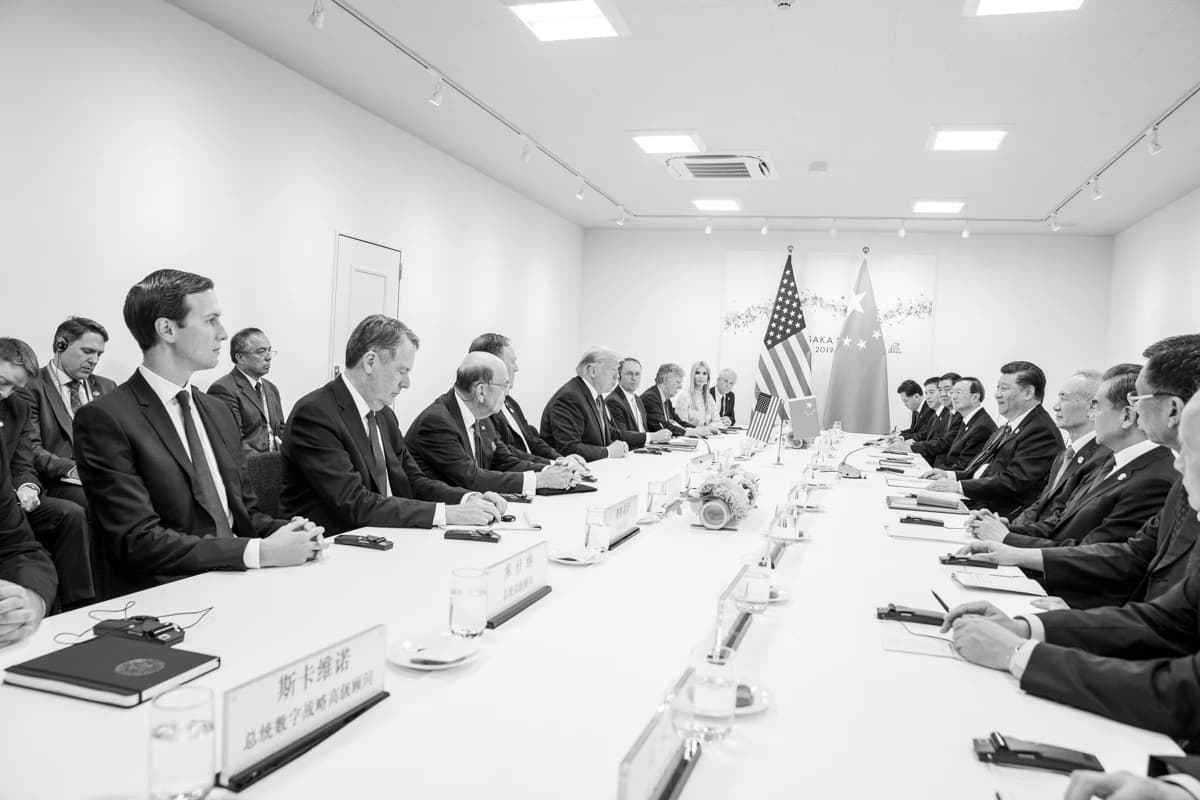
Trump said any meeting with Kim would happen in China and depend on whether Chinese President Xi Jinping brings him along. He also said he would meet with Xi and could meet Russian President Vladimir Putin, describing the trip as a chance to “accomplish a lot.”
The White House has not said there are firm plans for a Kim meeting, and North Korea has previously rejected the idea of talks while denouncing U.S. policy. That gap underscores how much of the summit choreography still depends on Xi, who could gain diplomatic leverage if China hosts a rare gathering of the leaders of the U.S., China, Russia and North Korea.
Geopolitical Risk — 30-day sentimentadalytica.com
Explore this data interactively — full history, time series and cross-market comparisons.
For investors, the immediate market impact is likely to be most visible in Asia risk assets and safe-haven trades rather than through direct fundamentals. China-focused assets showed mixed signals, with FXI hovering just below its 50-day moving average and below its 200-day average, while Korea’s EWY has been under pressure and remains well beneath its own 200-day average, reflecting how fragile sentiment is around the region.
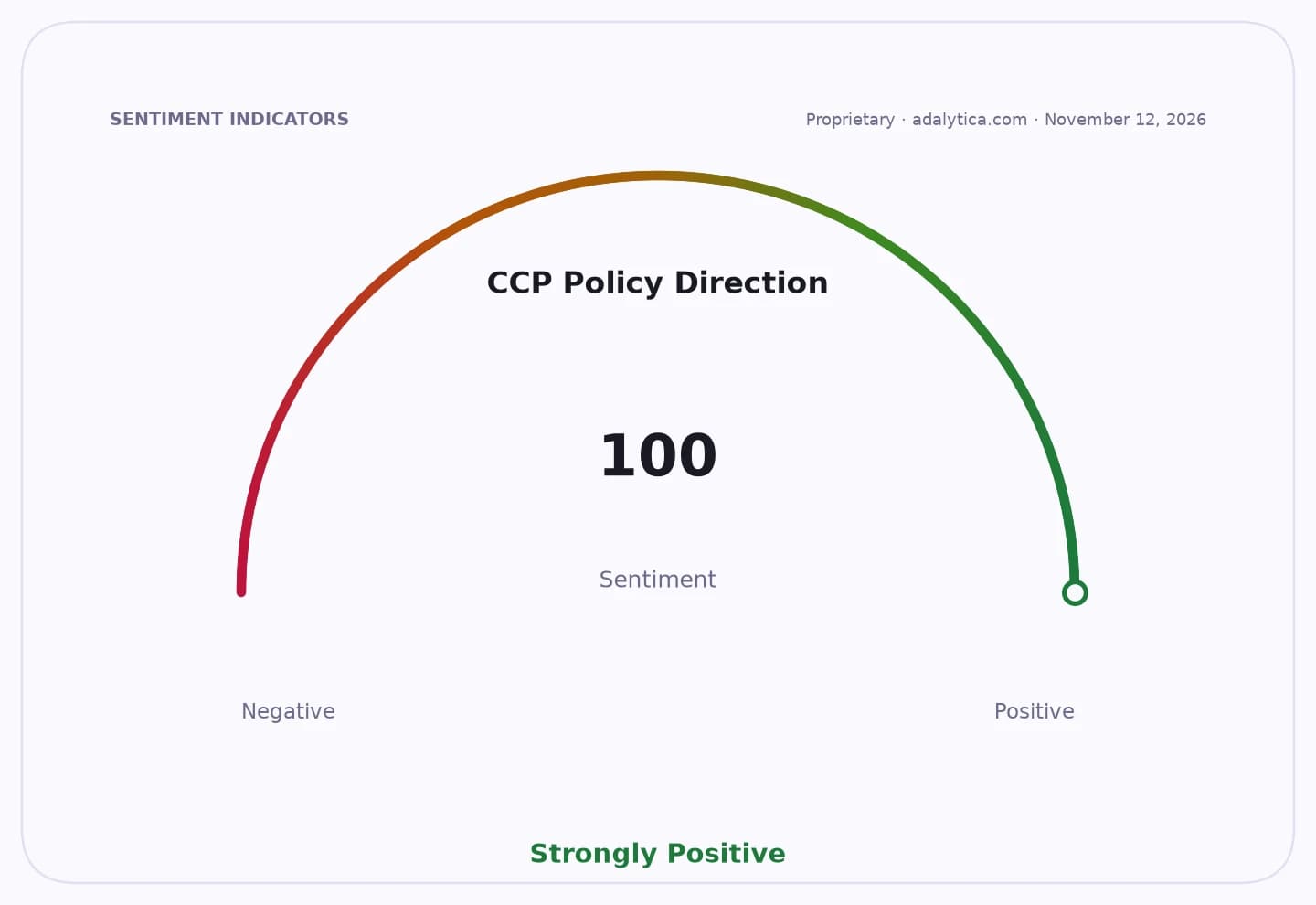
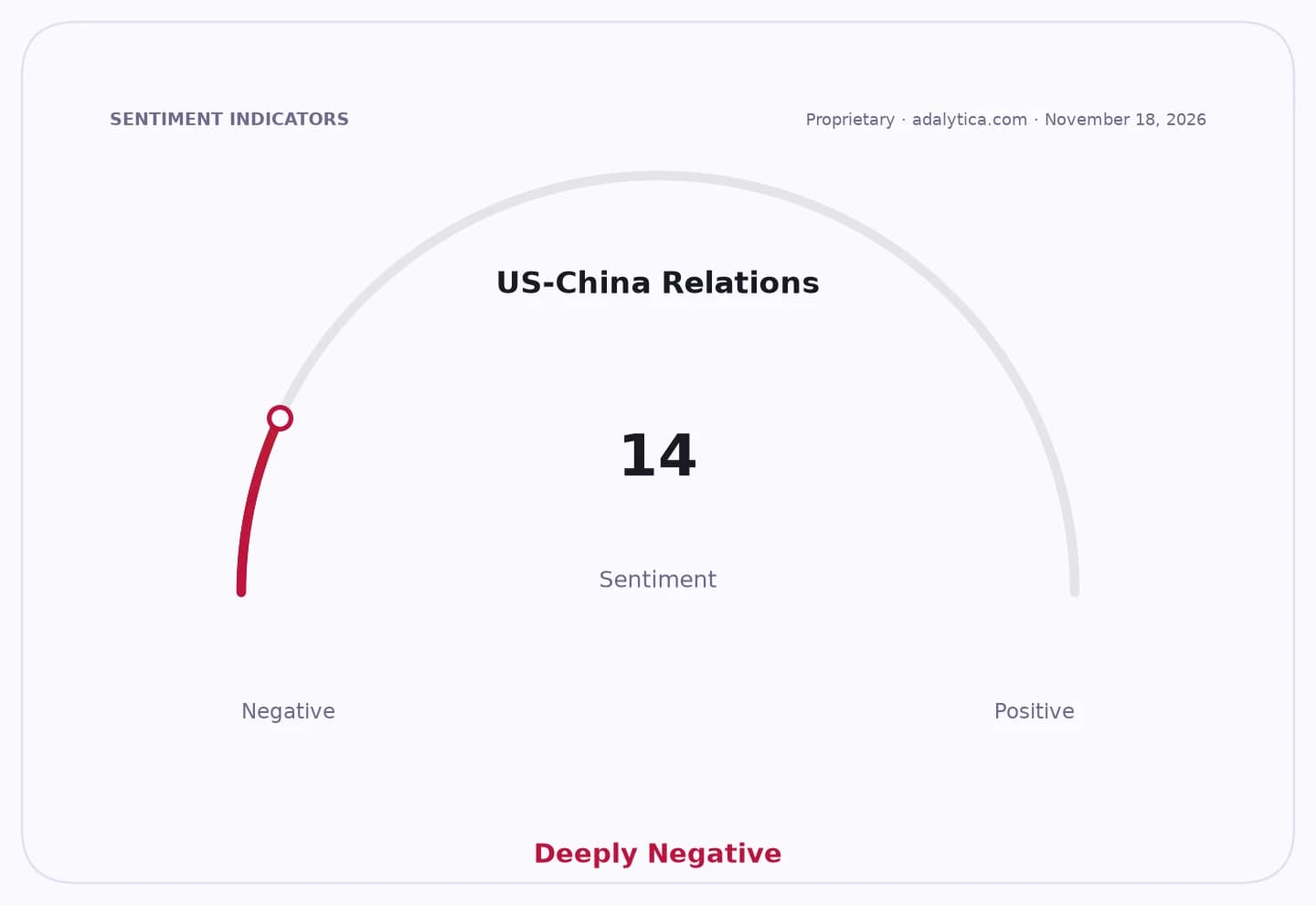
Adalytica’s Global Stability Sentiment gauge showed “Extreme Fear” at 14, while its China CCP Policy Direction reading was also in fear territory at 29, suggesting a market backdrop that remains vulnerable to headline-driven swings. The dollar gauge was neutral, leaving room for any escalation or de-escalation in Asia diplomacy to ripple through currencies and broader risk appetite.
Trump’s renewed interest comes seven years after his last summit with Kim failed to produce an agreement on denuclearization and sanctions relief. Since then, North Korea has expanded its nuclear and missile programs and deepened ties with Russia and China, including military support to Moscow’s war in Ukraine.
Any new opening could ease tensions, but it could also create friction with regional allies if Trump appears willing to accept North Korea as a de facto nuclear power. The key catalyst now is whether Xi allows Kim to appear in China and whether the APEC sidelines produce a bilateral or trilateral meeting that moves beyond symbolism.
| Entity | Gains | Losses |
|---|---|---|
| North Korea | ▲Diplomatic legitimacy | ▼Pressure over denuclearization |
| China | ▲Global diplomacy stature | ▼Risk of summit distraction |
| U.S. allies | ▲Lower tension if talks advance | ▼More uncertainty if concessions grow |
| Risk assets in Asia | ▲Relief rally potential | ▼Volatility if talks fail |