China’s push to lock in a wider economic partnership with Indonesia is the most important part of this week’s talks, because it points to more capital flowing into Southeast Asia’s biggest economy at a time when global investors are still looking for growth beyond the U.S. and a hedge against geopolitical friction.
China and Indonesia Expand Economic Partnership
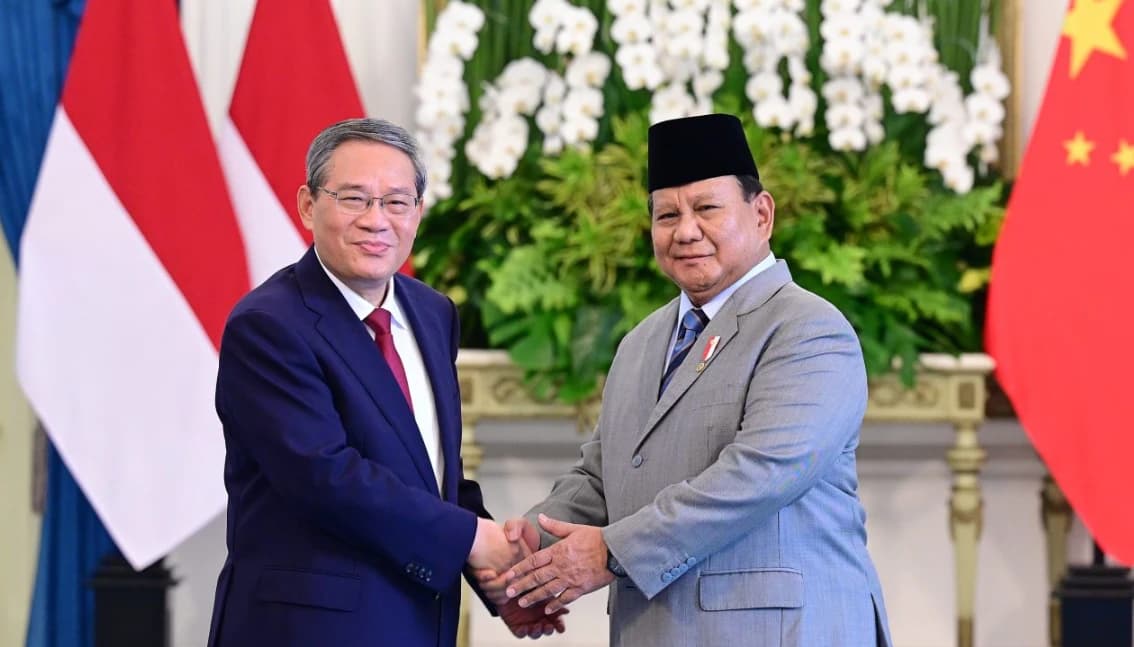
When President Xi Jinping met Indonesia’s Prabowo Subianto in Shenzhen after the APEC leaders’ summit, both sides emphasized a broader relationship that now stretches well beyond trade. Xi called for deeper cooperation in energy, minerals, artificial intelligence, digital economies and clean power, while urging the two countries to move toward a high-standard comprehensive economic partnership agreement. Prabowo, for his part, said Indonesia welcomed Chinese companies and promised a more stable, predictable investment climate.
Sentiment Indicators
That matters because Indonesia is trying to convert its resource base and population size into faster, higher-quality growth, while China is looking for dependable regional partners and new markets for its industrial and technology reach. The combination is particularly relevant for investors in commodities, infrastructure, electric-vehicle supply chains and digital platforms. Indonesia is one of the world’s key suppliers of nickel and other strategic minerals, and closer ties with China could accelerate processing capacity, power projects and manufacturing investment that support the next phase of industrialization.
The headline numbers already show the scale of the opportunity. On the sidelines of APEC, the two countries signed agreements worth $71.8 billion covering smart-city development, industrial production, infrastructure financing and technology to convert coal into ethanol. Indonesian officials say the deals should create jobs and encourage technology transfer, which is exactly the kind of spillover foreign investors want to see if capital is going to stay in the country for years rather than quarters.
For markets, the story is bigger than a one-off signing ceremony. It reinforces Indonesia’s pitch as a long-term investment destination and strengthens China’s commercial footprint in a region where supply chains are still being redrawn. Any progress toward a CEPA would matter because it could lower barriers, improve visibility for exporters and deepen ties across manufacturing, energy and digital services.
There are risks, of course. Big bilateral promises do not always translate quickly into operating assets, and investors will watch execution, financing terms and policy consistency in Jakarta. But if these projects move from photo-op to construction, they could support Indonesia’s growth story and give Chinese firms a larger role in one of Asia’s most important emerging markets.
For long-term investors, the key takeaway is simple: China and Indonesia are turning diplomatic warmth into economic ambition, and that can be constructive for infrastructure builders, mineral processors, energy developers and regional equity funds over the next several years.
| Entity | Gains | Losses |
|---|---|---|
| Indonesia | ▲More investment and jobs | ▼Pressure to deliver policy stability |
| China | ▲Wider regional economic influence | ▼Higher execution and financing risk |
| Infrastructure and tech firms | ▲New project pipeline | ▼Delayed approvals and buildout risk |
| Competing investors waiting on the sidelines | ▲None | ▼Slower access to deals |