Australian shares are set to open lower after a sharp selloff on Wall Street driven by a jump in US Treasury yields, stronger-than-expected US economic data and a rebound in oil prices that revives inflation worries.
ASX set to fall as U.S. yields jump and oil rises

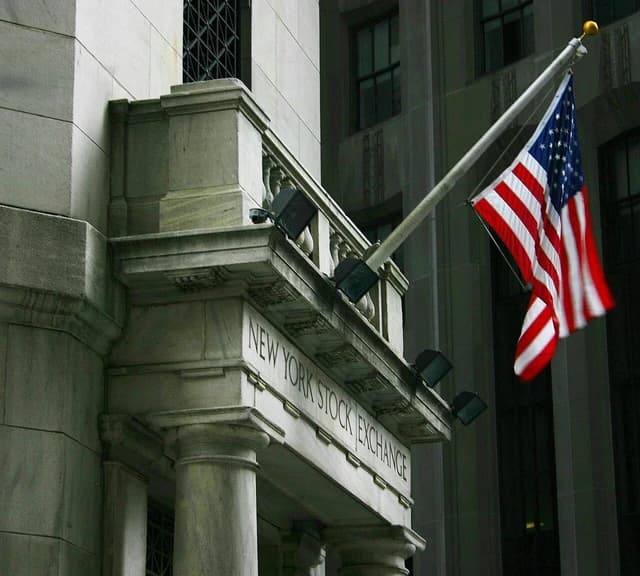
Futures pointed to a 97-point, or 1.1%, drop in the ASX at the open, extending a global risk-off move that took the S&P 500 down 0.7% and the Nasdaq 1.1% overnight. The immediate trigger was a surge in the 10-year Treasury yield to 5.12%, up from 4.96% late Tuesday, a level not seen since 2007 and one that raises the discount rate on equities, tightens financial conditions and makes borrowing more expensive across the economy.
Sentiment IndicatorsⓘProprietary · adalytica.com · September 28, 2026
This is a snapshot — live sentiment, awareness and momentum for 130+ markets update continuously in the dashboard.Open AlphaPulse
The move in bonds matters because it is no longer just about growth optimism. A preliminary survey showing US business activity at its strongest in more than five years pointed to resilient demand, but also to firmer pricing pressure. S&P Global said business costs were rising at the fastest pace in four years, with more expensive oil one of the drivers. That combination — stronger activity, higher costs and rising yields — is the kind of backdrop that can squeeze both margins and valuation multiples.
Oil added to the pressure. Brent crude for November delivery rose 3.5% to $US102.78 a barrel after earlier touching $US103.12, while the more actively traded December contract gained 2.8% to $US98.10. The rebound interrupts a recent slide but keeps crude far above the roughly $US72 level seen before the Iran war began. For markets, that matters because energy prices feed directly into inflation expectations, complicating the Federal Reserve’s effort to bring prices back to target.
DGS10 vs DGS2 — macro contextadalytica.com
Explore this data interactively — full history, time series and cross-market comparisons.Open AlphaPulse

The Fed has already responded once, lifting rates last week for the first time in three years, but officials are sounding increasingly hawkish. Fed governor Michael Barr said further policy adjustments are likely to be needed, and traders are now pricing better than a 50% chance of rate increases at both the October and December meetings, according to CME data. That shift leaves little room for equities to rely on the “soft landing” trade if yields continue higher.
The implications for Australian investors are direct. Higher US yields tend to weigh on global growth stocks and other long-duration assets, and can also pressure sectors in Australia that are sensitive to mortgage rates and consumer spending. The local market is already dealing with tighter financial conditions, and Wednesday’s futures move suggests offshore bond stress may overwhelm the support from otherwise solid corporate earnings.
There are still offsets. Strong profit reports from KB Home and General Mills show US corporate earnings have not yet rolled over, even if both companies pointed to tougher conditions ahead. But that mix is consistent with a late-cycle market: earnings remain decent, while higher rates and energy costs reduce the scope for multiple expansion. For the ASX, the key question now is whether the bond-market move is a one-day repricing or the start of a broader reset in risk appetite.
| Entity | Gains | Losses |
|---|---|---|
| Oil producers | ▲Higher crude prices | ▼None |
| Consumers | ▲None | ▼Higher fuel and borrowing costs |
| Equity investors | ▲Potential energy hedges | ▼Lower valuations, weaker risk appetite |
| Bondholders | ▲Higher yields on new debt | ▼Existing bond prices fall |