Athens shares tumbled for a second straight session on Friday, dragged lower by higher oil prices, worries over overstretched artificial intelligence plays and a broad selloff across European markets that is keeping investors defensive.
Athens shares fall as Greek banks drop

The benchmark at Euronext Athens fell 2.22% to 2,530.46, while the banking index slid 4.52% as the market’s heaviest weights were hit hard. The decline came as traders reassessed risk appetite after weakness on Wall Street and as energy prices added to inflation concerns, a toxic mix for rate-sensitive assets and indebted economies alike.
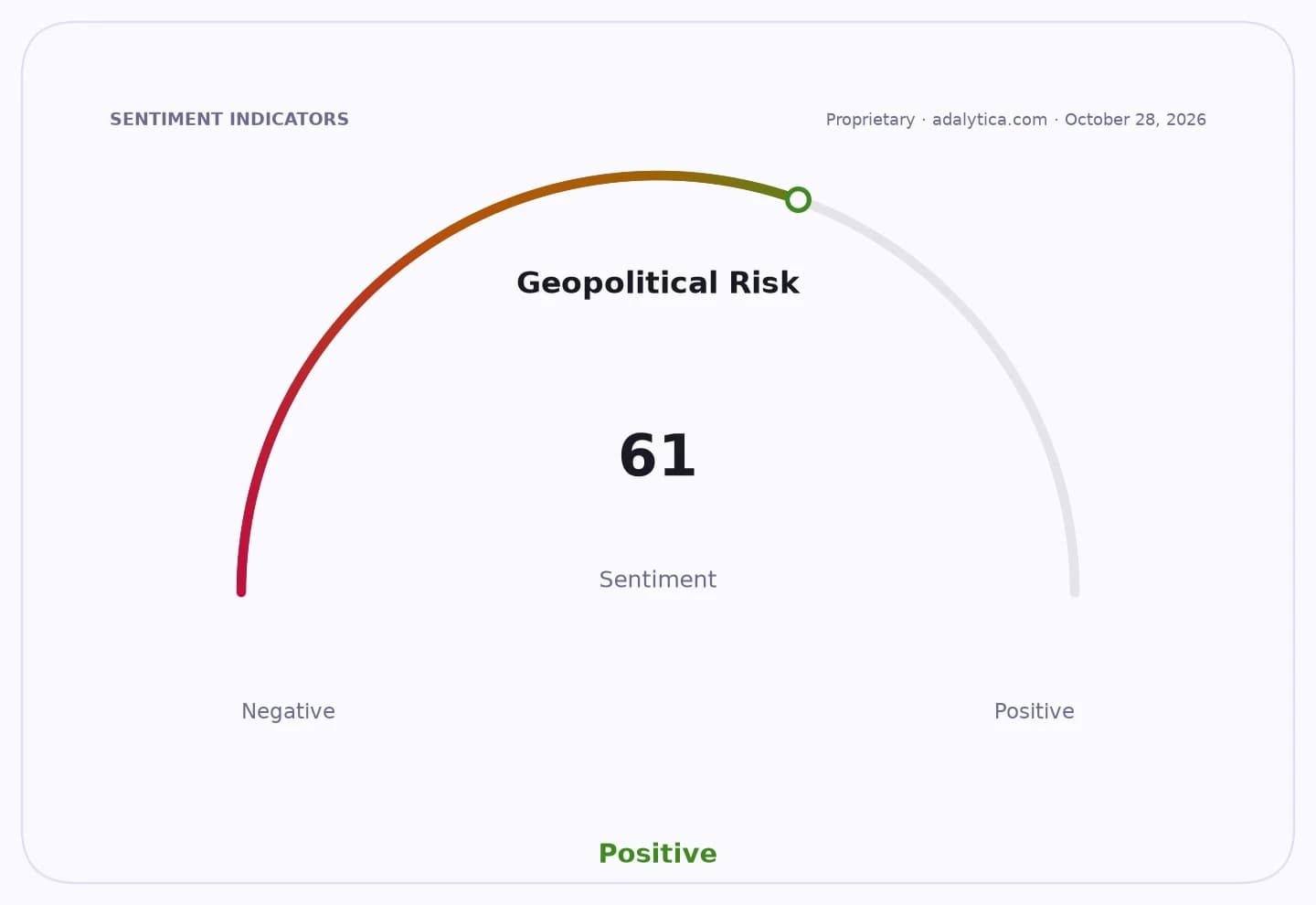
Sentiment Indicators

The damage in Athens was broad. Only 29 stocks advanced, 80 fell and 43 finished unchanged, even as turnover jumped to 761.34 million euros on 234.77 million shares, boosted by large pre-arranged trades in Eurobank. Eurobank alone accounted for 315.5 million euros of trading, including about 261.85 million euros in block deals, underlining how much of the day’s volume was driven by institutional repositioning rather than fresh conviction buying.
Banks were the clear pressure point. National Bank of Greece dropped 5.53%, Piraeus Bank lost 5.21%, Alpha Bank fell 4.21% and Eurobank slipped 3.98%, while CrediaBank and Optima bank also declined sharply. That matters because Greece’s market still leans heavily on financials; when banks sell off this hard, the whole index loses its anchor.

Energy names offered some resistance, with Motor Oil up 1.93% and HELLENiQ Energy gaining 1.37%, reflecting the direct benefit of firmer crude. But the gains were too small to offset the broader de-risking. Titan, Athens International Airport and EYDAP also rose, yet the market closed near session lows, a sign that buyers had little appetite to step in.
The message from Europe was similar. The Stoxx 600 fell 0.89%, with the FTSE 100 down 0.71%, the DAX off 1.33% and Italy’s FTSE MIB sliding 2.52%. Investors are increasingly uneasy about the durability of the AI trade after a powerful run in big technology names, while higher fuel costs risk feeding stickier inflation just as growth momentum in the euro zone shows signs of strain.
That combination matters for investors because it raises the odds of a more selective market. Rising oil can squeeze margins, complicate central-bank decisions and pressure consumer spending. At the same time, a pullback in AI enthusiasm could hit global risk sentiment well beyond the U.S., especially in markets that have already run hard and are vulnerable to valuation resets.
For Greece, the immediate technical question is whether 2,500 points can hold as support after two steep declines. If it breaks, the market may be forced into a deeper correction, particularly if banks remain under pressure. For now, the trade is clear: energy exposure is getting a relative bid, while banks and cyclicals are where the selling pressure is concentrating.
| Entity | Gains | Losses |
|---|---|---|
| Motor Oil / HELLENiQ Energy | ▲higher crude margins | ▼broader risk-off mood |
| Greek banks | ▲ | ▼heavy index drag |
| Athens market | ▲ | ▼second straight sharp drop |
| European equities | ▲ | ▼oil inflation and AI de-rating |