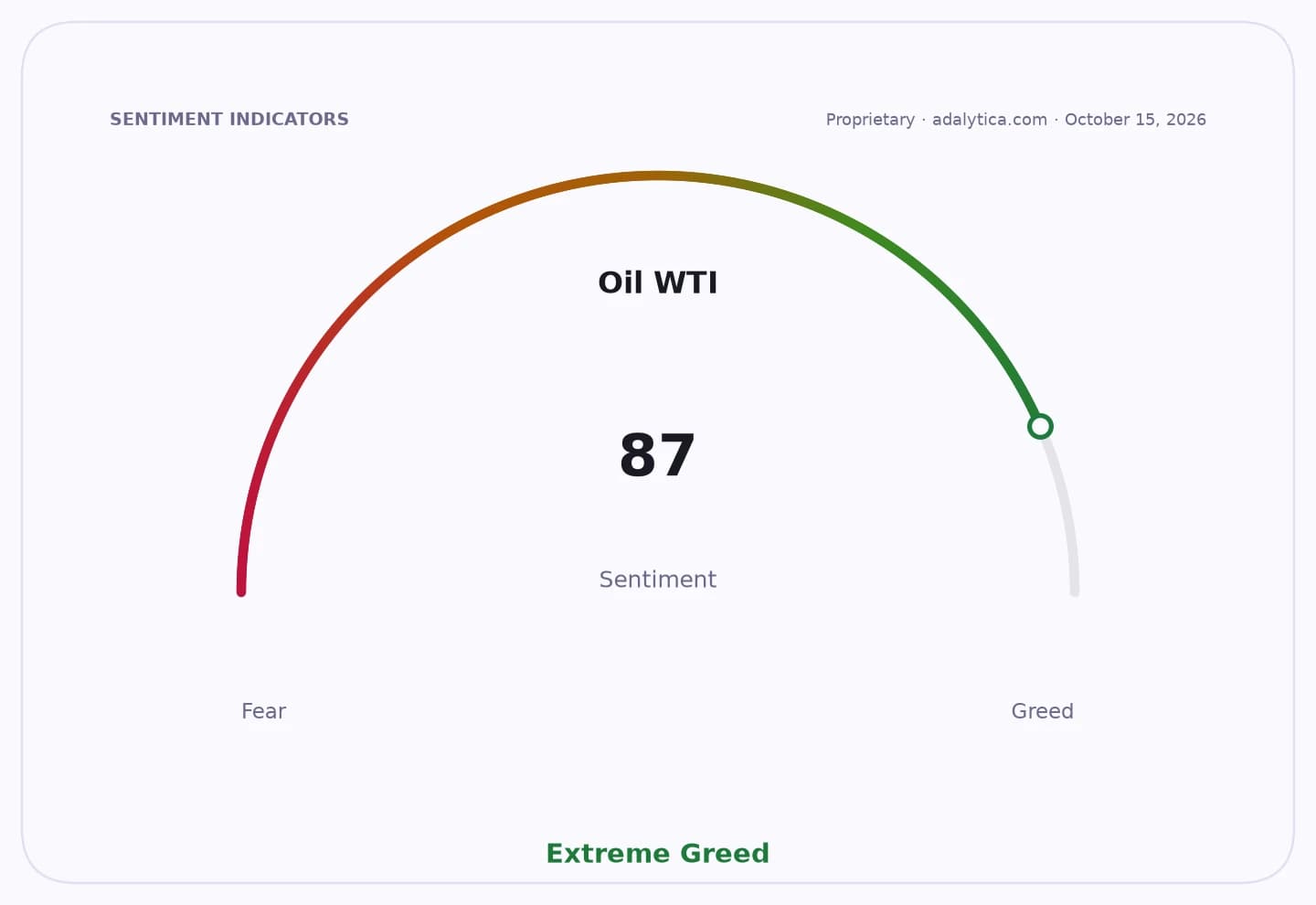
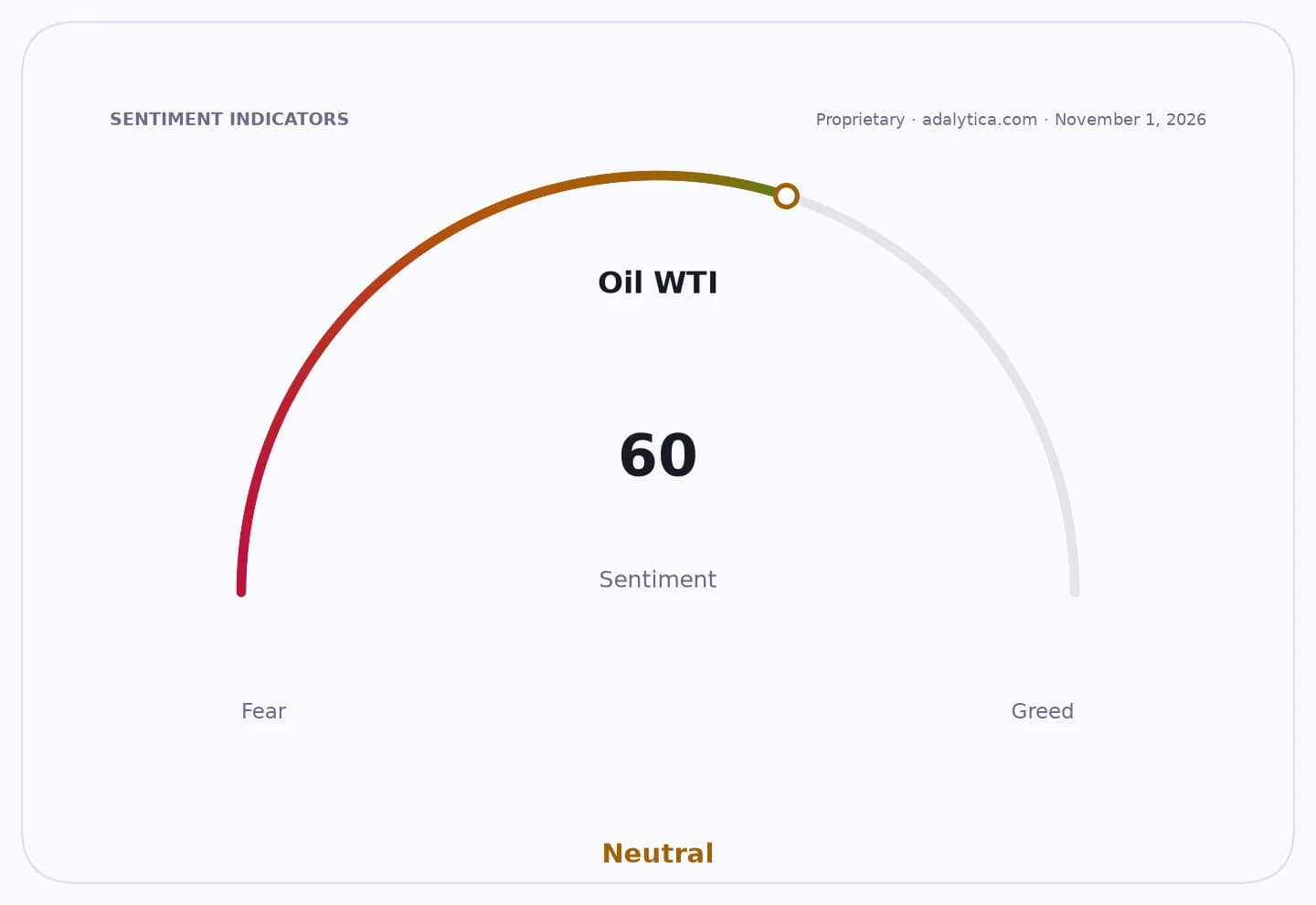
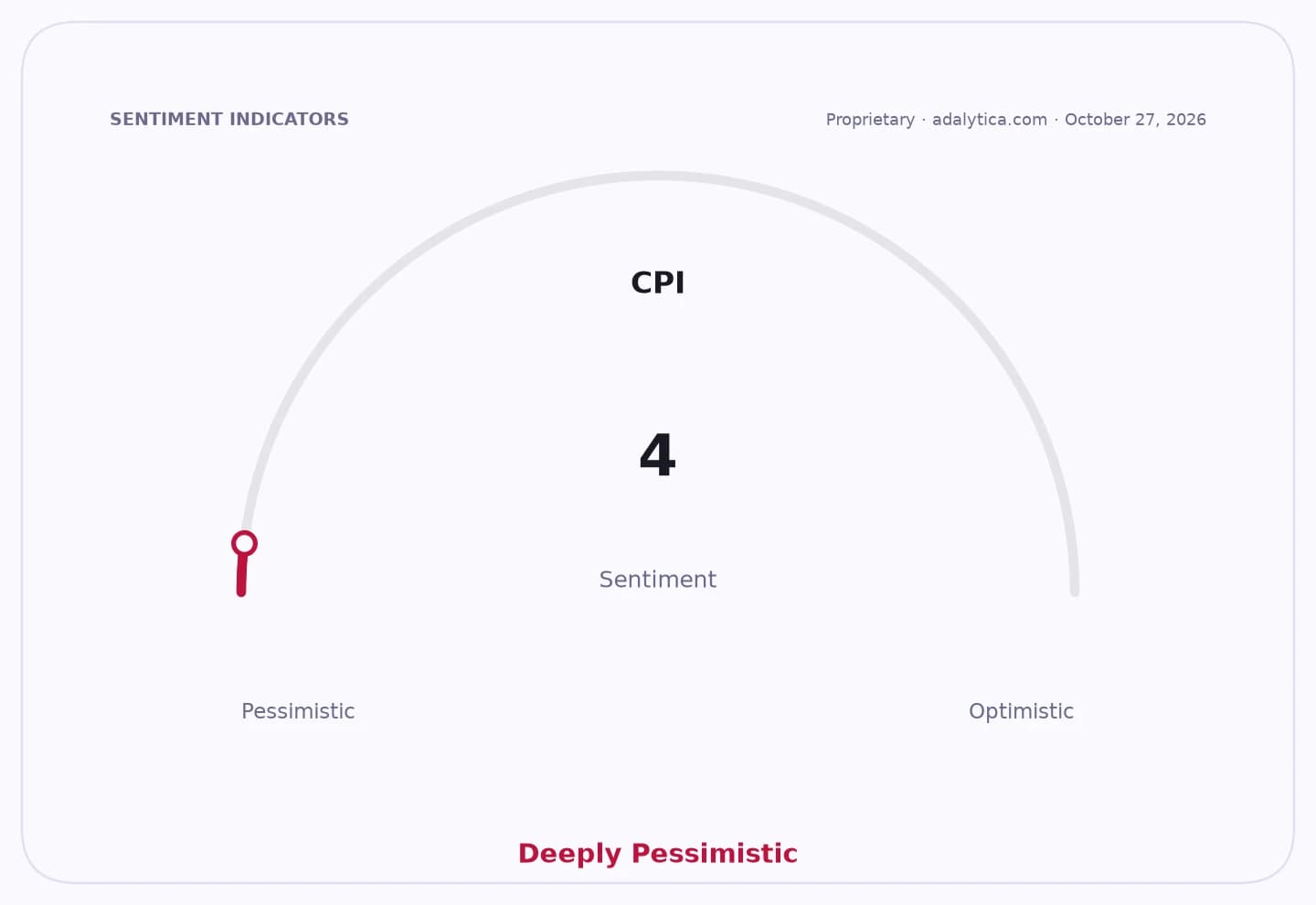
Greece has quietly been paying more for oil and natural gas imports this year, and the hit is only getting bigger as the euro weakens against the dollar and global energy prices climb.
Greece Fuel Import Bill Rises as Euro Weakens
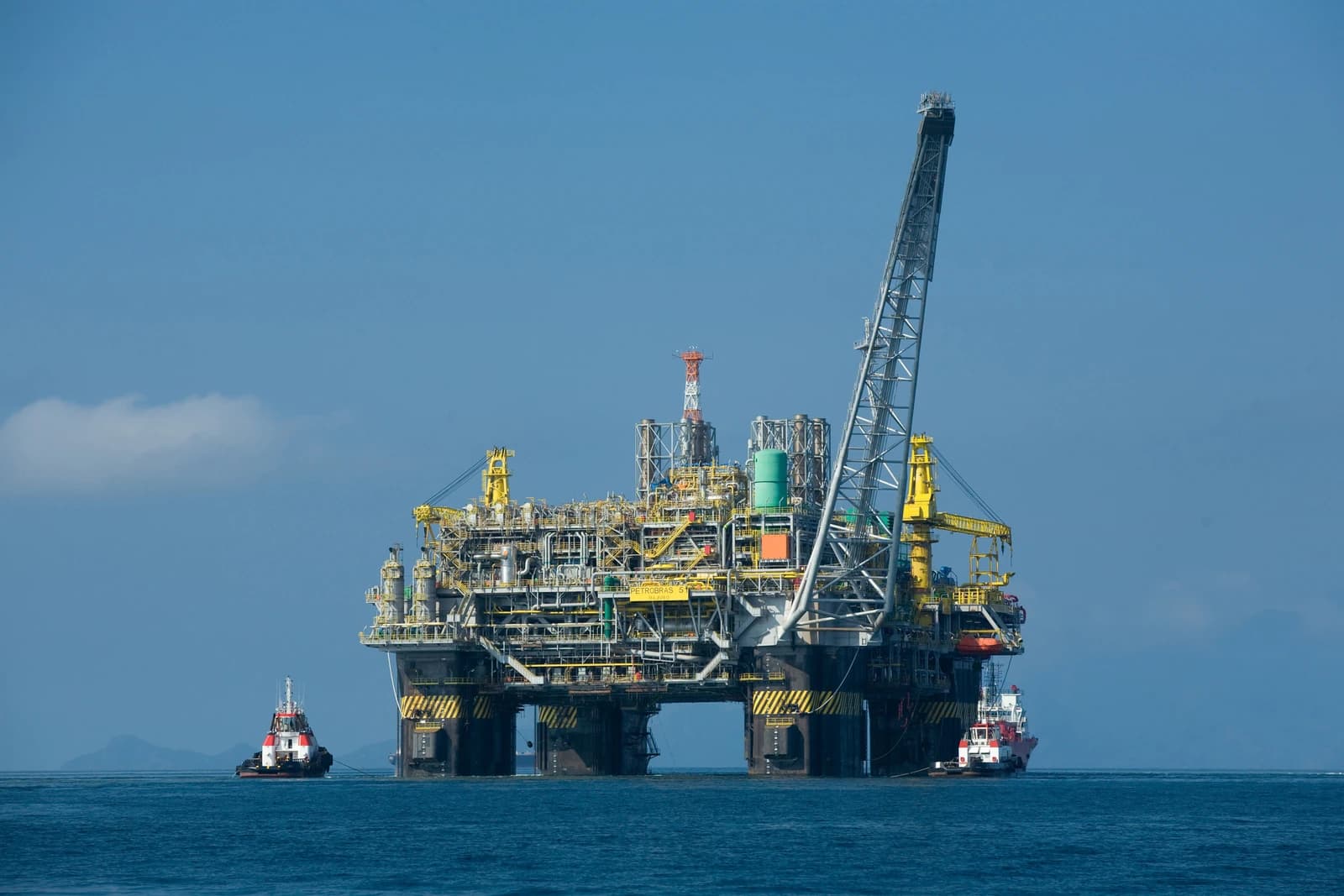
That matters because energy is one of the fastest ways a currency move becomes real economic pain. From January through August, Greece spent about 13 billion euros on fuel imports, up from 10 billion euros a year earlier, according to Bank of Greece data cited in the current-account balance. Of the roughly 3 billion-euro increase, about 528 million euros came from the euro’s 4.5% cumulative decline against the dollar. In other words, even before the latest jump in crude and gas prices, the exchange rate itself was making every barrel and every cargo more expensive.
Sentiment Indicators
This is the kind of hidden inflation investors should pay attention to. Oil and gas are priced in dollars, so a weaker euro acts like a tax on importers, households and businesses across the euro zone. The effect is especially damaging in Greece, where higher transport and heating bills can squeeze consumer spending and widen pressure on the trade balance. A currency that buys less energy also leaves less room for policymakers and companies to absorb shocks when winter demand rises.
The latest move in commodity markets makes the problem worse. The source material says oil was still below $100 a barrel in August and gas near 78 euros per thermal megawatt hour, but both have since moved higher, with oil above $105 and gas above 80 euros. That means the additional import bill is likely to keep rising as long as energy prices stay firm and the euro remains under pressure.
For investors, the message is straightforward: currency and commodity trends can matter just as much as the headline price of crude. A stronger dollar tends to favor producers and energy exporters while hurting import-dependent economies and consumer sectors that face higher input costs. That helps explain why energy funds and producers have remained resilient while importers carry the burden of a more expensive fuel bill.
The longer-term narrative here is not just about one country’s fuel bill. It is about how geopolitical tension, tight energy markets and a softer euro can combine to create a slow-moving but persistent drag on Europe’s economy. Greece is the immediate example, but the same mechanism can ripple through the broader euro area if energy prices stay elevated and confidence in the single currency keeps slipping.
For long-term investors, this is a reminder to own the businesses that benefit from structural energy demand and to be cautious about companies and countries that depend heavily on imported fuel. The hidden increase in oil and natural gas costs is worth watching, because it can shape inflation, margins and earnings far beyond the energy sector itself.
| Entity | Gains | Losses |
|---|---|---|
| Oil and gas exporters | ▲Higher euro-denominated import bills | ▼Import-dependent economies |
| Greek economy | ▲None | ▼Bigger trade and energy bill |
| Energy producers | ▲Stronger pricing power | ▼Fuel consumers |
| Euro holders | ▲None | ▼Purchasing power against dollar-priced energy |