Greece is moving quickly to distance its financial system from a U.S. probe into possible ties between an unnamed Greek bank and Iran, a case that could test how firmly Athens can keep its lenders clear of sanctions risk while preserving access to Western markets.
Greece Addresses U.S. Probe Into Bank Sanctions Risk
The finance ministry said Greek authorities are in contact with U.S. officials over the inquiry, which is part of Washington’s “Economic Outcast” operation targeting sanctions evasion and illicit financing linked to Tehran. That matters because even the suspicion of sanctions exposure can force banks, shipping companies and their counterparties to tighten compliance, freeze transactions and reassess risk on anything touching cross-border dollar clearing.
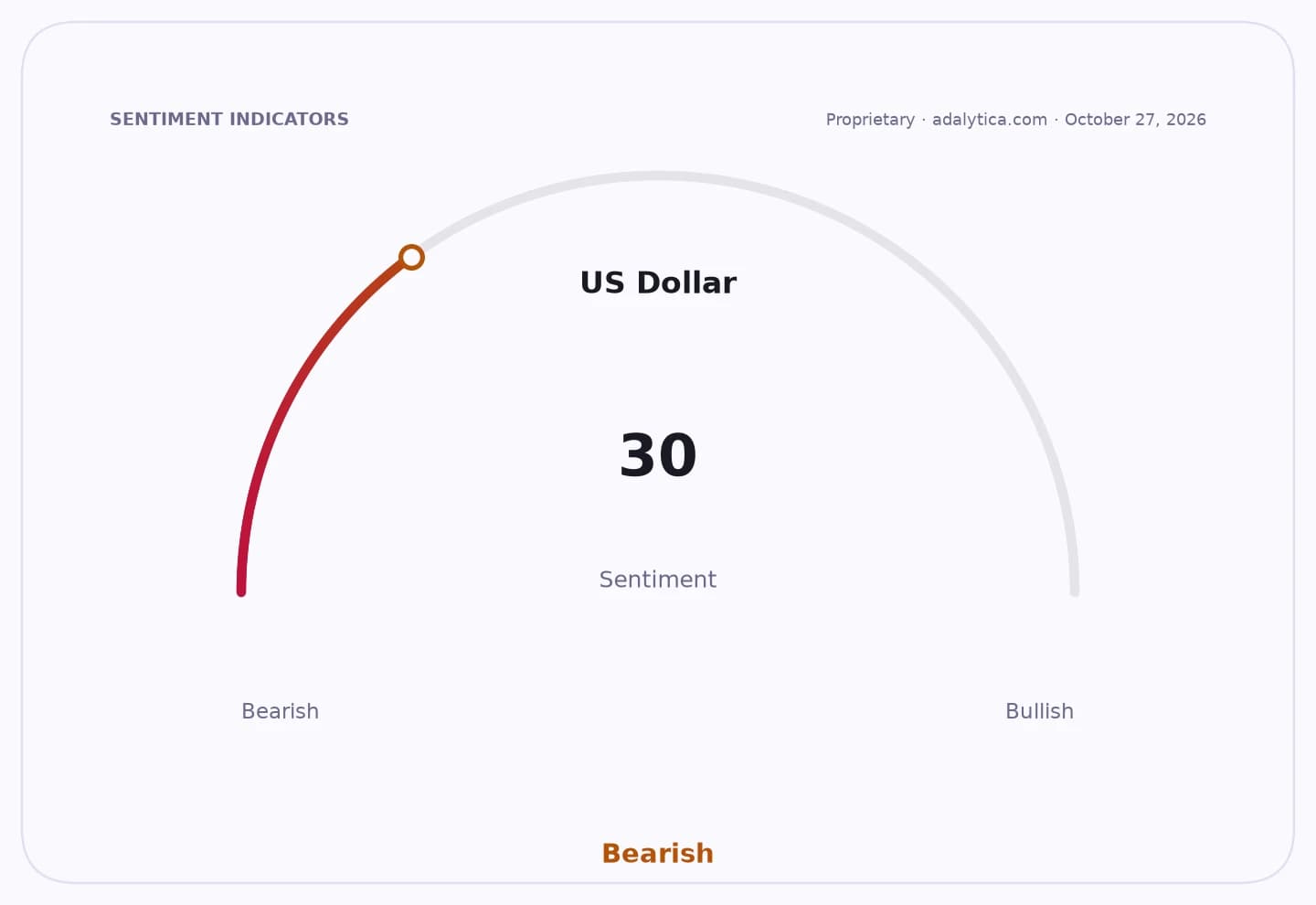
Sentiment Indicators
Athens is signaling that it wants no ambiguity. The ministry said Greece applies existing sanctions and supports efforts to combat money laundering and terrorist financing, adding that it is reviewing all available information and taking action under national, European Union and international law. For investors, that is the key message: the Greek state is trying to contain reputational spillover before it infects the broader banking sector or raises financing costs for domestic lenders.
The U.S. also sanctioned the law firm Karnakis and Karnakis and Roxette Maritime Shipping and Trading S.A., linking them to corporate structures and vessels allegedly used to move Iranian oil, petrochemicals and steel. That widens the story beyond one bank. It points to a broader enforcement push at the intersection of banking, maritime finance and sanctions compliance — areas where Greek firms are often exposed because of the country’s shipping footprint and its role as a regional financial hub.
Geopolitical Risk vs GREKadalytica.com
Explore this data interactively — full history, time series and cross-market comparisons.
The market impact should be limited for now, but the asymmetry is real. Greece’s banks have spent years rebuilding credibility after the sovereign debt crisis, and their access to international funding depends on staying inside the rules. Any confirmed breach would invite tighter scrutiny from correspondent banks, regulators and rating agencies. Even without formal penalties, it can slow deal flow and raise compliance costs.
That is why the response matters as much as the investigation. Greece is not just reacting to a diplomatic headache; it is defending the credibility of its banking system at a time when investors have been willing to re-rate Greek financial assets on the belief that the sector is finally normalizing. The euro-denominated economy has benefited from improved sentiment, while Greek bank shares have already shown they can be volatile when risk appetite turns. The current message from Athens is designed to prevent a sanctions story from becoming a funding story.
For now, the investable takeaway is straightforward: this is a compliance event, not yet a systemic one. But if Washington’s probe expands or identifies specific institutions, the pressure will fall first on lenders with the deepest cross-border and shipping-related exposure, while the cleaner names could emerge as relative winners. Investors should watch for any knock-on effects in Greek financials, shipping-linked service providers and exchange-traded vehicles such as GREK and EUFN, where headlines can move sentiment faster than fundamentals.
| Entity | Gains | Losses |
|---|---|---|
| Greek government | ▲Shows compliance resolve | ▼Faces reputational scrutiny |
| Clean Greek banks | ▲Relative safety premium | ▼Sector-wide uncertainty |
| US authorities | ▲Stronger sanctions enforcement | ▼Higher diplomatic friction |
| Sanctioned firms and exposed counterparties | ▲— | ▼Funding access and reputation |