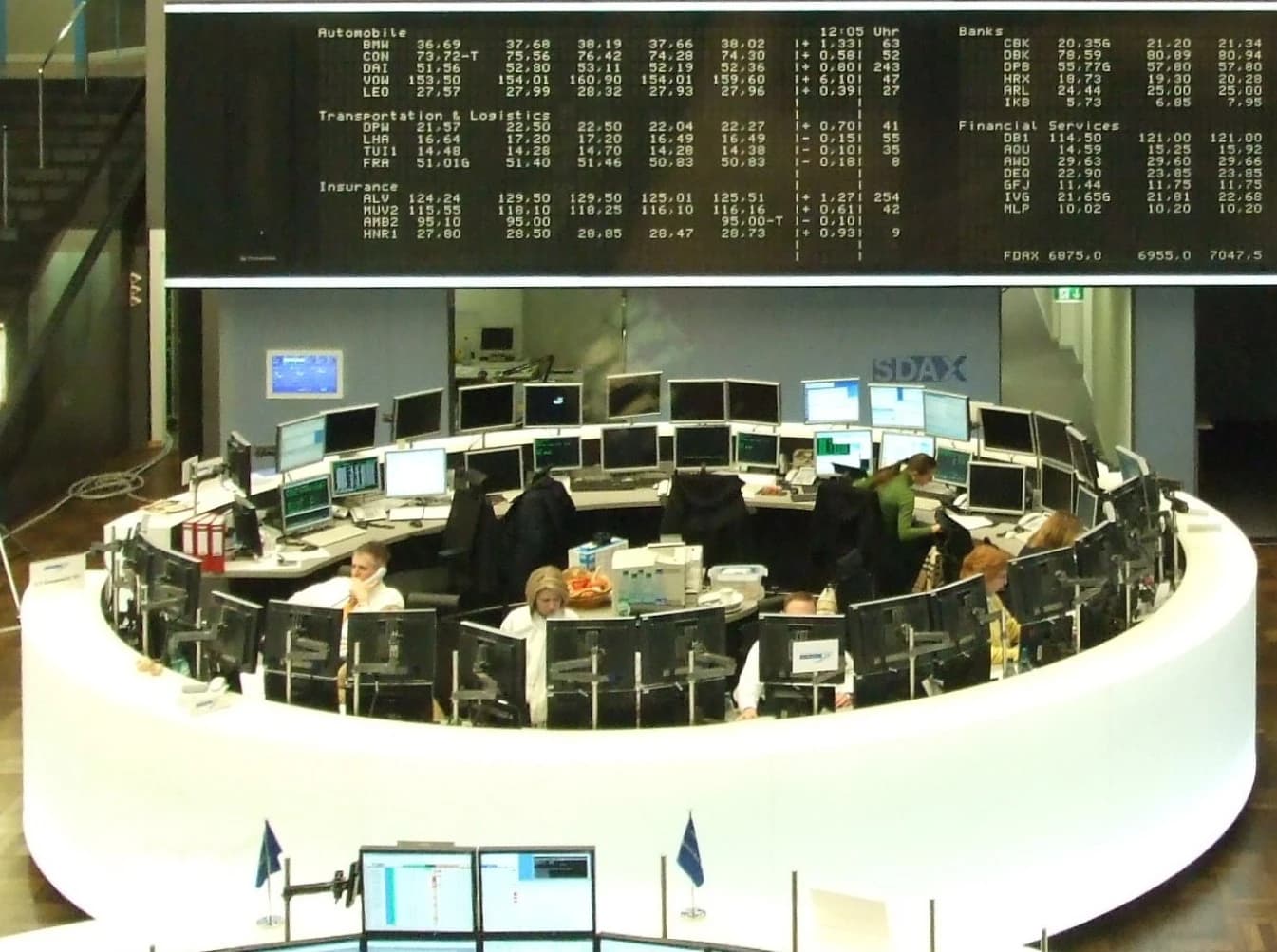
The Austrian ATX was little changed on Thursday even as Germany’s DAX extended losses and Asian equities traded without a clear direction, with investors focused on rising oil prices, stronger-than-expected US data and the resulting jump in bets on another Federal Reserve rate increase.
ATX Holds Steady as DAX Falls on Oil and Yields
That mix matters because it shifts the market debate back toward inflation and borrowing costs at a time when global equity valuations remain sensitive to bond yields. In Europe, the DAX opened 0.58% lower at 25,263.11 and stayed in the red, while the ATX slipped at the open before moving back toward the flat line. In Asia, Tokyo’s Nikkei 225 rose 0.76%, but the Shanghai Composite lost 1.22% and Hong Kong’s Hang Seng was modestly lower, underscoring how uneven the risk response has become.
Sentiment IndicatorsⓘProprietary · adalytica.com · September 29, 2026
This is a snapshot — live sentiment, awareness and momentum for 130+ markets update continuously in the dashboard.Open AlphaPulse
The common thread is the oil market. Brent and WTI resumed their climb after recent declines, reviving concern that higher energy costs could keep consumer prices sticky and force central banks to stay restrictive for longer. That is particularly uncomfortable for equity investors because it pushes up government bond yields, tightens financial conditions and compresses the present value of future earnings — a bigger problem for growth-heavy markets than for more defensively positioned ones.
The DAX was the clearest casualty of that repricing. German shares are especially exposed to the bond-yield channel and to the hit from higher energy costs, which can pressure industrial margins and consumer demand. The benchmark’s weakness also suggests investors are reluctant to pay up for cyclicals while the market is still rethinking the likelihood of another Fed move. In the 10-year US Treasury market, yields climbed to 5.11%, the highest since 2007, while futures pricing now assigns a 70% probability to an October rate increase, up from about 55% previously.
That backdrop leaves the ATX comparatively resilient, at least for now. Vienna’s market has not been immune to the broader selloff, but Thursday’s steadier tone suggests investors are differentiating between markets with heavier exposure to global growth and those with a more selective sector mix. Still, a sustained rise in oil and yields would eventually filter through all European equities, particularly if US financial conditions tighten further.
For Asia, the picture was more mixed. Japanese shares managed gains, likely reflecting the weaker yen and a different earnings mix, while mainland Chinese and Hong Kong stocks struggled with the same global rate pressure that weighed on Europe. The region’s response also reflects its own dependence on imported energy, which means higher oil can act as both an inflation shock and a trade-cost shock.
The next test for markets is whether the oil rally persists and whether Washington’s diplomatic talks with Iran — alongside the Trump-Xi meeting — produce any easing in geopolitical risk. For investors, the immediate message is straightforward: as long as energy prices keep feeding inflation fears, the market will favor balance-sheet strength, pricing power and defensives over more rate-sensitive cyclicals.
| Entity | Gains | Losses |
|---|---|---|
| Energy producers | ▲Higher crude prices | ▼None from the move |
| European rate-sensitive stocks | ▲Higher yields, inflation fears | ▼Valuations |
| DAX exporters/industrials | ▲Weak growth outlook | ▼Margins and sentiment |
| ATX | ▲Relative stability | ▼Limited upside if yields rise further |