Australian household spending rose 0.6% in September, a sign that consumers are still carrying the economy even as policymakers weigh whether demand is strong enough to keep inflation sticky and delay any easing in interest rates.
Australia Household Spending Rises 0.6% in September

That matters because consumption is the dominant engine of Australian growth, and a firmer-than-expected September print suggests the third quarter finished on a steadier footing than many feared. With spending up 0.6% on the month and running 0.72% above August’s level in the latest reading, the message is that fiscal support is still filtering through to households at a time when the labor market remains relatively resilient. The unemployment rate edged to 4.2% in September from 4.1%, hardly a recession signal, and core inflation is still climbing, with the trimmed-mean consumer price measure rising 0.33% on the month and 2.55% over the latest reported year.
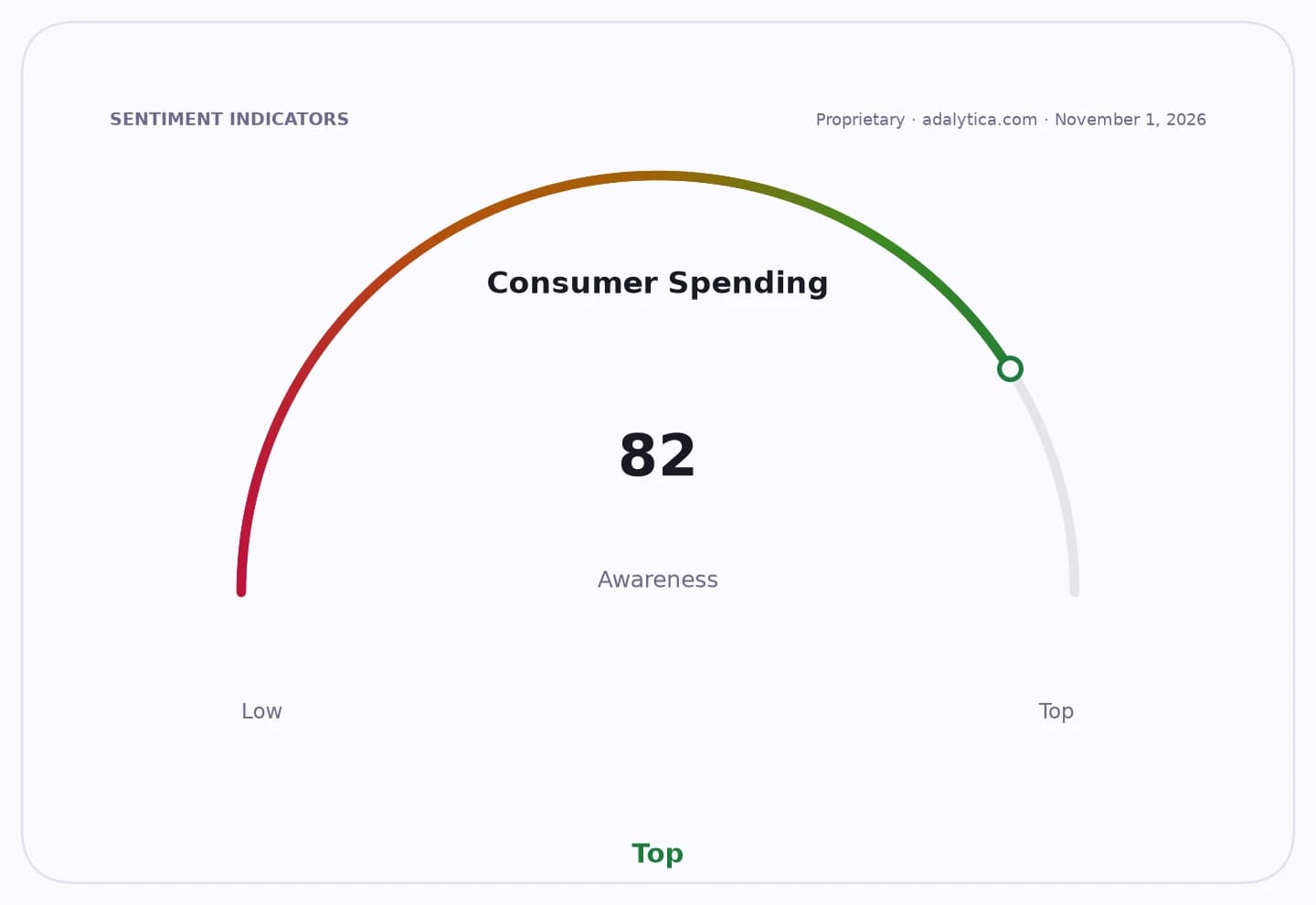
Sentiment Indicators
Consumer Spending
For investors, that combination is crucial. Stronger spending reduces the odds of an early rate-cut cycle and keeps pressure on duration-sensitive assets, while supporting retailers, banks and domestically exposed cyclicals that depend on household cash flow. At the same time, it complicates the case for an aggressive re-rating in consumer discretionary shares, because resilient demand can keep the Reserve Bank cautious just as mortgage holders are still absorbing higher borrowing costs.
The market has already been trying to thread that needle. Consumer discretionary ETF XLY and Australia’s equities proxy EWA have both traded through sharp swings over recent months, reflecting the tension between improving demand and the risk that policy stays restrictive for longer. Technical readings on both funds have pointed to a market still searching for conviction rather than a clean trend, but the macro setup is turning more important than the day-to-day tape: if spending holds up into year-end, earnings revisions for retailers, travel and housing-linked names can improve, while bond bulls may need to wait.
Consumer Spending
The bigger narrative is that Australia is entering a late-cycle phase where government support is cushioning households just enough to avoid a hard slowdown, but not enough to let inflation fade quickly. That is a better backdrop for select equities than for broad macro complacency. In our view, the market underestimates how long this “higher for longer” setup can last if consumer demand stays intact.
Investors should treat the latest spending gain as a warning against assuming rate relief is imminent. The better trade is to stay selective in domestic cyclicals, favor businesses with pricing power and balance-sheet strength, and avoid betting too early on a rapid policy pivot.
| Entity | Gains | Losses |
|---|---|---|
| Australian retailers | ▲Better sales volumes | ▼Margin pressure if rates stay high |
| Banks | ▲Healthier household spending | ▼Higher default risk if stimulus fades |
| Reserve Bank of Australia | ▲Stronger growth data | ▼Less room to cut rates |
| Bond bulls | ▲— | ▼Delayed easing hopes |