Government spending is emerging as a real contributor to Australia’s inflation problem, even if it is not the only one, because fiscal policy is still adding demand at a time when the economy is already running hot.
Australia government spending and inflation pressure
CPI
That matters because the Reserve Bank is relying on interest rates to do the heavy lifting on inflation, and the latest argument in Canberra is whether the budget can take some of that pressure off. With the RBA expected to lift rates again — a fifth increase this year and the 18th in five years — the debate is no longer academic. If fiscal policy keeps boosting household demand through tax cuts, subsidies and new spending, the central bank has to stay tighter for longer.
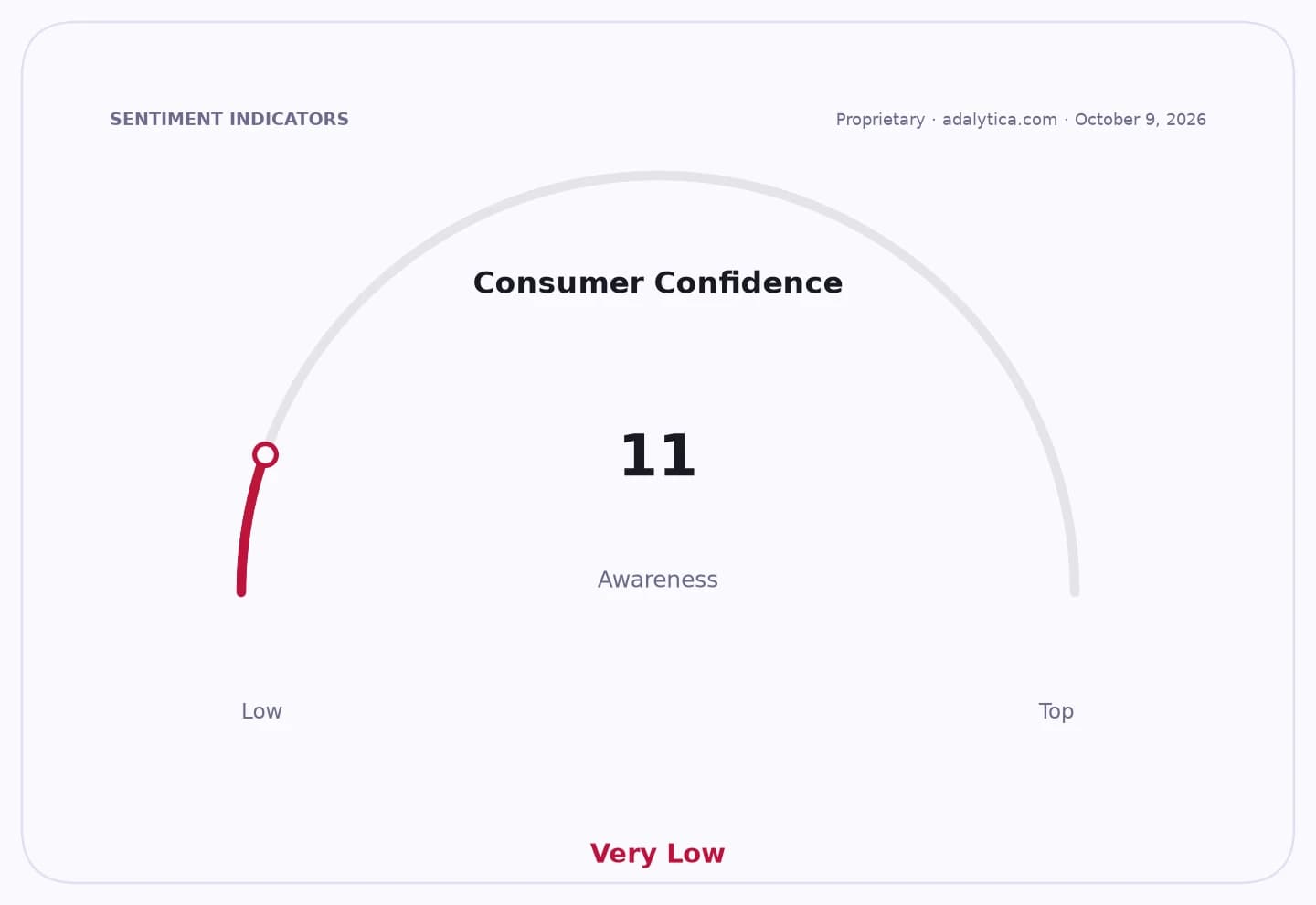
Sentiment Indicators
CPI
The charts suggest the Albanese government has not been helping on that front. Overall spending has remained unusually elevated, near pandemic-era levels, even after the emergency phase has passed. The budget balance has improved in headline terms, helped in part by stronger inflation lifting tax receipts, but once those cyclical effects are stripped out, the underlying position has deteriorated in each year under Labor due to policy choices.
That distinction matters for investors because it gets to the sustainability of disinflation. A government can partially offset inflation with targeted cuts, but it can also reinforce it by trying to cushion voters from higher prices. In practice, Canberra has leaned toward relief — from cheaper child care and bulk-billing changes to tax cuts — which may be politically popular but adds to aggregate demand. Treasurer Jim Chalmers argues the government is balancing inflation and budget pressures, but the market’s concern is whether that balance is still tilted toward more spending than the economy can absorb.
The economics are straightforward. Inflation rises when demand outruns supply, and monetary policy works by suppressing demand broadly. Fiscal tightening can do the same more selectively. That is why economists say some spending cuts could substitute for part of a rate hike. Chris Richardson’s estimate that $7 billion to $10 billion of annual spending cuts is roughly equivalent to one rate increase underscores the scale of the trade-off. The exact figure is imprecise, but the direction is clear: less fiscal stimulus means less work for the RBA.
For borrowers, the difference is material. Higher rates hit mortgages, corporate debt and investment directly, while spending cuts would distribute the pain more narrowly across recipients of subsidies or public programs. For investors, the issue is whether Australia’s rate cycle has to go further than otherwise because fiscal policy remains expansionary. That affects bond yields, bank margins, housing affordability and consumer-sensitive sectors, especially if inflation proves stickier than expected.
The political economy also cuts both ways. The government can target programs it deems lower priority, and opponents are already pointing to measures such as battery subsidies, EV incentives and fuel tax credits. But cutting spending has its own economic cost, especially for households already facing a high cost of living. That leaves policymakers choosing between two types of pain: a broader squeeze from the RBA or a narrower one from the budget.
For markets, the narrative is less about one budget line item than about whether fiscal policy is working against disinflation. If the government follows through on savings, it could ease pressure on the RBA and reduce the risk of more rate hikes. If it does not, monetary policy will remain the main brake on demand, and inflation may take longer to settle back toward target.
| Entity | Gains | Losses |
|---|---|---|
| RBA | ▲Easier inflation fight | ▼Need for repeated rate hikes |
| Borrowers | ▲Less if spending cuts replace hikes | ▼More if rates stay higher |
| Government recipients | ▲Relief from subsidies and transfers | ▼Smaller payments or fewer programs |
| Inflation fighters | ▲Lower demand from fiscal restraint | ▼Persistent pressure if spending stays high |