Australian housing is heading for a long period of low real returns, and that should change how investors think about the country’s biggest asset class. Judo Bank economist Warren Hogan says the era of rapid property wealth creation is over, with house prices likely to only just outpace inflation over the next two decades.
Australian housing may underperform inflation for years
That is a blunt warning for a market that has long been priced around perpetual appreciation. Hogan, speaking on Mark Bouris’s Straight Talk podcast, said he expects a peak-to-trough decline of as much as 12% before the market bottoms around autumn next year. For households, that means the housing market may stop acting like a one-way wealth machine just as living standards have already been under pressure for five straight years.
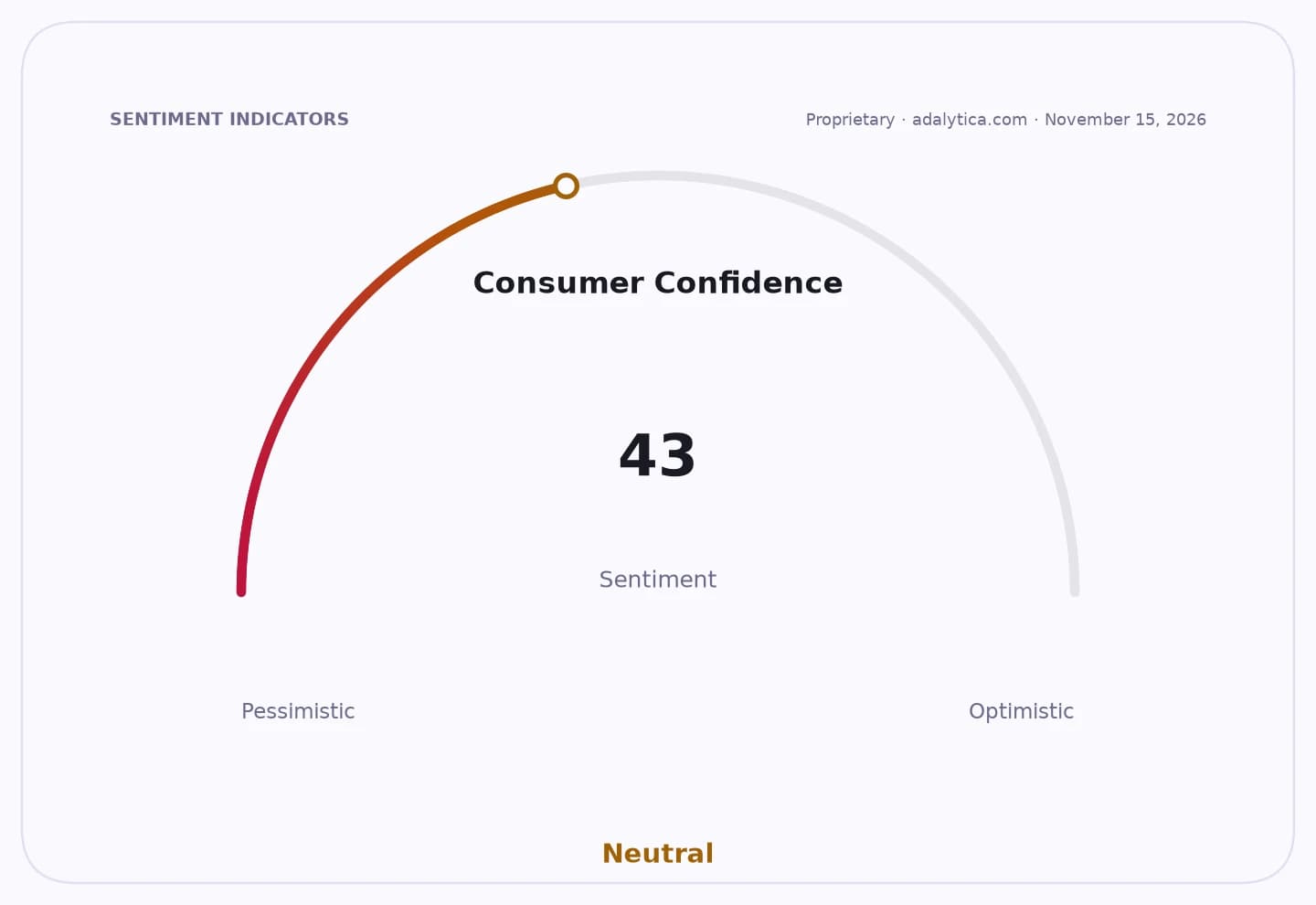
Sentiment Indicators
The bigger economic point is that Australia’s property boom was built on an extraordinary rate backdrop that no longer exists. Hogan blamed the surge in house prices on the decade after the global financial crisis, when real rates hovered near zero and borrowing costs were far cheaper than they should have been. In his view, the combination of ultra-loose money and heavy government spending left housing overcooked and the economy more fragile than it looked.
That matters because housing is not just a consumer asset in Australia; it is the collateral base for the banking system, household confidence and spending. Hogan warned that if the Reserve Bank of Australia were forced to take the cash rate from 4.35% to 6.5%, the economy could tip into a financial crisis, with mortgage holders and small and medium-sized businesses taking the biggest hit. He also argued the RBA has been too slow to respond to inflation and that federal recurrent spending should be trimmed by 10% to 20% to restore stability.
The investable implication is that the market should stop treating Australian property as a blanket buy-and-forget trade. In an environment of slower nominal gains and weaker real wealth creation, location and quality matter far more than beta to the national housing cycle. The warning also reinforces the case for banks to be viewed through a credit-cycle lens rather than a simple dividend lens: if rates stay restrictive for longer, credit stress rises before any broad housing recovery does.
That tension is visible in the market. Commonwealth Bank, Westpac and ANZ have all traded with elevated momentum at points this year, but the underlying story is still one of an economy balancing sticky inflation, higher-for-longer rates and household strain. The data backdrop is not yet a crash, but it is consistent with an economy where asset-price support is fading and earnings growth will have to do more of the work.
Hogan’s more constructive twist is that the pain may eventually shift wealth toward younger Australians as asset returns soften and labor shortages intensify when baby boomers leave the workforce. He expects that shortage to lift wages over time, which would make the next phase of Australia’s economy more about income growth than property leverage. For investors, that is a profound regime change: the next big opportunity may be found not in chasing another housing boom, but in owning the businesses that benefit from tighter labor markets, more disciplined credit, and a consumer that is forced to earn rather than borrow its way to prosperity.
| Entity | Gains | Losses |
|---|---|---|
| Younger workers | ▲Higher wage leverage | ▼Slower property inflation |
| Banks | ▲Higher lending spreads | ▼Rising mortgage stress |
| Home buyers | ▲Better entry prices | ▼Less capital-gain upside |
| Existing homeowners | ▲None | ▼Flat real housing wealth |