New Zealand house prices have gone nowhere in real terms over the past decade, underscoring a shift in one of the country’s most important wealth engines and leaving buyers with more bargaining power as the market cools further.
New Zealand House Prices Flat in Real Terms
Cotality said national values fell 0.4% in October for a seventh straight monthly decline, taking prices 2.3% below a year earlier and leaving the median home value at $790,987. Over the past 10 years, house values have risen an average 3% a year, almost exactly matching inflation of about 34% over the same period.
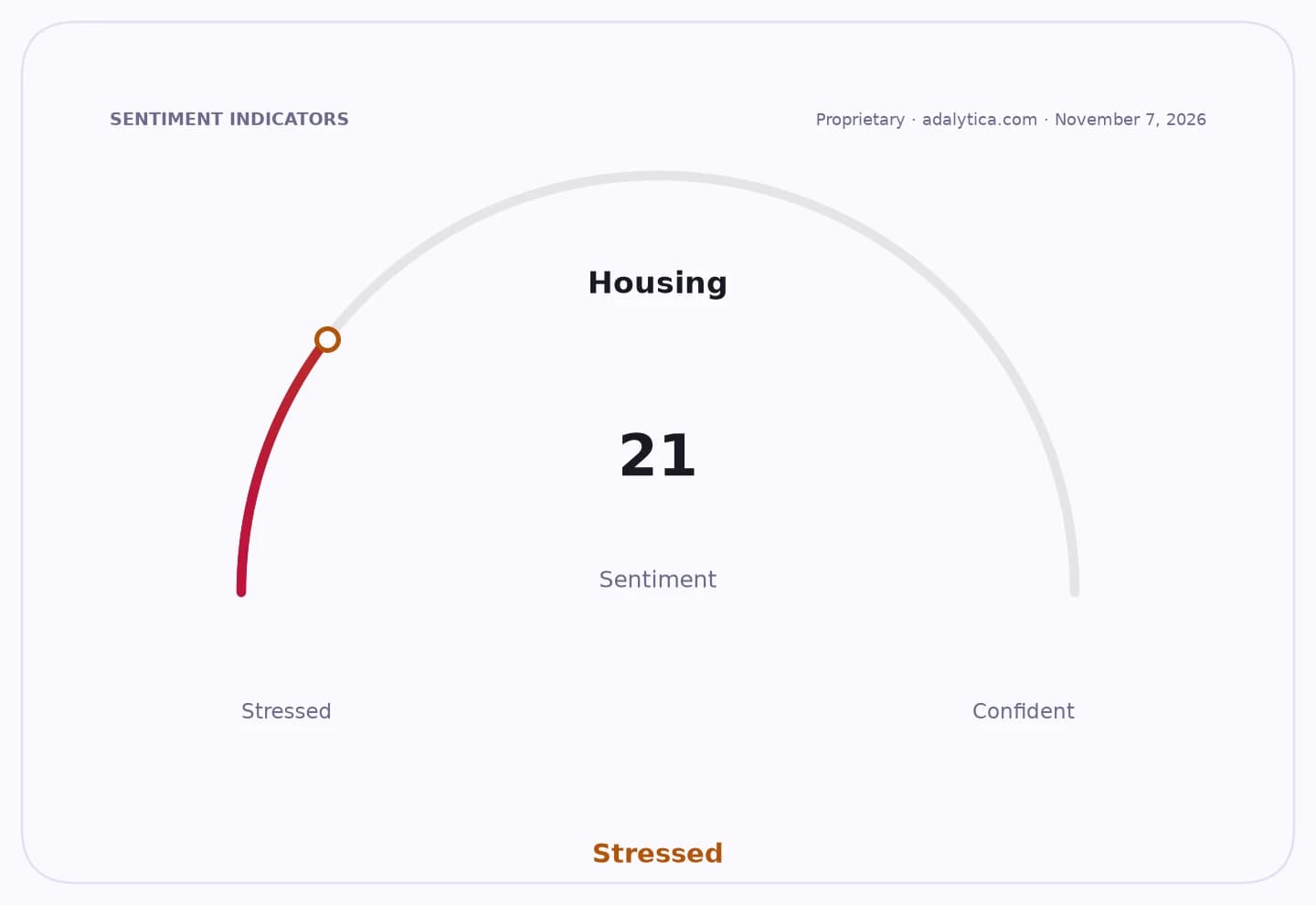
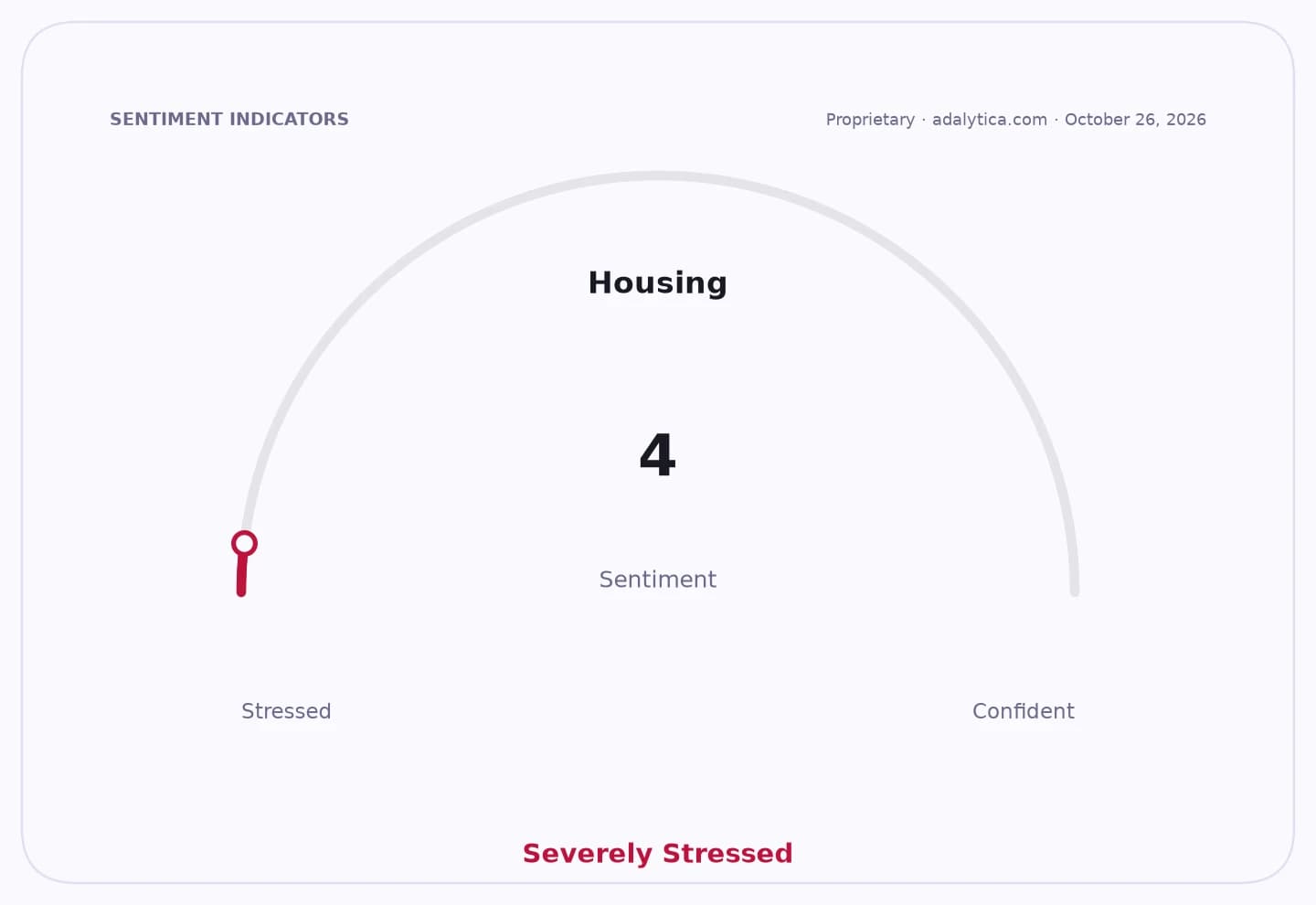
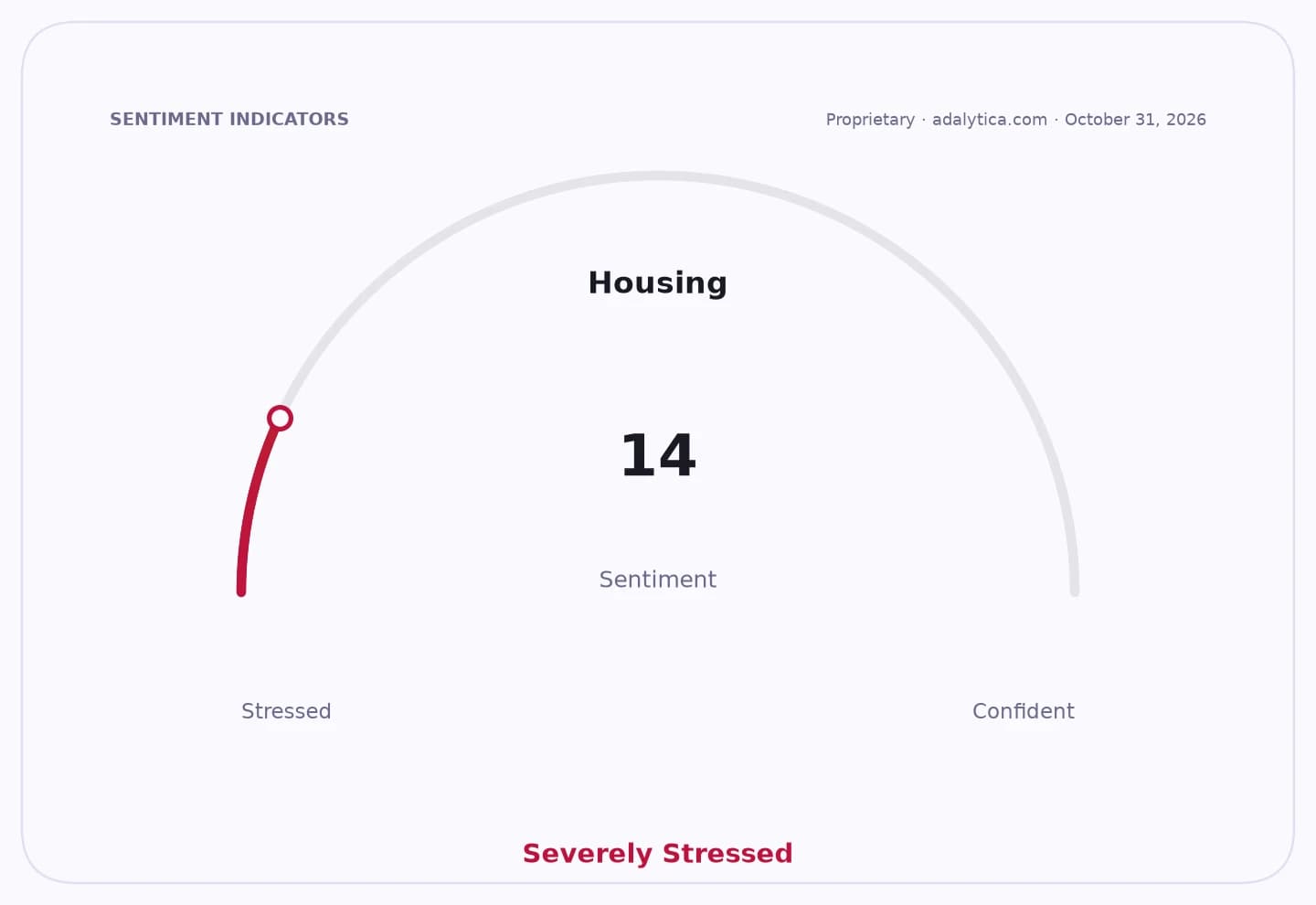
Sentiment Indicators
Housing
That means the long-running assumption that property in New Zealand reliably outpaces the cost of living no longer holds. For households, it means housing has delivered little or no real wealth gain despite a decade of ownership. For investors, it points to thinner capital gains, lower leverage-driven returns and a market where yield and cash flow matter more than price appreciation.
The weaker picture is concentrated in the country’s biggest markets. Auckland values were down 0.7% in October and Wellington fell 0.9%, while Hamilton, Tauranga and Christchurch were flat. National values remain 19.1% below their peak in January 2022, and Cotality said the median price had risen only 34.7% over 10 years, versus inflation of roughly 34%.

Kelvin Davidson, Cotality’s chief property economist, said the decade-long data point suggested the “new normal” may already be here, with future house price growth likely to be slower than in previous cycles. He cited improved housing supply, the rise of dual-income households and possible policy changes, including tax reforms on property investment, as reasons the market may not return to its old rhythm.
The backdrop is a market where supply remains elevated and buyers retain the upper hand. Sales volumes have drifted lower through the year, mortgagee sales remain very low at about 400 over the past 12 months, and vendors are not yet under widespread distress. That combination argues for a drawn-out adjustment rather than a sharp crash, but also limits the case for a quick rebound.
For investors, the message is that New Zealand housing is behaving less like a runaway asset class and more like a slow-growth, income-sensitive market. Unless wages, population growth or policy change restore stronger demand, prices may stay subdued for the next 12 to 18 months and perhaps longer if rates and affordability keep restraining buyers.
| Entity | Gains | Losses |
|---|---|---|
| Buyers | ▲More negotiating power | ▼Little short-term price upside |
| Existing homeowners | ▲Some stability in values | ▼Weak real capital gains |
| Property investors | ▲Potential focus on yield | ▼Slower appreciation, higher policy risk |
| Sellers | ▲Limited forced-sales pressure | ▼Softer pricing and slower turnover |