Toronto’s housing market weakened in October as sales dropped nearly 8% from a year earlier, underscoring how high borrowing costs and economic caution are still keeping would-be buyers on the sidelines.
Toronto Housing Sales Fall 7.9% in October
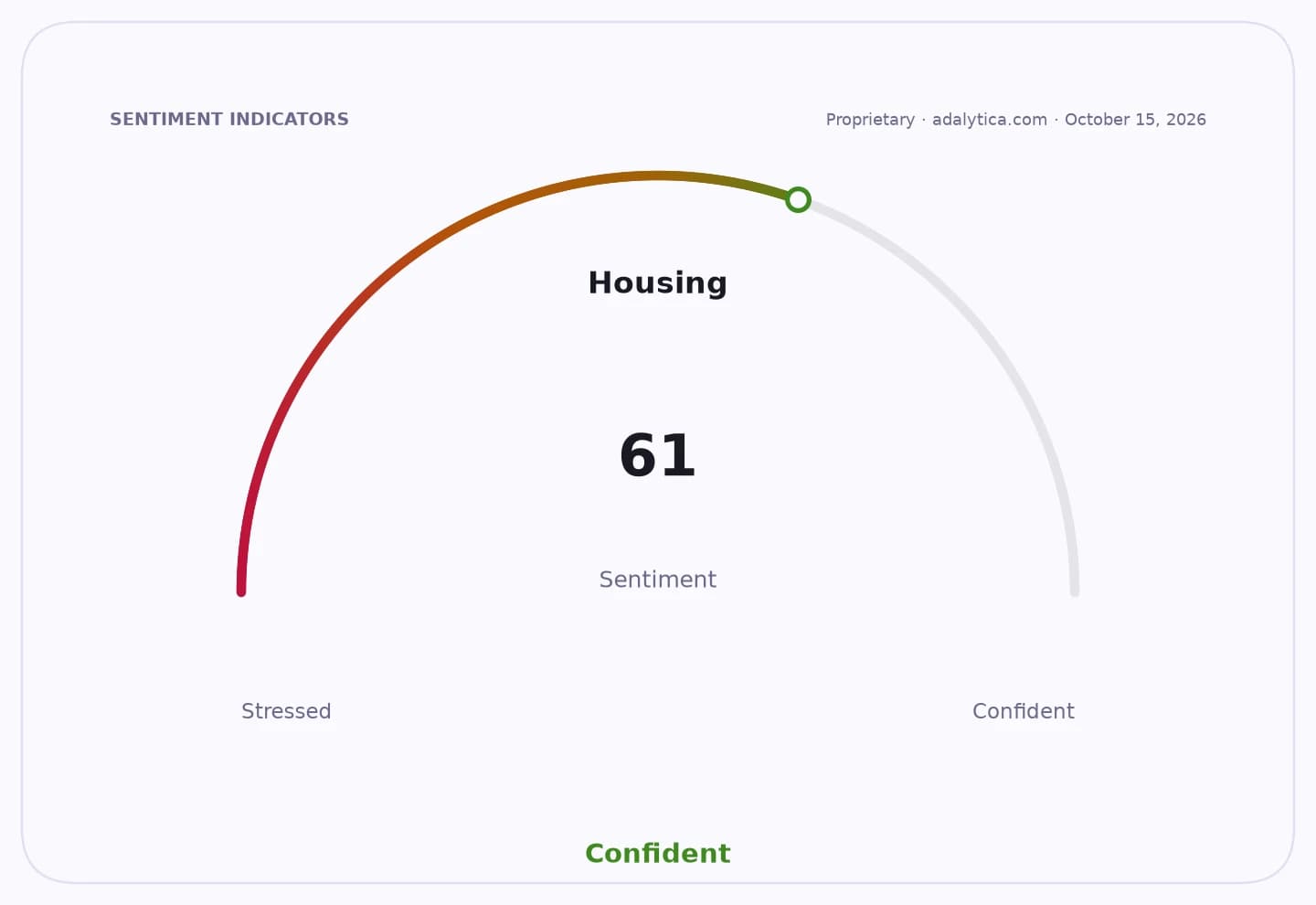
Housing
The Toronto Regional Real Estate Board said 5,603 homes changed hands last month, down 7.9% year over year, even as sales edged up 1.2% from September on a seasonally adjusted basis. That monthly improvement suggests demand has not disappeared, but it remains too fragile to drive a sustained recovery while affordability stays stretched.
Sentiment Indicators
Prices are still drifting lower. The average selling price fell 2.7% from a year ago to $1,024,108, while the composite benchmark price slipped 4.3%, a sign that softer demand is continuing to pressure valuations across the Greater Toronto Area. New listings also fell 11.9% to 14,173, which helped keep the market from sliding even faster, but overall inventory still stood at 25,098 homes for sale.
The bigger economic story is that Toronto’s housing market is trapped between weak affordability and caution about the broader outlook. TRREB president Daniel Steinfeld said residents are watching Canada-U.S. trade talks and Middle East conflict for signs that inflation and economic uncertainty could ease before they make a move. That matters because housing in Canada is not just a consumer-market story; it feeds through to spending, construction, mortgage demand and the wealth effect that shapes the wider economy.
For investors, the message is simple: the market underestimates how long this reset can last if borrowing costs stay restrictive and buyers keep waiting for clarity. That is a headwind for Canadian housing-linked lenders, brokers, builders and suppliers, while it keeps the case alive for selective names tied to lower-cost housing and rental demand. The fact that sales rose modestly from September tells us the market is stabilizing at a lower level, not breaking out.
The next catalyst is policy, not sentiment. If rate cuts or clearer trade conditions improve confidence, pent-up demand could return quickly to one of Canada’s most interest-rate-sensitive markets. Until then, the Greater Toronto Area remains a slow-moving test of whether affordability can improve enough to unlock transactions — and where the next investable rebound may begin.
| Entity | Gains | Losses |
|---|---|---|
| Homebuyers | ▲More negotiating power | ▼Waiting for better affordability |
| Sellers | ▲Faster market access on well-priced homes | ▼Lower prices and slower turnover |
| Canadian housing-linked stocks | ▲Potential rebound if rates fall | ▼Ongoing pressure from weak transaction volumes |
| Renters | ▲Less immediate purchase pressure | ▼Persistent housing affordability stress |