First-time buyers looking past rundown houses are still powering U.S. homebuilding demand, even as higher borrowing costs and mortgage stress keep the housing market under pressure.
U.S. Homebuilders Gain From Entry-Level Housing Demand
The latest data point to a market that is still selling, but only after a reset in prices and expectations. U.S. new home sales are running below recent peaks, with the HOUST series showing a forecast of 1,277.9 in October after a drop to 1,221 in September, while the S&P CoreLogic Case-Shiller home price index sits at 336.741, near record highs but with growth slowing. That combination helps explain why bargain-hunting buyers are willing to take on fixer-uppers and why builders and suppliers are still finding demand even as affordability remains stretched.
Sentiment Indicators
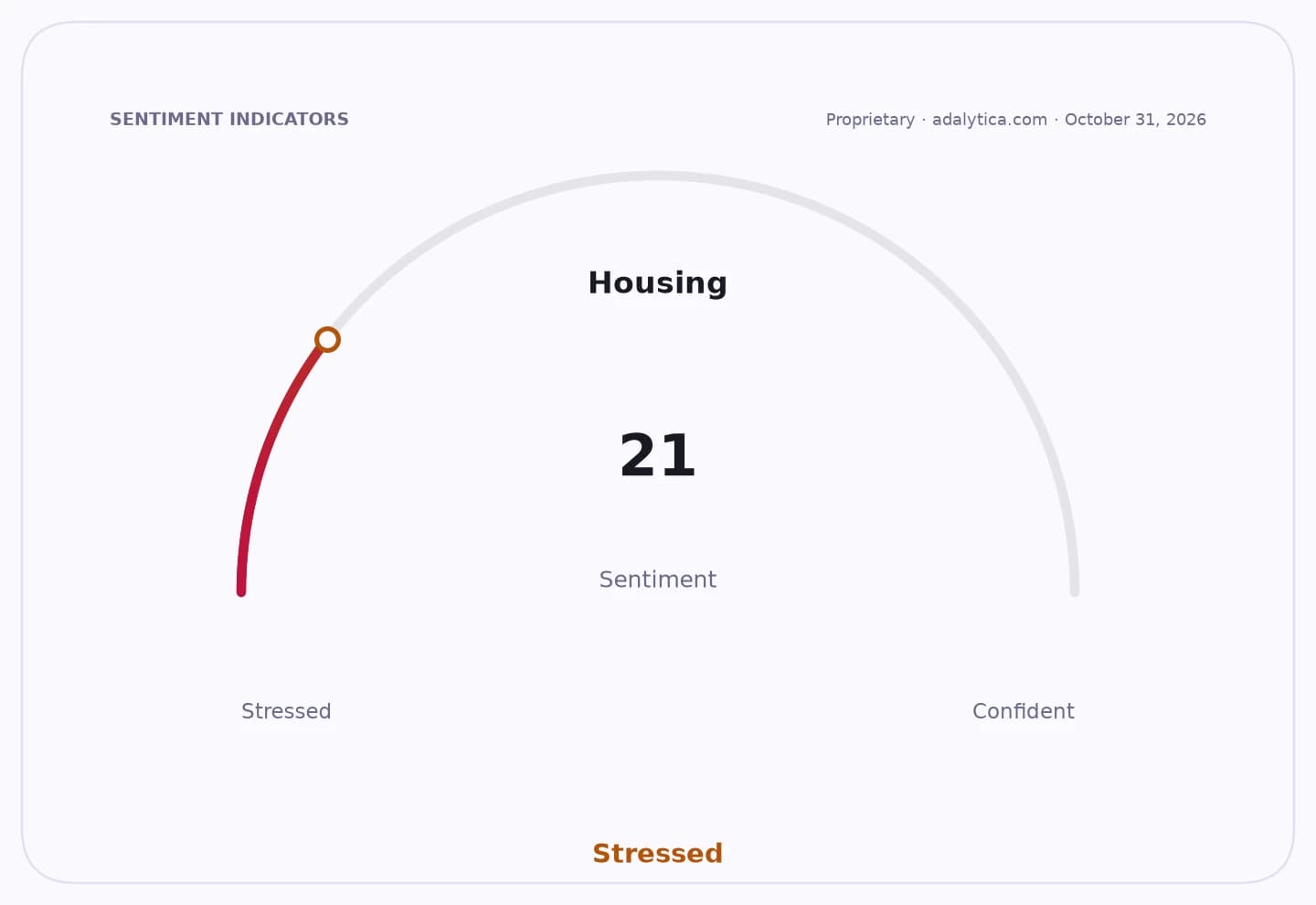
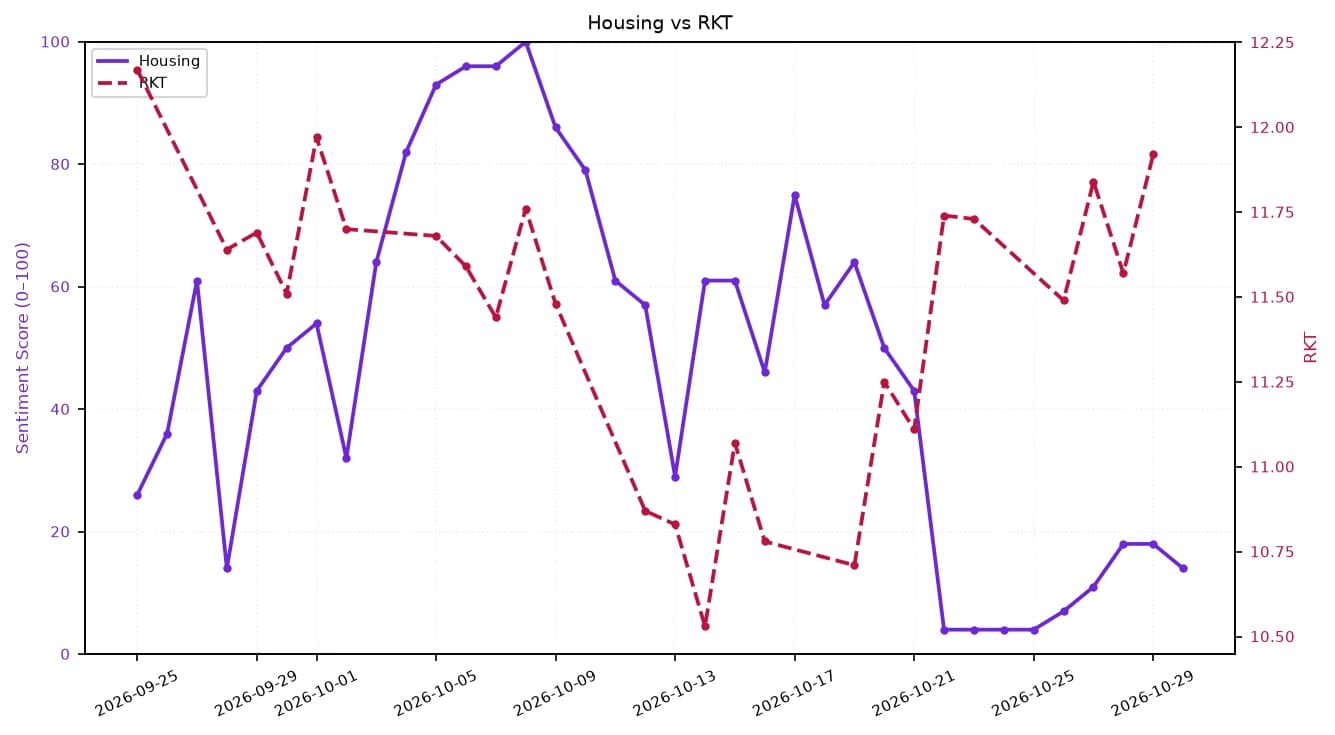
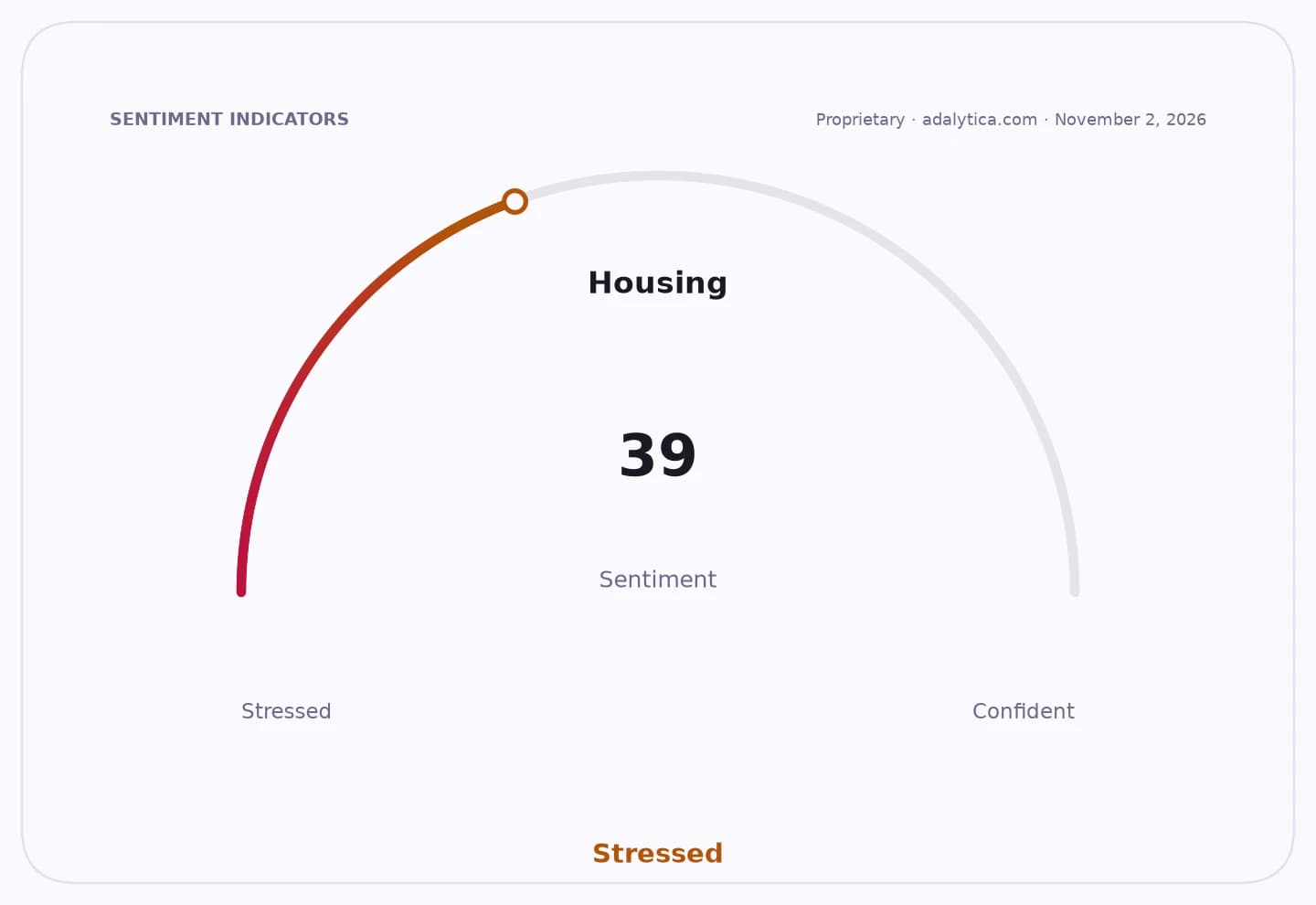
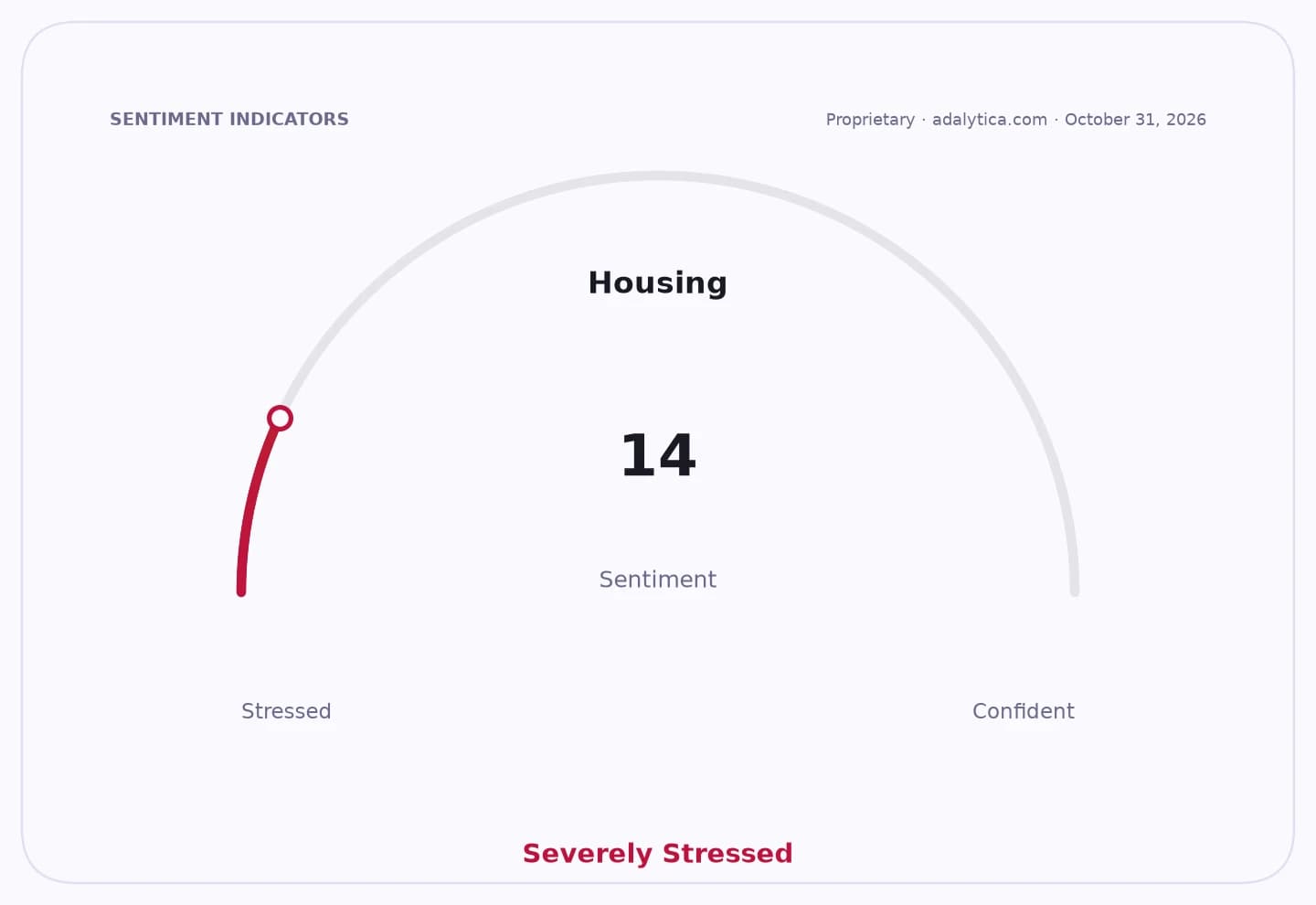
That strain is showing up in credit conditions and mortgage behavior. The 10-year Treasury yield was around 4.95%, keeping mortgage rates elevated, and Adalytica’s housing and rent inflation sentiment gauge was neutral at 36, reflecting a market that is no longer euphoric but not broken either. The broad message for borrowers is clear: financing remains expensive, so buyers are leaning more heavily on lower-priced homes, renovation potential and creative financing to get into the market.
Investors have already been rewarding the housing names most exposed to that demand. Builders FirstSource jumped to $67.82 on Nov. 2 from $63.06 two sessions earlier, while Lennar rose to $91.02 and D.R. Horton climbed to $152.93. Builders FirstSource remains well below its 200-day moving average of $79.90, but the recent bounce shows traders are betting that volume can offset softer pricing and mortgage friction. Lennar and D.R. Horton, meanwhile, have rebounded from earlier-year lows as buyers continue to trade down into more affordable inventory.
HOUST vs CSUSHPINSA — macro contextadalytica.com
Explore this data interactively — full history, time series and cross-market comparisons.
The bigger narrative is not a housing boom, but a market split between affordability pain and opportunistic demand. Sellers of aging homes may need to cut more aggressively, while builders and suppliers tied to entry-level housing can still win volume. The next catalyst is the path of mortgage rates and any fresh signals on housing starts, pricing and mortgage-credit conditions.
| Entity | Gains | Losses |
|---|---|---|
| First-time buyers | ▲Cheaper entry points | ▼Renovation risk and mortgage strain |
| Builders FirstSource | ▲Higher repair and materials demand | ▼Housing cyclicality |
| Lennar and D.R. Horton | ▲Entry-level sales volume | ▼Margin pressure from affordability |
| Existing-home sellers | ▲Faster sales if priced down | ▼Lower pricing power |