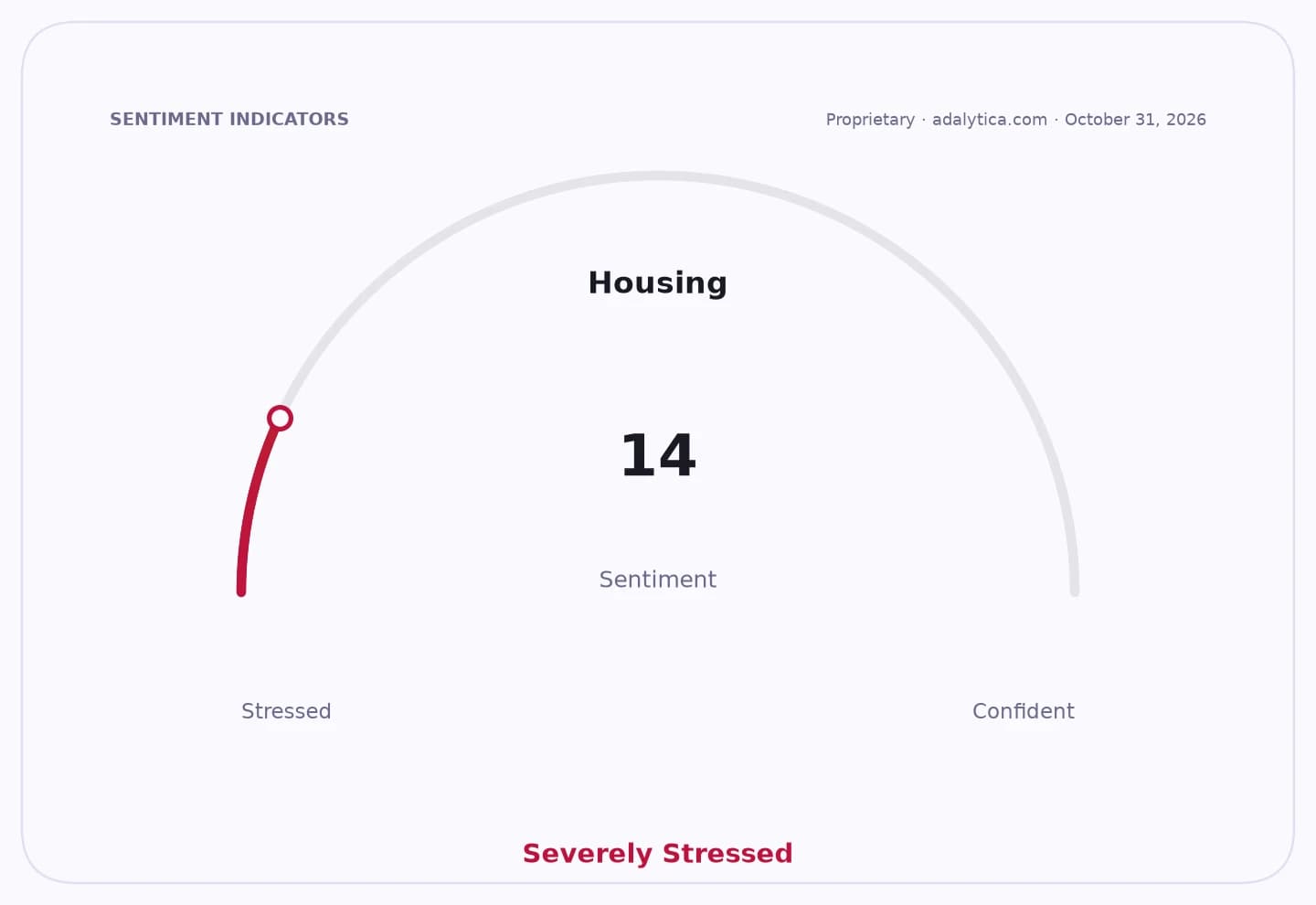
Homeowners whose properties are worth less than their outstanding mortgages are facing a growing equity trap, and that matters far beyond the kitchen table. It raises the risk of loan delinquencies, forced cash top-ups on sales, and weaker housing turnover just as mortgage originators and bond traders are already navigating a fragile rate backdrop.
U.S. Home Equity Squeeze Pressures Mortgage Lenders
Housing
The economic significance is straightforward: when house prices do not cover remaining loan balances, mobility falls and refinancing becomes harder. Sellers may have to bring cash to closing, while borrowers with reduced income can quickly slip into arrears. That is a drag on consumer balance sheets and a brake on residential transactions, two channels that feed directly into banks, nonbank lenders and the broader housing cycle.
Sentiment Indicators
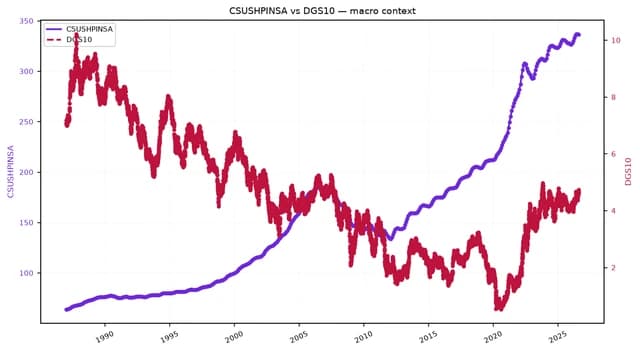
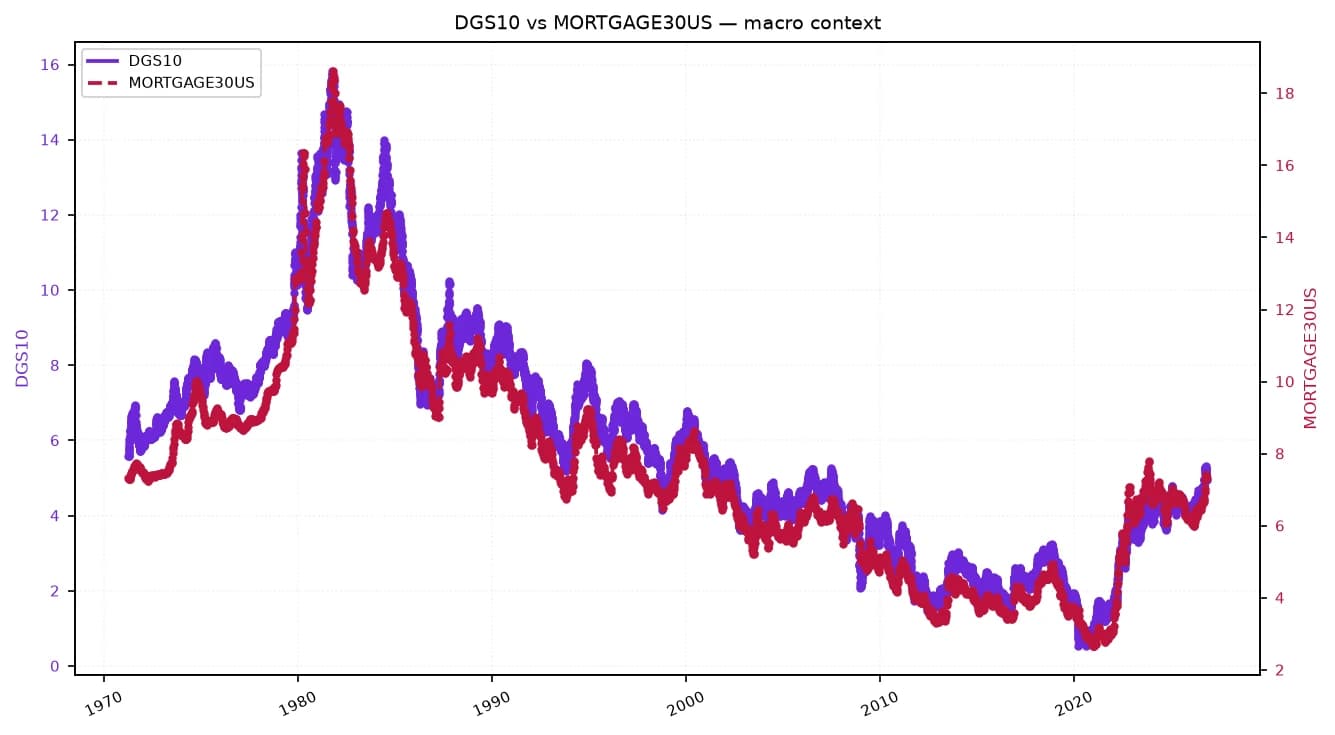
The data points to a market that is no longer rising cleanly enough to heal those balance-sheet gaps. The U.S. Case-Shiller home price index stood at 336.741 in August 2026, down 0.15% from July, after a long run-up that had already slowed to 3.11% in June and 0.1% in July. The 10-year Treasury yield was near 5% late in October, keeping mortgage costs elevated and limiting the relief buyers and refinancers might otherwise get from cheaper financing. Unemployment, while still moderate, ticked to 4.2% in September from 4.1% in August, a subtle but important warning sign for households carrying high leverage.
For investors, this is where the story turns from abstract housing advice into a tradeable theme. Mortgage originators and servicers are exposed to the quality of the housing recovery and to borrower stress. Rocket Companies, the online mortgage lender, has seen its share price fall to $12.80 on October 30 from $16.17 in late November 2025, even after a recent bounce, while United Wholesale Mortgage remains far below its 2026 highs despite a sharp rebound from March lows. Mr. Cooper and Pennymac Financial Services have also been volatile, reflecting how quickly sentiment can change when home equity cushions thin out and rate sensitivity returns.

That makes the next phase of the housing trade less about a nationwide crash than about select pockets of negative equity, tighter affordability and slower churn. The market underestimates how much balance-sheet pressure can persist even without a severe recession. If rates stay high and home-price gains remain muted, the winners are the lenders and servicers with disciplined credit, lower-cost funding and strong borrower retention. The losers are heavily leveraged homeowners, mortgage originators dependent on refinance volume, and any portfolio that has priced in an easy recovery in housing turnover.
This is an inflection point for investors who want to position ahead of the next credit cycle rather than chase it after the damage is visible. The actionable takeaway: favor mortgage servicers, credit-selective lenders and housing infrastructure names over pure mortgage-volume plays, because the real opportunity now lies in surviving the equity squeeze and monetizing it when the market finally reprices risk.
| Entity | Gains | Losses |
|---|---|---|
| Mortgage servicers | ▲Steadier fee income | ▼Borrowers in stress |
| Credit-selective lenders | ▲Lower default risk | ▼Refi-dependent originators |
| Homeowners with low equity | ▲Option to wait out prices | ▼Mobility and cash proceeds |
| RKT, UWMC, PFSI | ▲Potential volume rebound | ▼Housing turnover slowdown |