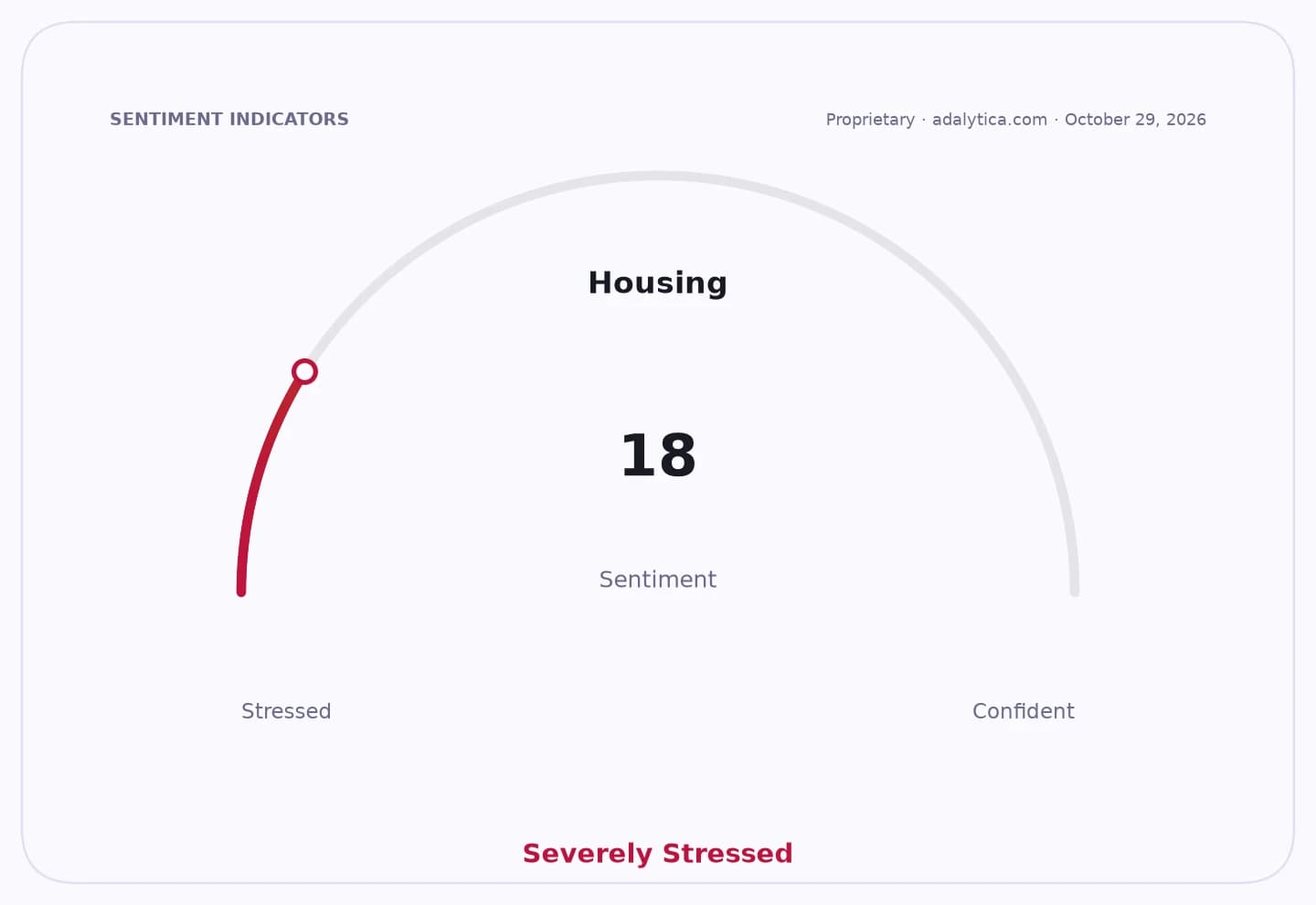
US home prices are starting to roll over as 7%-plus mortgage rates and stubbornly high housing costs push buyers to the sidelines and force sellers in some markets to cut asking prices.
US home prices cool as mortgage rates stay above 7%
Housing
The shift matters because housing is one of the biggest pillars of the US economy, and a broad slowdown in transactions can spill into construction, lending, consumer spending and local labor markets. Freddie Mac said the average rate on a 30-year fixed mortgage eased to 7.32% on Oct. 22, but that still marked a fifth straight week above 7%, a level that continues to lock out many would-be buyers.
Sentiment Indicators
The pressure is showing up first in overheated pandemic-era markets. More than 20% of listings had price cuts in September, with the deepest adjustments in places such as Florida and Texas. In Austin, average price per square foot fell more than 8% from a year earlier, a sign that buyers are regaining leverage after years of bidding wars.
National prices have not collapsed, but they are losing momentum. The National Association of Realtors said the median existing-home price in September was still up 1.3% from a year earlier at $417,500, the 39th straight annual gain. Sales, however, fell 2.2%, while starts, pending sales and builder confidence also weakened, underscoring how affordability is choking demand even before outright price declines become broad-based.
CSUSHPINSA vs DGS10 — macro contextadalytica.com
Explore this data interactively — full history, time series and cross-market comparisons.
The freeze is being reinforced by a supply trap. Many homeowners who locked in mortgages below 3% during the pandemic are unwilling to sell and swap into today’s much more expensive financing, keeping inventory tight and preventing a full reset. But as demand weakens, that “lock-in” effect is beginning to give way to price concessions where supply has piled up.
Builders are responding with incentives of their own. A National Association of Home Builders survey showed 43% of builders cut prices in October, by an average of 6%, while 65% used sales incentives. That is helping some buyers offset financing costs, and analysts say builder-paid concessions can shave as much as a percentage point off mortgage rates on new homes.
For investors, the message is that housing is moving from a scarcity-driven pricing model to a slower, discount-led market in parts of the country. Homebuilders, mortgage lenders and housing-related exchange-traded funds such as ITB and XHB are most exposed to any further deterioration in volumes, while buyers and cost-conscious renters may benefit if the pullback spreads.
Oxford Economics expects the market to remain largely stalled and says a meaningful recovery may not come until around late 2027, once mortgage rates ease. Until then, the key risks are higher-for-longer borrowing costs, sticky inflation and further erosion in affordability.
| Entity | Gains | Losses |
|---|---|---|
| Home buyers | ▲Better negotiating power | ▼Higher financing costs |
| Home sellers | ▲Faster sales if they cut prices | ▼Lower sale prices |
| Homebuilders | ▲Move inventory with incentives | ▼Margins and pricing power |
| Housing stocks/ETFs | ▲Relief if rates fall | ▼Slower sales and volumes |