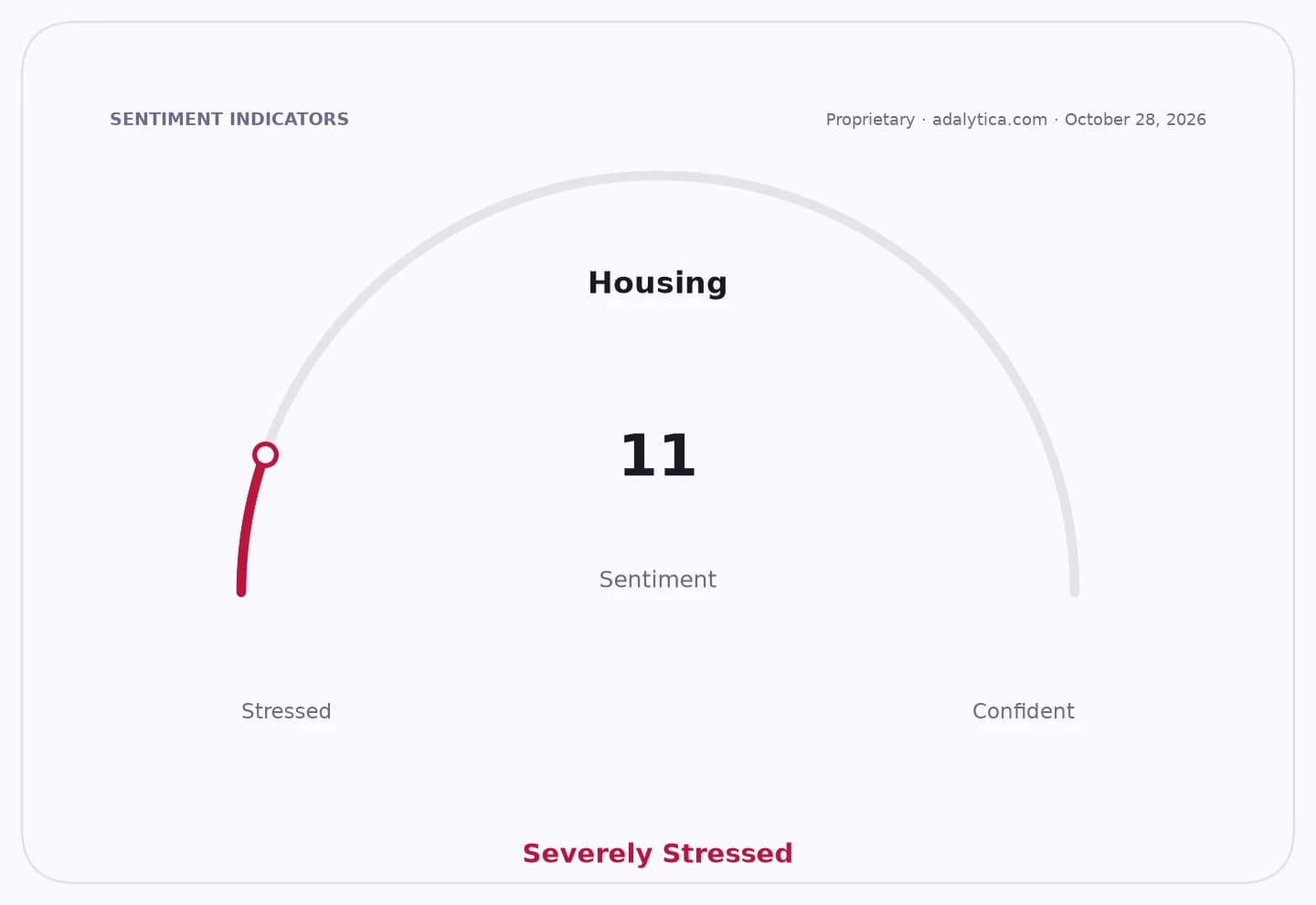
Americans are moving less because housing is too expensive and old mortgages are too cheap to surrender, and that is turning a shortage of homes into a shortage of housing turnover.
U.S. housing turnover slows as mortgage rates stay high
Housing
That is the key economic shift behind real estate professor J. David Chapman’s warning that “everybody ends up one house out of position.” When households stop moving, the housing ladder jams: young families stay in starter homes, retirees remain in houses that no longer fit, and first-time buyers wait for inventory that never hits the market. The result is less fluid housing supply, weaker transaction volume and a market that increasingly rewards owners who can stay put rather than trade up or down.
Sentiment Indicators
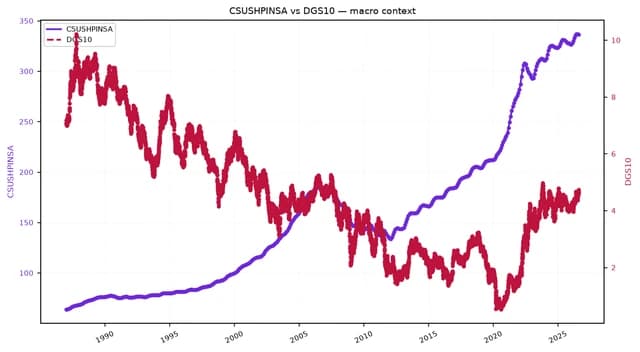
The squeeze is easy to see in the data. The average 30-year mortgage rate is running around 7.3% to 7.5%, while the 10-year Treasury is near 5%, keeping borrowing costs high even as inflation cools. Home prices are still elevated as well, with the Case-Shiller index around 337, more than five times its 1987 level and still near record highs after the pandemic surge. For millions of homeowners who locked in far lower pandemic-era mortgage rates, moving now can mean giving up financing that looks nothing short of priceless.
That makes affordability itself a structural advantage for places like Oklahoma, not just a talking point. If housing is cheaper in one state than another, that gap now matters more because the cost of moving has risen so sharply. Employers and workers are no longer comparing wages alone; they are comparing what those wages can buy after mortgage payments, insurance, taxes and maintenance. States and metros with relatively affordable housing may attract more people and capital over time, even if they are not the flashiest growth markets.
The bigger investment implication is that housing demand is shifting from transaction-driven to adaptation-driven. Instead of selling and buying, households are renovating, adding on, and retrofitting homes to age in place. That favors contractors, home-improvement retailers, remodeling suppliers and accessory dwelling unit plays more than pure home turnover stories. It also strengthens the case for builders and developers that can offer more housing variety — apartments, townhomes, starter homes and downsizing options — rather than just more suburban single-family stock.
That is why the recent weakness and rebound in housing ETFs such as IYR, XHB and ITB matters beyond daily price moves. The conventional technical indicators show these funds trying to stabilize after sharp swings, but the real story is fundamental: the market is still pricing a housing sector that behaves like it used to, not one constrained by sticky mortgage rates and reduced mobility. Investors underestimating this shift are missing a long-cycle opportunity in the picks-and-shovels of housing adaptation.
The thesis is straightforward: the U.S. housing market is not just short of homes, it is short of movement. That creates winners in affordability, remodeling, multifamily, and age-in-place solutions, while punishing anyone dependent on high turnover. If Americans keep staying put, the best returns may come from the companies that help homes change around the owners who refuse to move.
| Entity | Gains | Losses |
|---|---|---|
| Homeowners with locked-in low rates | ▲Rate advantage preserved | ▼Incentive to move fades |
| Remodelers and home-improvement firms | ▲More aging-in-place spending | ▼Less turnover-driven demand |
| Affordable-housing markets like Oklahoma | ▲Relative attractiveness rises | ▼High-cost states lose mobility edge |
| Traditional home sellers and buyers | ▲— | ▼Lower inventory and fewer transactions |