Mortgage costs have surged about 50% in a year, making it noticeably harder to buy an apartment in Valencia and underscoring how higher rates are still cooling one of Spain’s hottest housing markets.
Valencia Mortgage Costs Surge as Rates Stay High
That matters because housing affordability is one of the clearest channels through which monetary policy hits the real economy. When borrowing costs rise that fast, monthly payments jump even if home prices do not. For first-time buyers, that can be the difference between qualifying for a loan and being shut out entirely. For sellers, it can mean fewer bids, longer selling times and more pressure to accept lower offers. For the broader economy, it slows transactions, trims mobility and reduces the spending that usually follows a home purchase.
Sentiment Indicators
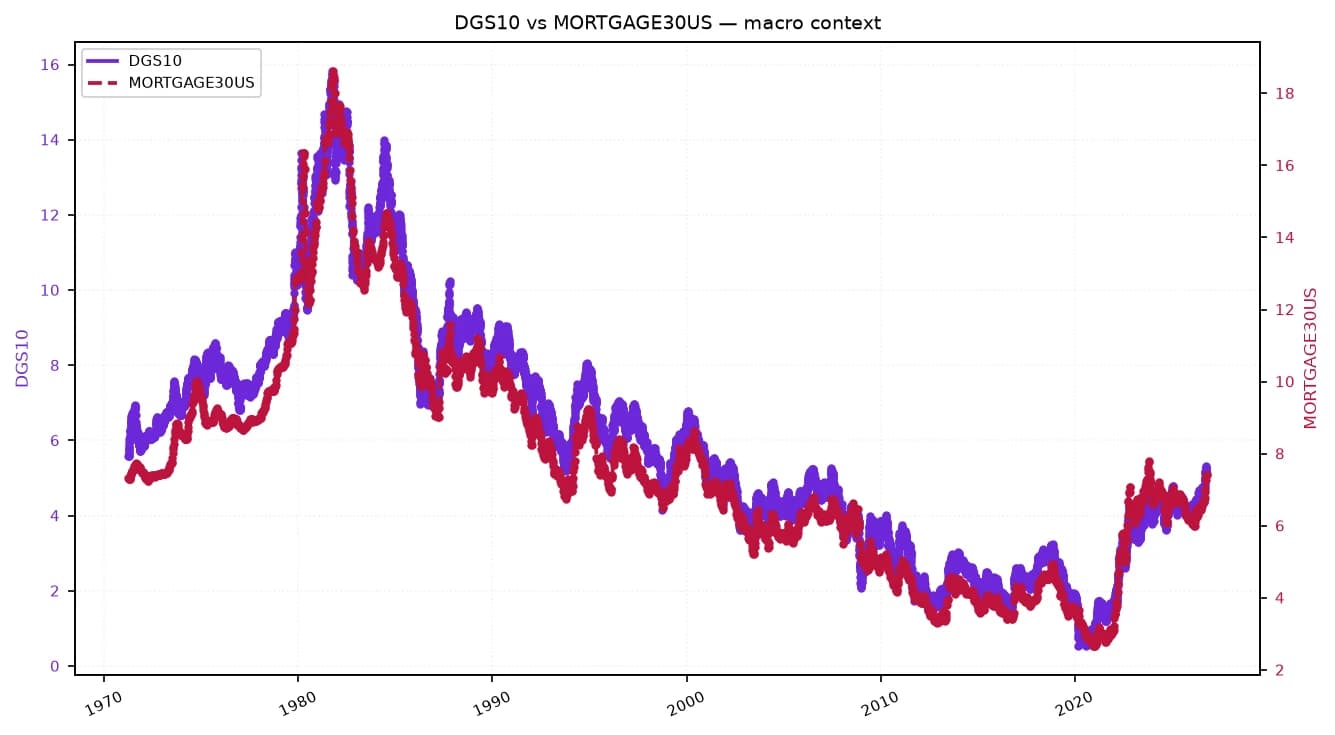
The squeeze in Valencia is part of a wider global rate shock. In the US, the average 30-year mortgage rate is still around 7.32%, after recently easing from 7.40%, while Spain and other euro-area markets have faced similar pressure as central banks kept policy tight to contain inflation. Germany’s mortgage rates have climbed to the highest levels since 2009, and Portugal has already seen record highs this year. The message for borrowers is simple: cheap money is gone, and timing now matters far more than it did just a few years ago.
Investors should care because housing is a major economic transmission belt. Higher mortgage rates usually weaken demand for construction materials, home improvement, furniture and housing-related financial services. That helps explain the weaker tone in US homebuilder ETFs, where the ITB index fund remains well below its earlier 2026 highs, even as it has stabilized from its spring lows. The broader read-through is that housing stocks can rally on any hint of rate relief, but the underlying business remains highly sensitive to financing costs.
DGS10 vs MORTGAGE30US — macro contextadalytica.com
Explore this data interactively — full history, time series and cross-market comparisons.
There is also an important market signal in long bonds. The recent bounce in the 10-year Treasury yield and the continued elevation in mortgage rates show why relief can be uneven and temporary. If markets start to believe central banks will need to keep rates restrictive longer, mortgage affordability will stay strained even if headline inflation cools. That would keep pressure on buyers and extend the slowdown in housing turnover.
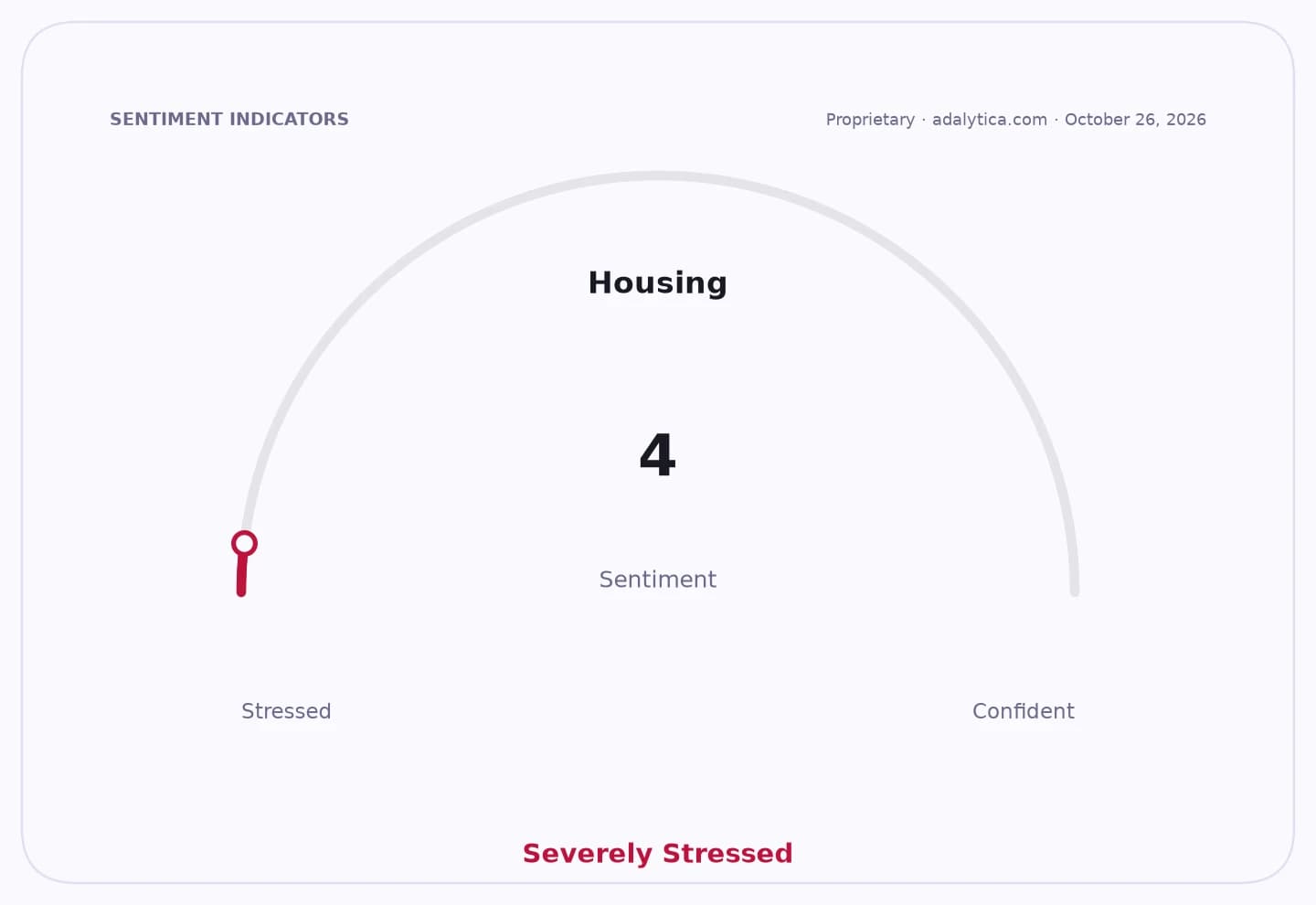
Adalytica’s Housing and Rent Inflation Sentiment gauge remains in “Extreme Fear,” which matches the lived reality for buyers in expensive urban markets. For long-term investors, the lesson is not to chase housing headlines, but to understand the cycle: when rates rise this sharply, affordability becomes the story, and that can reshape the market for years. Buyers may need patience, sellers may need realism, and investors should keep housing-related stocks on the watchlist rather than assuming a quick rebound.
| Entity | Gains | Losses |
|---|---|---|
| Existing homeowners with low-rate mortgages | ▲Lower refinancing pressure | ▼Less bidding competition |
| New apartment buyers in Valencia | ▲Possible future price relief | ▼Much higher monthly payments |
| Homebuilders and housing stocks | ▲Potential rebound on rate cuts | ▼Softer demand now |
| Lenders and mortgage brokers | ▲Higher rate products | ▼Fewer qualified borrowers |