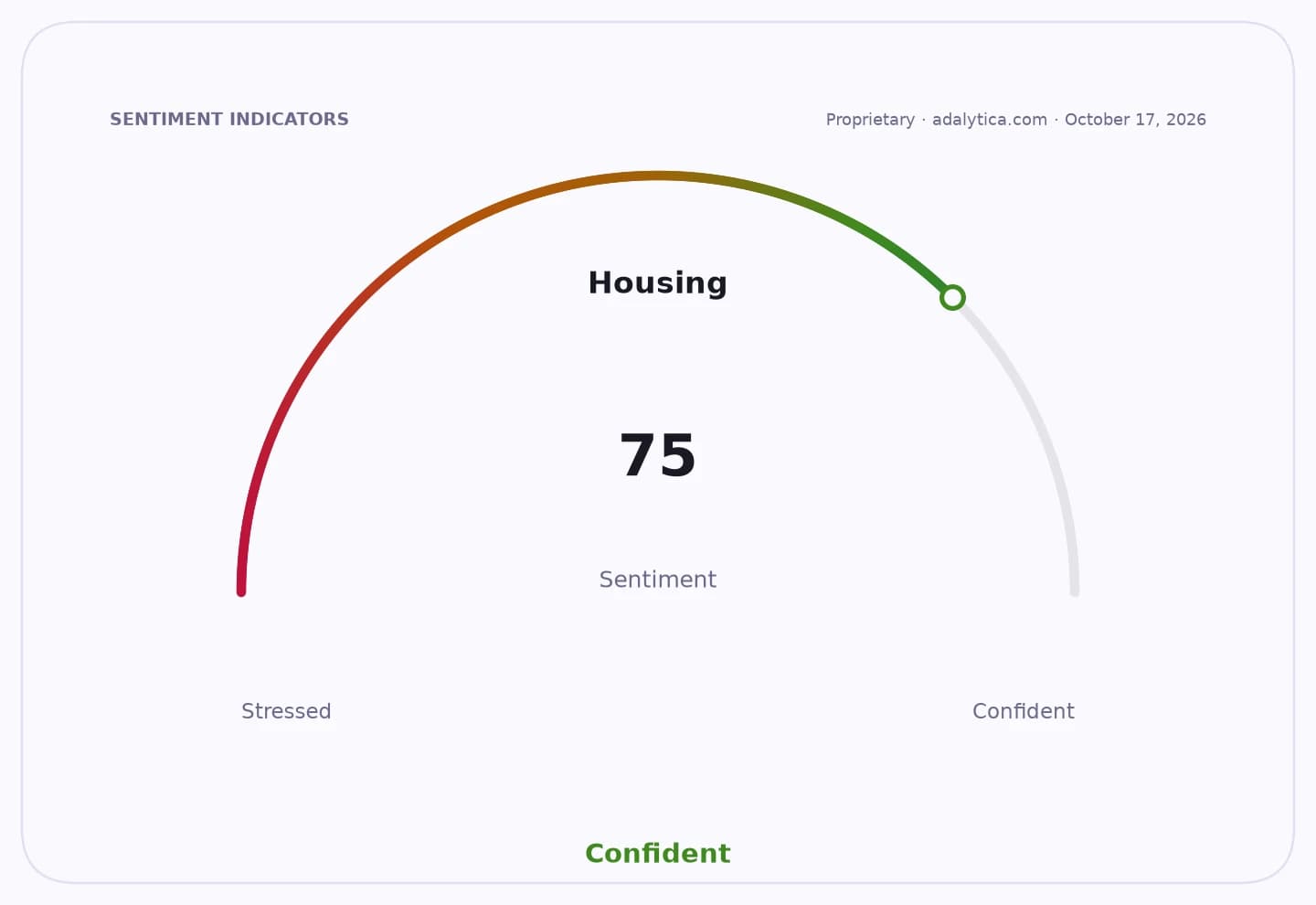
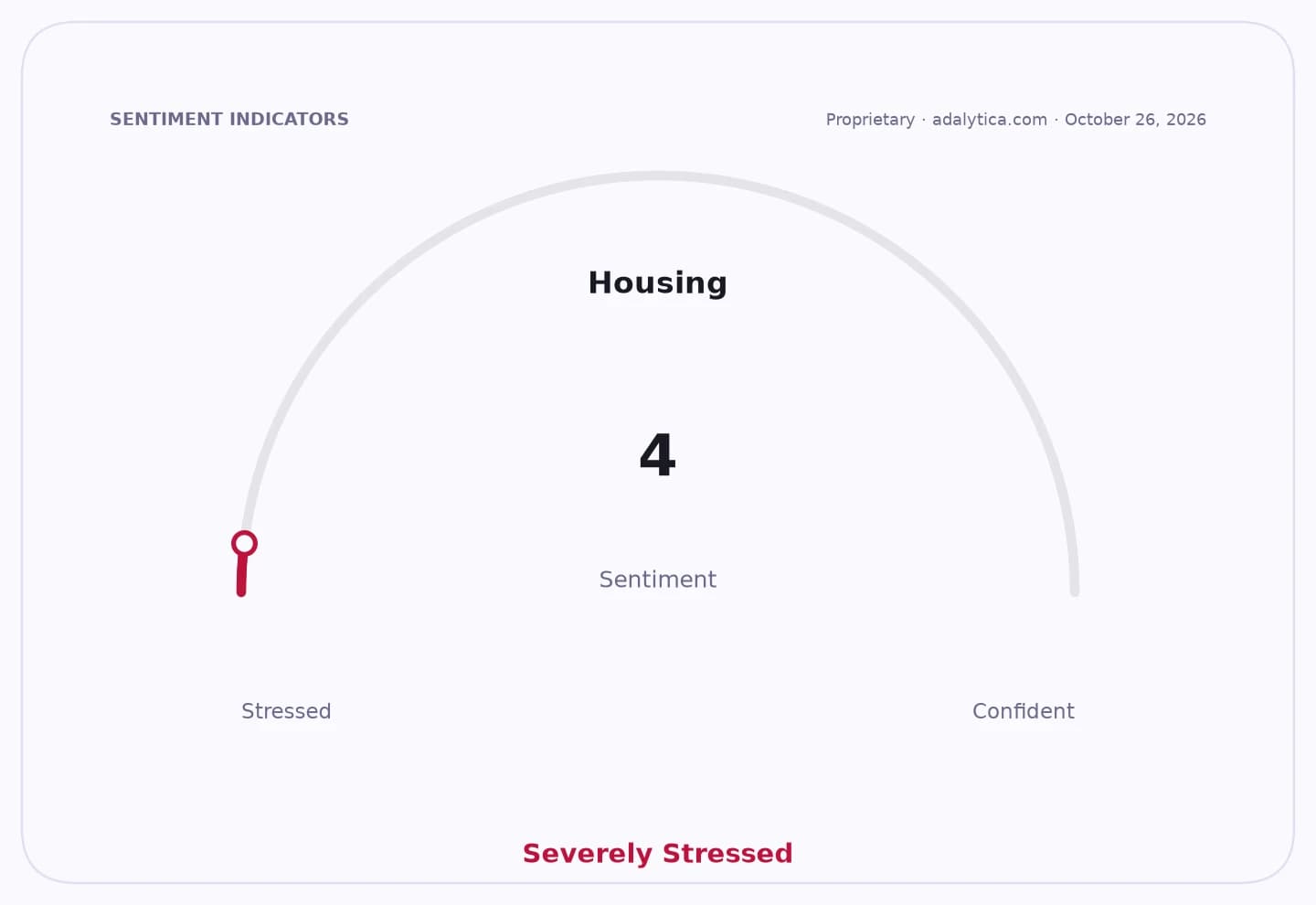
The average long-term US mortgage rate fell for the first time since late August, but the decline does little to ease pressure on the housing market after borrowing costs spent months near their highest levels in nearly three years.
US mortgage rates fall from late-August highs
Freddie Mac said Thursday the benchmark 30-year fixed rate slipped to 7.32% from 7.40% a week earlier, while the 15-year rate edged down to 6.68% from 6.71%. The move follows a modest pullback in the 10-year Treasury yield, which lenders use as a reference point for home-loan pricing and has been easing after climbing to its highest level since 2002.
Sentiment Indicators
For homebuyers, even a small drop matters only at the margin. On a $400,000 mortgage, the rise in rates since late February has added about $355 a month to the payment bill, underscoring how sensitive demand remains to bond-market swings. The average 30-year rate was 6.19% a year ago and briefly touched 5.98% in late February before surging as oil prices rose and bond volatility intensified.
The bigger economic issue is that housing is still operating under a rate shock that began in 2022 and has not fully unwound. Existing-home sales were essentially flat last year at a 30-year low, and the latest easing in mortgage rates is unlikely to change that quickly. Even with this week’s decline, the 30-year rate remains well above the level that prevailed before the inflation surge, keeping affordability strained and sidelining many buyers.
That leaves the rate move important mainly as a signal for financial markets, not as a turnaround for housing. Treasury bonds have steadied after a sharp selloff, and mortgage-linked assets have responded accordingly. In equity markets, homebuilder ETFs such as XHB and broader housing-related funds like ITB have shown some recovery alongside the pullback in yields, while long-duration Treasury exposure has also firmed. But the technical picture for both housing equities and bond proxies still suggests investors are treating the move as a bounce, not a trend change.
Fannie Mae is still forecasting a 30-year mortgage rate averaging 7.4% in the final quarter of this year and 7.5% in 2027, a reminder that policy and inflation expectations remain the dominant forces. Unless inflation cools more decisively or Treasury yields break lower in a sustained way, the recent dip in mortgage rates is more likely to cushion the market than revive it.
| Entity | Gains | Losses |
|---|---|---|
| Homebuyers | ▲Slightly lower monthly payments | ▼Still-stretched affordability |
| Homebuilders | ▲Marginal demand support | ▼Weak pace of new sales |
| Bond investors | ▲Relief from recent yield pullback | ▼Less pricing pressure if yields fall further |
| Lenders | ▲Some refinance activity | ▼Persistent thin purchase demand |