Donald Trump has ordered federal agencies to push down the cost of home loans and speed up housing development, a move aimed at easing one of the biggest drags on the US economy: unaffordable housing.
Trump order targets mortgage costs and housing supply
Housing
The executive order directs the Federal Housing Finance Agency to push Fannie Mae and Freddie Mac to test eliminating what the administration calls excessive mortgage insurance costs for eligible borrowers. It also expands a pilot program that could let automated property-title checks replace title insurance on some mortgage refinancings, trimming closing costs for homeowners and lenders.
Sentiment Indicators
The policy matters because mortgage rates remain near 7.24% on the 30-year loan, even after easing from 7.40% earlier this month, while the 10-year Treasury yield is around 5.05%. That leaves borrowing costs high enough to keep many buyers on the sidelines and adds pressure to an already strained housing market.
Housing data show the affordability squeeze is still biting. US housing starts are forecast at 1.278 million for October, up from 1.221 million in September, but still well below levels that would suggest a broad supply recovery. The administration is trying to address both sides of the problem by lowering financing costs and speeding the production of manufactured homes through a new task force due to deliver recommendations within 180 days.
DGS10 vs MORTGAGE30US — macro contextadalytica.com
Explore this data interactively — full history, time series and cross-market comparisons.
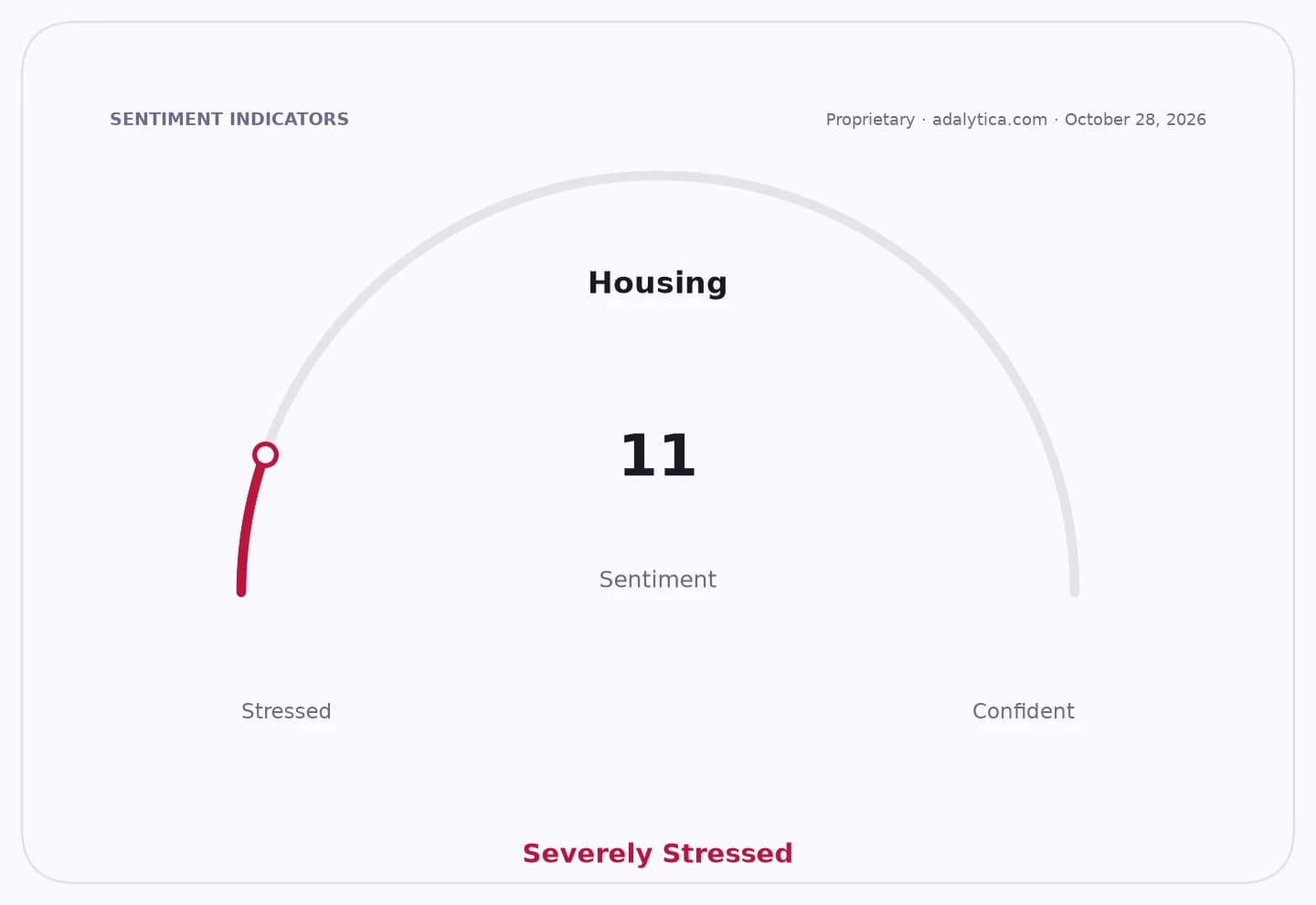
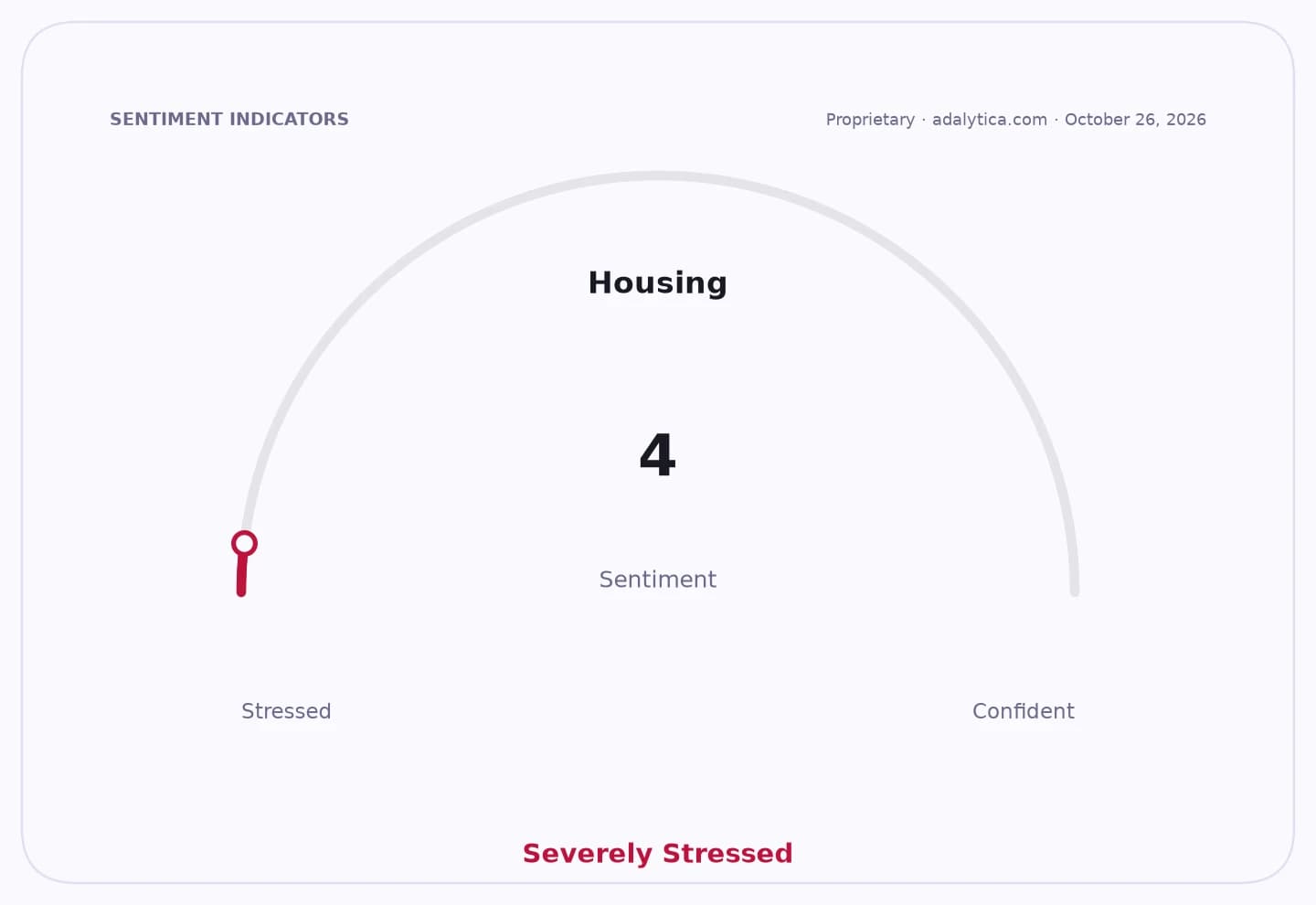
For investors, the order puts the housing complex back in focus. Builders, mortgage lenders, title insurers and government-backed mortgage operators could all see shifts in volumes and margins if the plan translates into cheaper financing and faster transactions. Adalytica’s Housing and Rent Inflation Sentiment gauge remains in “Fear,” underscoring how fragile affordability remains for consumers and how much policy support markets now expect.
Shares tied to the housing market may also react to any sign that lower costs could revive demand, particularly after a period of weak sentiment and affordability-driven hesitation. Manufactured housing and single-family rental companies stand to benefit if cheaper credit improves homebuying activity, while title insurers and some mortgage-related fee earners could face pressure.
The order adds political urgency to a housing market already wrestling with high borrowing costs, tight inventory and slow construction. The next catalyst will be whether agencies move quickly enough to turn the directive into lower closing costs, easier refinancing and more home sales.
| Entity | Gains | Losses |
|---|---|---|
| Homebuyers | ▲Lower borrowing and closing costs | ▼Less burden from high mortgage payments |
| Fannie Mae/Freddie Mac | ▲Expanded policy role | ▼Higher scrutiny and execution pressure |
| Builders/Manufactured housing firms | ▲Potential demand boost | ▼Less pricing power if affordability rules tighten |
| Title insurers/Mortgage fee earners | ▲— | ▼Risk of lower fee revenue |