Higher borrowing costs are threatening to deepen the housing affordability crunch even as inflation and unemployment remain close enough to their recent norms to keep policymakers uneasy about cutting rates too soon.
U.S. Housing Costs Rise as Treasury Yields Stay High
US Treasury
The 10-year Treasury yield, a key benchmark for mortgage pricing, is hovering near 4.9%, after a brief move above 4.95% this week, keeping pressure on U.S. housing costs at a time when households are already stretched by elevated prices. Consumer prices have continued to rise, with the CPI at 336.298 in September, while the jobless rate edged up to 4.2% from 4.1% in August, leaving the Federal Reserve with little room to signal an easy path lower on rates.
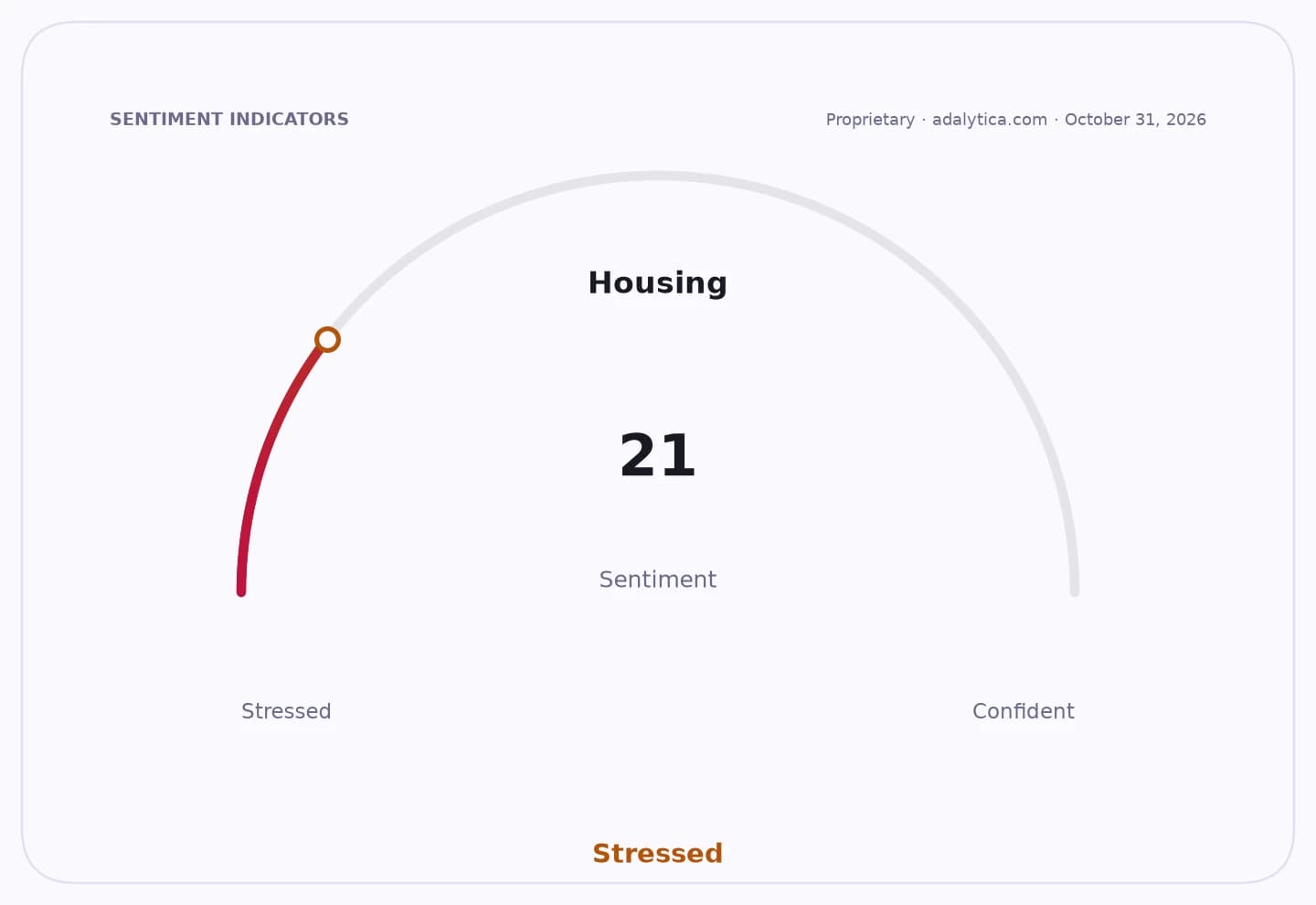
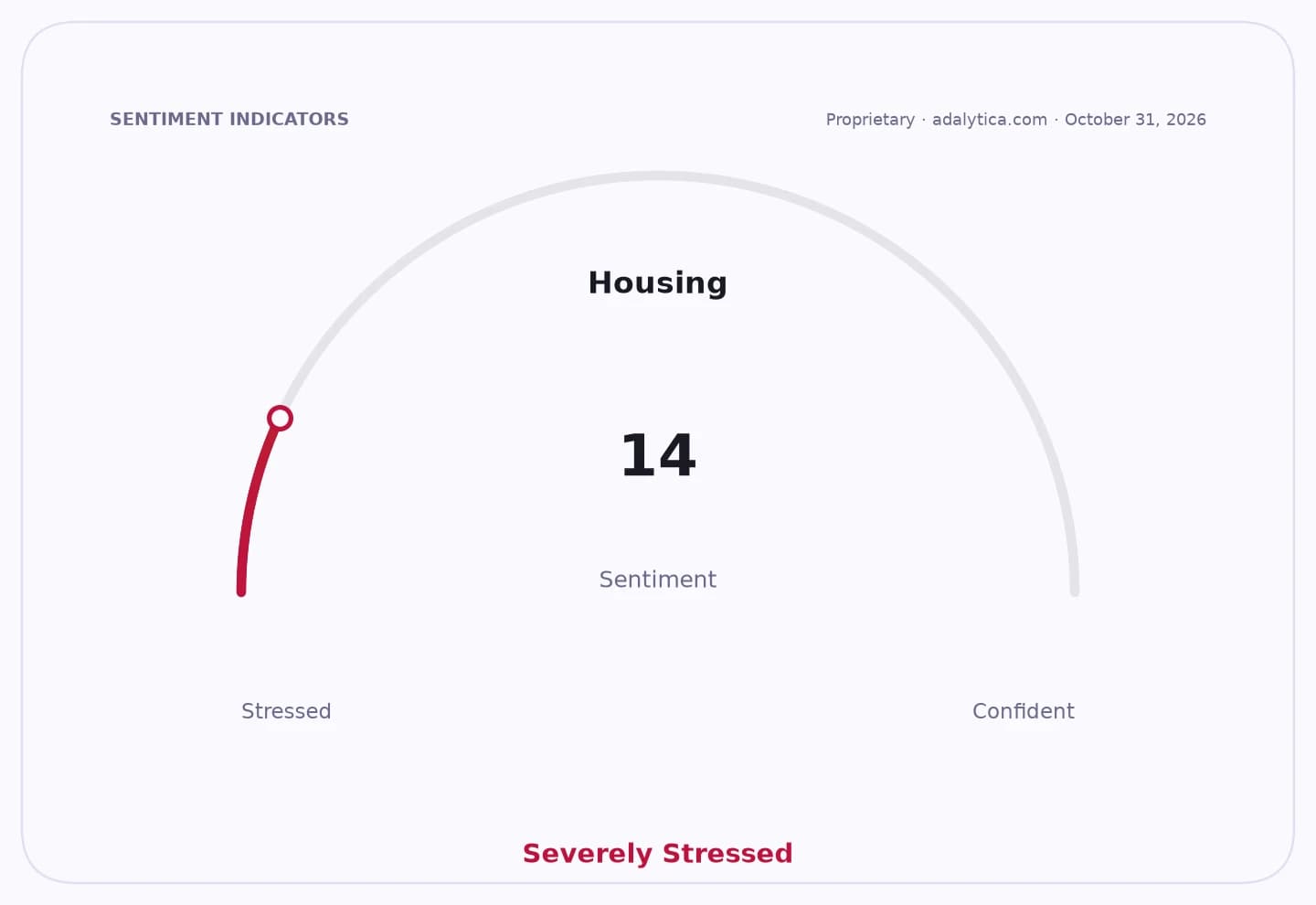
Sentiment Indicators
For housing, the transmission is immediate. Mortgage rates track Treasury yields more closely than the Fed’s policy rate, so even fears of additional tightening can quickly freeze affordability and squeeze demand. That matters economically because housing is one of the largest channels through which monetary policy hits consumers: higher monthly payments reduce disposable income, curb mobility and slow construction and transaction volumes. In markets already under strain, the effect can be severe. News flow from overseas has already shown how higher mortgage rates can trigger price declines, with Melbourne logging a twelfth straight monthly fall in house prices and a $74,000 drop cited in the latest data.
Investors are watching the effect most closely in rate-sensitive real estate names. American Homes 4 Rent, which owns single-family rental properties, has seen its shares recover to $33.09 from $30.00 two days earlier, but the stock still sits in a sector where valuation is tied to the path of yields and rent growth. The 50-day moving average at about $31.40 is now above the 200-day average near $31.14, a sign of recent stabilization, yet the broader macro setup remains uncomfortable. If yields remain elevated, homebuyers stay sidelined longer, which can help landlords and rental operators in the near term, but it also raises financing costs and increases the risk that a weaker economy eventually hits rent collections and property values.
DGS10 vs CPIAUCSL — macro contextadalytica.com
Explore this data interactively — full history, time series and cross-market comparisons.
The bond market is already leaning into that tension. Adalytica’s signals show extreme-greed positioning in Treasury bonds and neutral sentiment in the S&P 500, suggesting investors are hedging growth risks even as equity markets remain relatively calm. That mix is consistent with a market that sees persistent inflation and sticky yields as a drag on housing rather than a temporary nuisance.
The bull case for housing is that supply remains constrained and any softening in rates could quickly improve affordability. The bear case is that if the Fed keeps rates higher for longer — or moves again — mortgage stress will intensify, transactions will stay depressed and the housing squeeze will spill further into consumer spending and financial conditions. For investors, the key catalyst is the next move in Treasury yields and any shift in Fed guidance that changes the cost of mortgage capital.
| Entity | Gains | Losses |
|---|---|---|
| Treasury bond holders | ▲Higher yields, stronger demand | ▼Price pressure if yields rise further |
| Homebuyers | ▲Possible future rate relief | ▼Higher monthly mortgage costs |
| Single-family landlords | ▲More rental demand | ▼Higher financing costs |
| Housing market | ▲Supply support from rental demand | ▼Lower affordability and weaker sales |