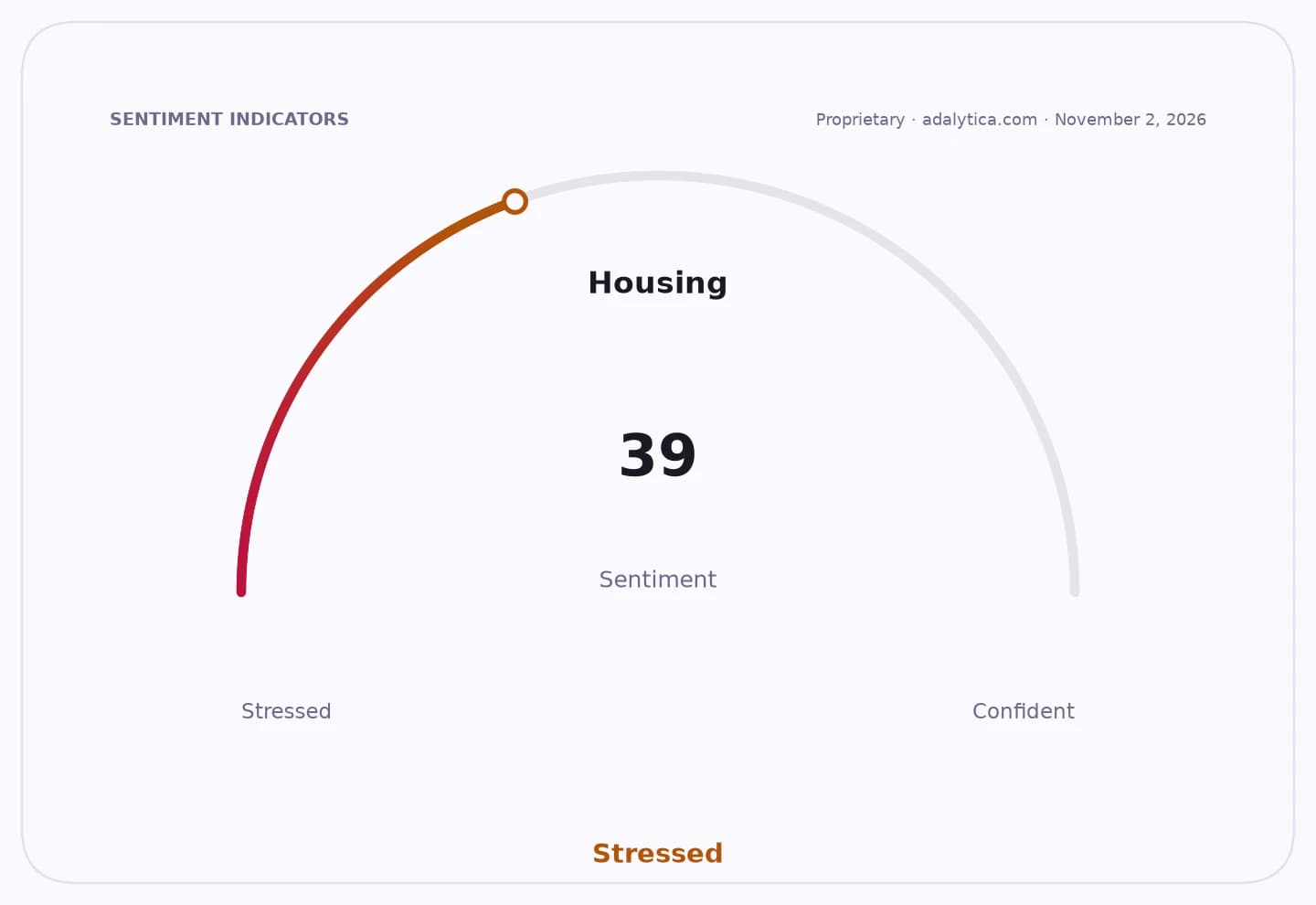
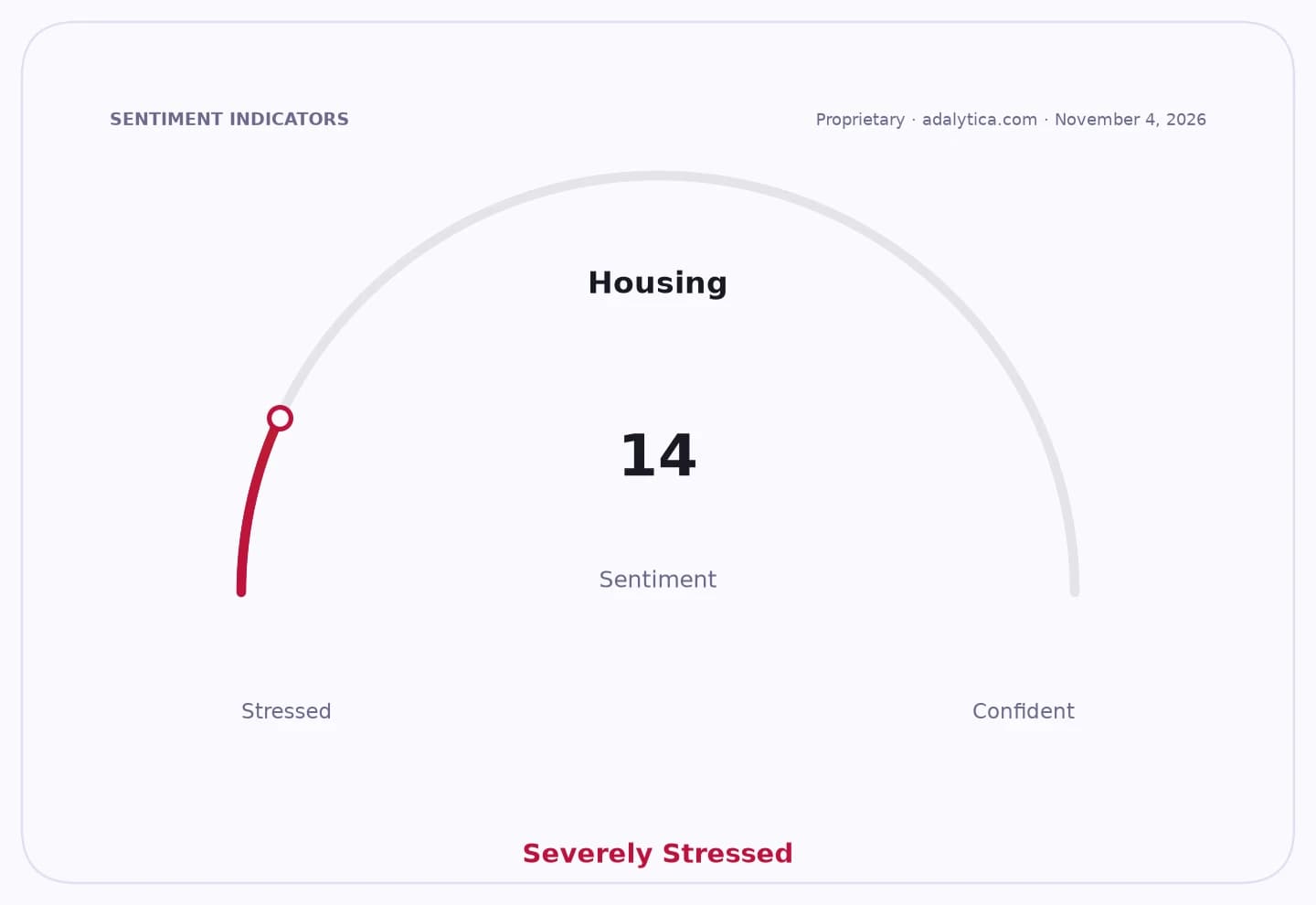
Australia’s housing slump is worsening just as the Reserve Bank pushes borrowing costs to an 18-year high, and that combination is exactly what threatens household spending, bank earnings and property-linked wealth over the next year.
Australia housing slump, RBA hikes, CBA price forecast
Commonwealth Bank now expects national home prices to fall 14% from the peak before stabilising late next year, calling it the biggest downturn on record. That is a sharper warning than many borrowers were bracing for, and it lands after the RBA lifted the cash rate to 4.85%, the fifth increase this year. On a typical 30-year, $600,000 mortgage, the move adds about $100 a month in repayments, an amount that may sound modest in isolation but quickly compounds when households are already facing higher food, energy and rent costs.
Sentiment Indicators
The bank’s forecast matters because housing is not just another asset class in Australia; it sits at the center of consumer confidence, bank balance sheets and political pressure. If prices fall as CBA expects, the wealth effect will likely curb spending, especially in Sydney and Melbourne, where home values have already dropped 10.1% and 8.2% from their peaks. Brisbane and Perth are not immune either, with values down 8.3% and 8.9%. For investors, that points to a cooling in one of the country’s most important transmission channels for monetary policy: when homes fall, people feel poorer, borrow less and spend less.
The slowdown is broad-based and getting harder to dismiss as a brief correction. CBA sees prices falling 8% this year and another 3% over 2027 before bottoming in the second half of next year, when rate cuts are expected to begin. That is a long enough horizon to matter for construction activity, mortgage growth and credit demand. It also means lenders face a tougher environment even if credit quality does not deteriorate sharply. Fewer transactions usually mean less lending, less refinancing and softer fee income, which is why housing downturns often show up in bank results before they show up in the broader economy.
The Reserve Bank’s split 6-3 vote suggests policymakers are increasingly aware of the trade-off between fighting inflation and damaging growth. The removal of language warning that rates could rise further was read by markets as a sign that 4.85% may prove the peak. If so, the housing market still has to absorb the full force of earlier hikes before relief arrives. That lag is important: mortgage stress tends to build slowly, then all at once.
For long-term investors, the message is less about trying to time a turn in house prices than about understanding the earnings cycle that follows. Homebuilders, mortgage lenders and property-linked sectors may stay under pressure, while diversified banks and quality businesses with little exposure to Australian housing should look relatively resilient. If you own property, the key question is not whether prices move a little lower next month, but whether the market has enough income growth and policy relief to stabilize by late next year.
The bigger takeaway is that Australia’s housing correction has moved from warning stage to full-cycle event. For patient investors, that argues for caution on the most rate-sensitive names, but also for keeping dry powder: downturns like this often create the best long-term entry points once rates start to ease and confidence returns.
| Entity | Gains | Losses |
|---|---|---|
| Home buyers with cash | ▲Better negotiating power | ▼Near-term price declines |
| Existing homeowners | ▲Potential rate relief later | ▼Paper wealth erosion |
| Banks and lenders | ▲Eventually, refinancing rebound | ▼Softer loan growth now |
| Homebuilders and property-linked stocks | ▲Long-term recovery opportunity | ▼Slower demand and lower volumes |