India’s latest 25-basis-point repo rate increase is unlikely to hit the residential property market immediately, but it raises the risk that affordability-sensitive buyers start feeling the strain if borrowing costs and home prices keep climbing.
India repo rate hike raises housing affordability risk
That is the central message from JLL, which said the move should be manageable for the broader housing market because mortgage rates remain relatively competitive and banks may not fully pass on the increase right away. The firm’s view suggests the policy shift is more of a gradual headwind than an abrupt shock, but it could still matter for developers, lenders and buyers in the lower-priced segment where monthly payments are already stretched.
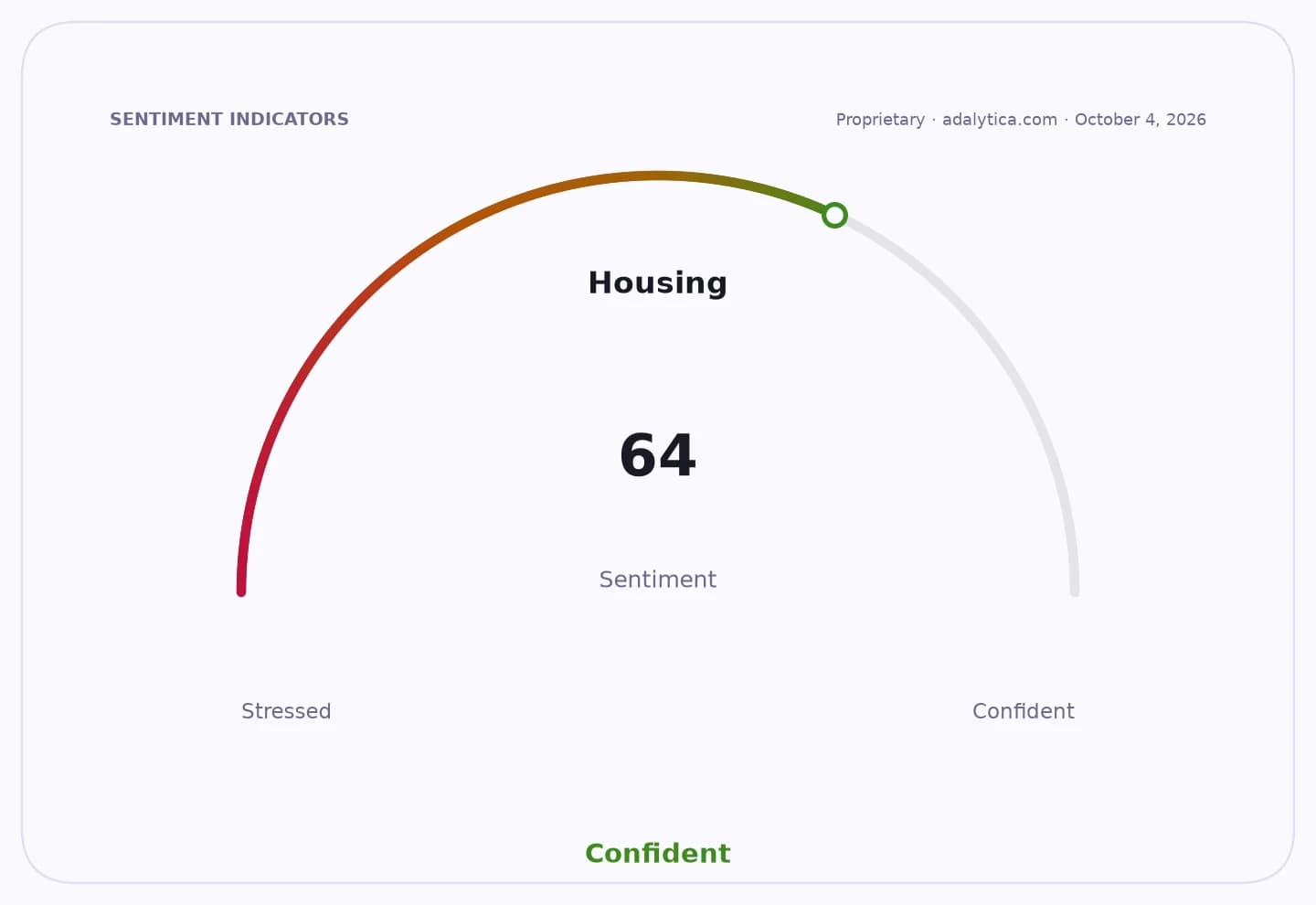
Sentiment IndicatorsⓘProprietary · adalytica.com · October 8, 2026
This is a snapshot — live sentiment, awareness and momentum for 130+ markets update continuously in the dashboard.Open AlphaPulse
The timing is important for India’s real estate sector, which has been benefiting from resilient demand and higher home prices. JLL said the impact of the hike will depend on how quickly banks reprice loans, with existing floating-rate borrowers seeing costs rise only after transmission through the banking system. New buyers may face slightly higher rates, but strong-credit borrowers can still access home loans below 8%, limiting the near-term impact.
The more exposed part of the market is affordable housing. JLL said premium homebuyers are better positioned to absorb higher EMIs, while lower-income buyers are more sensitive to even modest increases in monthly payments. That matters because the affordable segment is usually the first to show stress when rates rise, especially after a period of already elevated property prices and construction costs.
Developers face a similar split. Larger listed builders generally have easier access to financing, while smaller developers are more vulnerable to rising borrowing costs. At the same time, companies have limited room to keep absorbing higher input and financing expenses, increasing the chance that more costs are pushed to buyers over time. If that happens alongside higher EMIs, demand in the lower-end market could weaken.
For investors, the key issue is not the 25-basis-point move itself but the cumulative effect of tighter policy, persistent inflation pressures and rising property prices. JLL described the RBI stance as calibrated tightening, implying policymakers are trying to preserve macro stability rather than cool housing specifically. That leaves room for the central bank to pause if global conditions worsen, but not necessarily to ease soon.
Amit Prakash Singh of Urban Money said the rate hike should be seen in the context of energy-driven inflation and geopolitical risk, arguing that a stable macro backdrop matters more for real estate than a modest increase in borrowing costs. That reflects the base case for the sector: demand is still firm, but the next leg of growth may depend on whether the cheapest housing can hold up as the cost of money filters through the system.
| Entity | Gains | Losses |
|---|---|---|
| RBI | ▲Inflation control credibility | ▼Near-term housing affordability |
| Premium home developers | ▲Resilient demand | ▼Minimal immediate pressure |
| Affordable housing buyers | ▲— | ▼Higher EMIs |
| Smaller developers | ▲— | ▼Higher financing costs |