Lower mortgage rates are making home loans look more affordable again, but borrowers can still end up paying more if they focus only on the headline number. For investors, that matters because the real economics of housing finance depend on much more than the rate: loan-to-value, term, fees, inflation indexing and the ability to refinance can change the true cost of owning a home for decades.
Argentina Mortgages: Rates, Terms and True Borrowing Cost
The clearest takeaway from the latest mortgage-market shift is that cheaper money is not the same as better money. As banks reopen credit lines and compete more aggressively for borrowers, the upfront monthly payment may fall, but households are also taking on longer commitments that can run 20 to 30 years and stretch through very different inflation and wage cycles. That is especially true in UVA-linked lending, where the loan balance and installment rise with inflation over time.
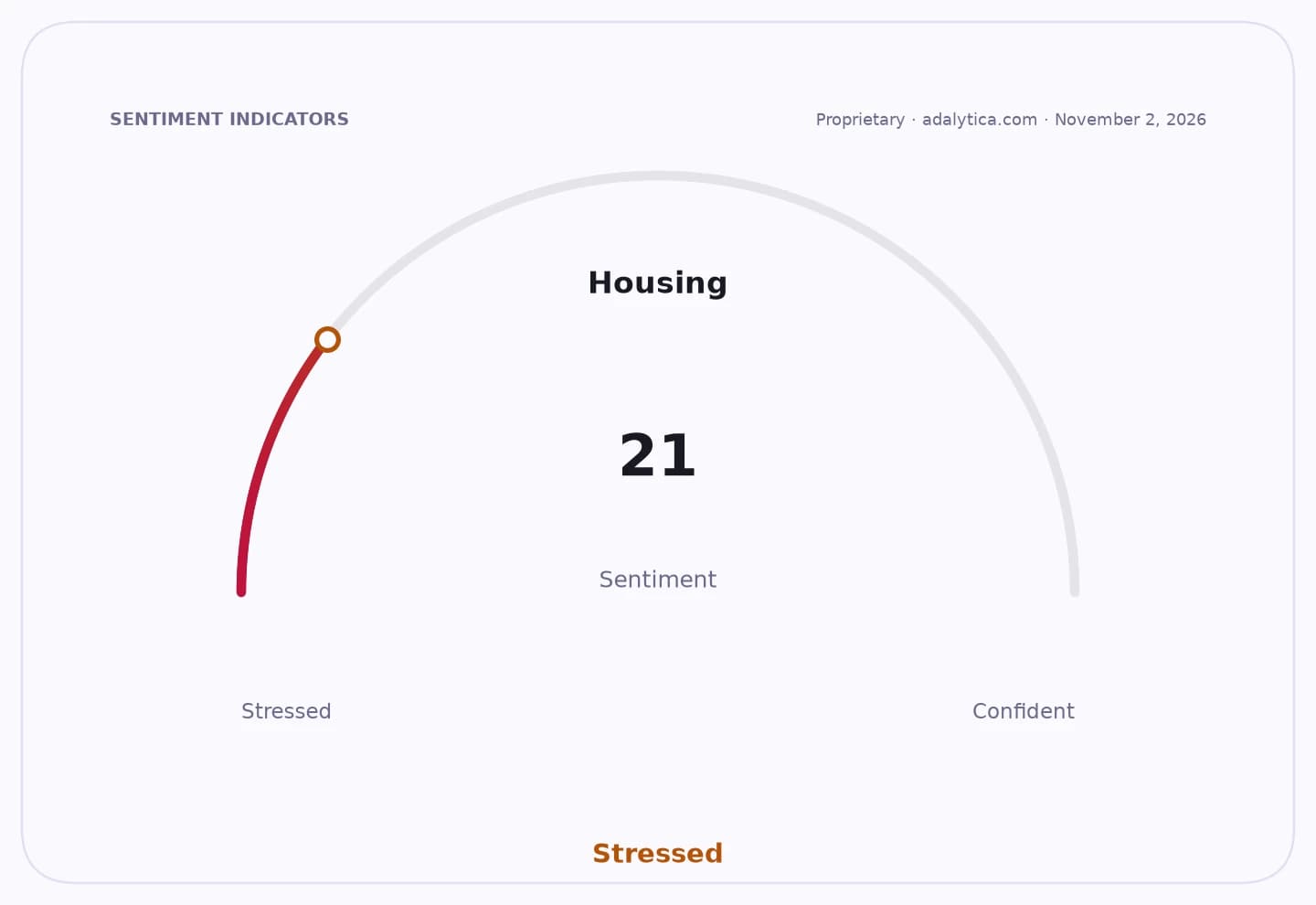
Sentiment Indicators
In practice, that means a borrower can be drawn in by a 6.5% annual rate and still end up with a less convenient loan than one carrying a slightly higher rate. Banco Ciudad is offering 6.5% for up to 25 years and financing up to 70% of the property value, while Banco Nación is at 6.7% for as long as 30 years and finances up to 75%. BBVA goes to 80% financing, but at 7.5%. For many families, the bigger constraint is not the interest rate itself but the amount the bank will actually lend, the size of the down payment, and the cushion they need to absorb inflation.
That is why the loan structure matters as much as the price of credit. A longer term can cut the initial payment — specialists say moving from 20 to 30 years can reduce it by about 13% — but it also keeps the borrower exposed to inflation-linked debt for longer. Add in insurance, administrative charges, notarization and prepayment penalties, and the cost of the mortgage can diverge sharply from the advertised rate. In other words, the cheapest loan on paper may be the most expensive over time.
For investors, this is a reminder that housing demand is shaped by affordability, not just rates. Easier credit can support home sales and bank lending volumes, but it also increases sensitivity to inflation and wage growth. If salaries fail to keep pace, the household budget gets squeezed and defaults become a bigger risk. That tension is exactly why lenders, housing finance companies and mortgage insurers have to think about credit quality as well as origination growth.
The backdrop is still supportive for borrowers compared with the recent high-rate environment, and that can help revive transaction activity in the housing market. But it does not eliminate the need for discipline. The smartest buyers will compare the full cost of borrowing, not just the coupon, and leave room in the budget for a loan that may get heavier over time.
For long-term investors, the broader lesson is durable: when mortgage markets open up, the winners are usually the lenders and brokers that can balance growth with underwriting quality. The losers are borrowers who mistake a low rate for a good deal. If you are evaluating housing-related investments, or even your own mortgage, the loan terms behind the rate are where the real story lives.
| Entity | Gains | Losses |
|---|---|---|
| Borrowers who compare full costs | ▲Better affordability | ▼Less risk of budget strain |
| Borrowers focused only on rate | ▲Lower headline payment | ▼Higher long-term cost |
| Banks with flexible underwriting | ▲More loan demand | ▼More pressure on margins |
| Households with tight incomes | ▲Access to credit | ▼Inflation-linked repayment risk |