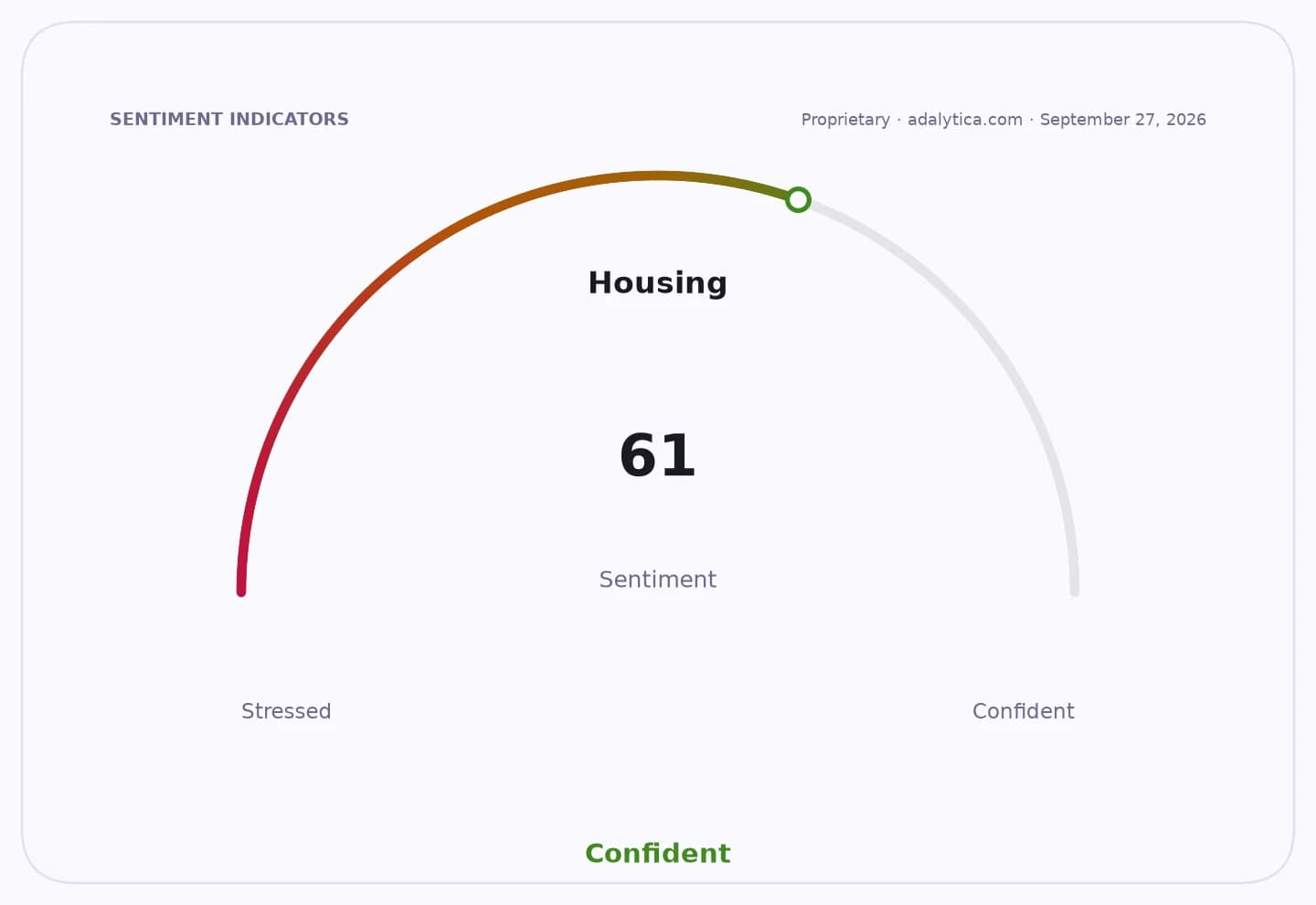
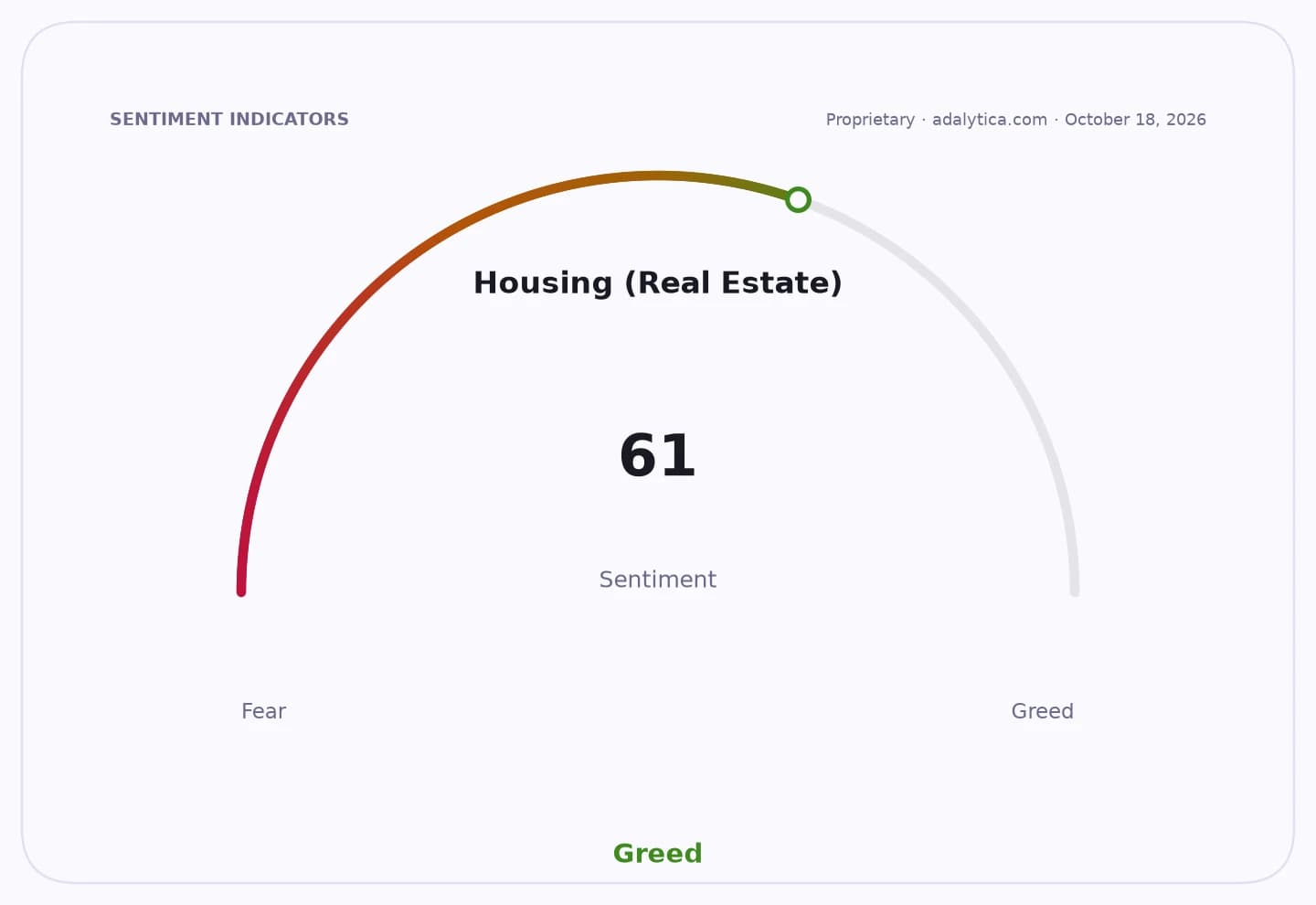
Property taxes and home insurance are now as important to U.S. housing affordability as mortgage rates, underscoring how the monthly cost of owning a home has become a broader inflation problem rather than a financing problem alone.
U.S. Housing Costs Rise on Taxes, Insurance
That message, laid out by Rep. Mike Flood, a Nebraska Republican, points to a shift in the politics and economics of housing. Elevated borrowing costs remain the most visible barrier to homebuying, with the 10-year Treasury yield around 5.1% and mortgage rates still well above the levels that fueled the pandemic-era housing boom. But the squeeze on owners does not end at the closing table: insurance premiums have climbed as catastrophe losses rise, while property taxes keep moving higher in many markets as home values and municipal budgets reset.
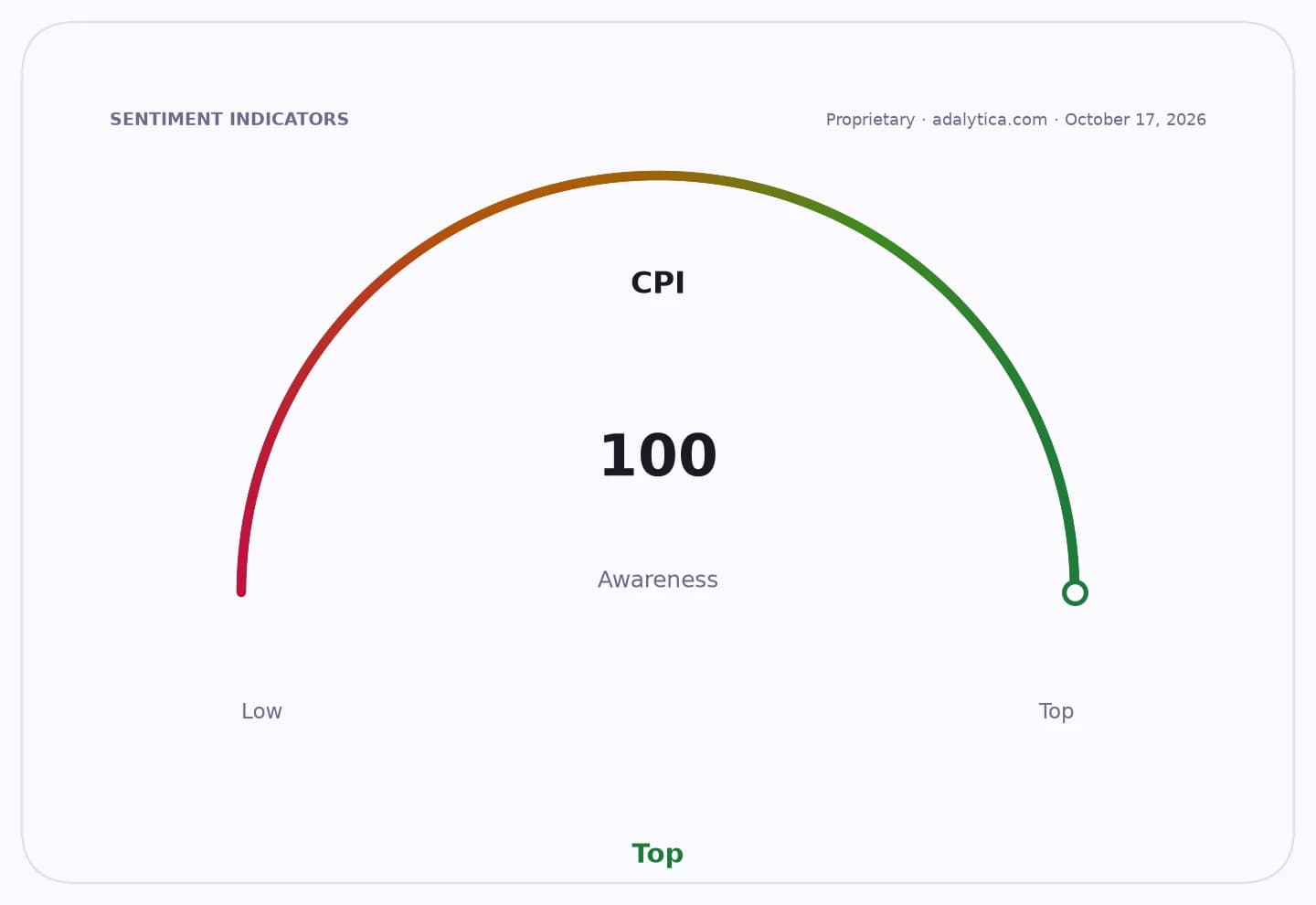
Sentiment IndicatorsⓘProprietary · adalytica.com · October 17, 2026
This is a snapshot — live sentiment, awareness and momentum for 130+ markets update continuously in the dashboard.Open AlphaPulse
The result is a tighter affordability backdrop that can depress mobility, suppress transaction volumes and keep would-be sellers locked in place. That matters for the broader economy because housing is a transmission channel for consumer spending, labor mobility and state and local revenue. When owners face higher fixed costs, they are less likely to trade up, relocate for work or absorb additional debt, which can slow turnover across the housing market and weigh on industries tied to home sales, remodeling and brokerage activity.
The pressure is visible in housing data and in the market behavior of real-estate intermediaries. U.S. housing starts have fallen sharply from their post-pandemic highs, while affordability continues to be constrained by financing costs and ownership expenses. Zillow shares have fallen to roughly $31.46 from levels above $70 late last year, reflecting the strain on housing transactions and the sensitivity of property-platform businesses to a frozen market. Opendoor, another transaction-dependent name, has dropped to $2.32 from nearly $9.40 in November, a sign that investors still see weak throughput in the resale market.
Insurers are feeling a different side of the same affordability crunch. The sector has been dealing with bigger catastrophe losses, and filings from peers including Travelers and Chubb point to underwriting pressure from weather-related claims, risk retention and less favorable reinsurance terms. For homeowners, that has translated into higher premiums and in some cases reduced availability of coverage in exposed markets. For investors, it raises questions about whether insurance inflation becomes a durable feature of the housing cost base rather than a temporary spike.
The political significance is that housing affordability is broadening beyond the usual debate over mortgage rates and the Federal Reserve. If Republicans and Democrats can frame taxes, insurance and financing as one cost stack, it could create more room for policy proposals on local levies, zoning and supply expansion. But the scale of the problem also means any relief is likely to be incremental.
For investors, the key issue is that housing demand will not recover cleanly just because mortgage rates ease. A full normalization would likely require lower borrowing costs, slower property-tax growth and stabilization in insurance pricing. Until then, the housing market may remain stuck in a low-turnover, high-cost environment that favors landlords, insurers with strong pricing power and select suppliers, while pressuring brokers, mortgage platforms and transaction-sensitive homebuilders.
| Entity | Gains | Losses |
|---|---|---|
| Homeowners with fixed costs | ▲More predictable budgets | ▼Higher carrying costs |
| Insurers with pricing power | ▲Higher premiums | ▼More claims and scrutiny |
| Housing platforms and brokers | ▲A rebound in turnover | ▼A frozen transaction market |
| Buyers and movers | ▲Lower rates, if they come | ▼Affordability pressure from taxes and insurance |