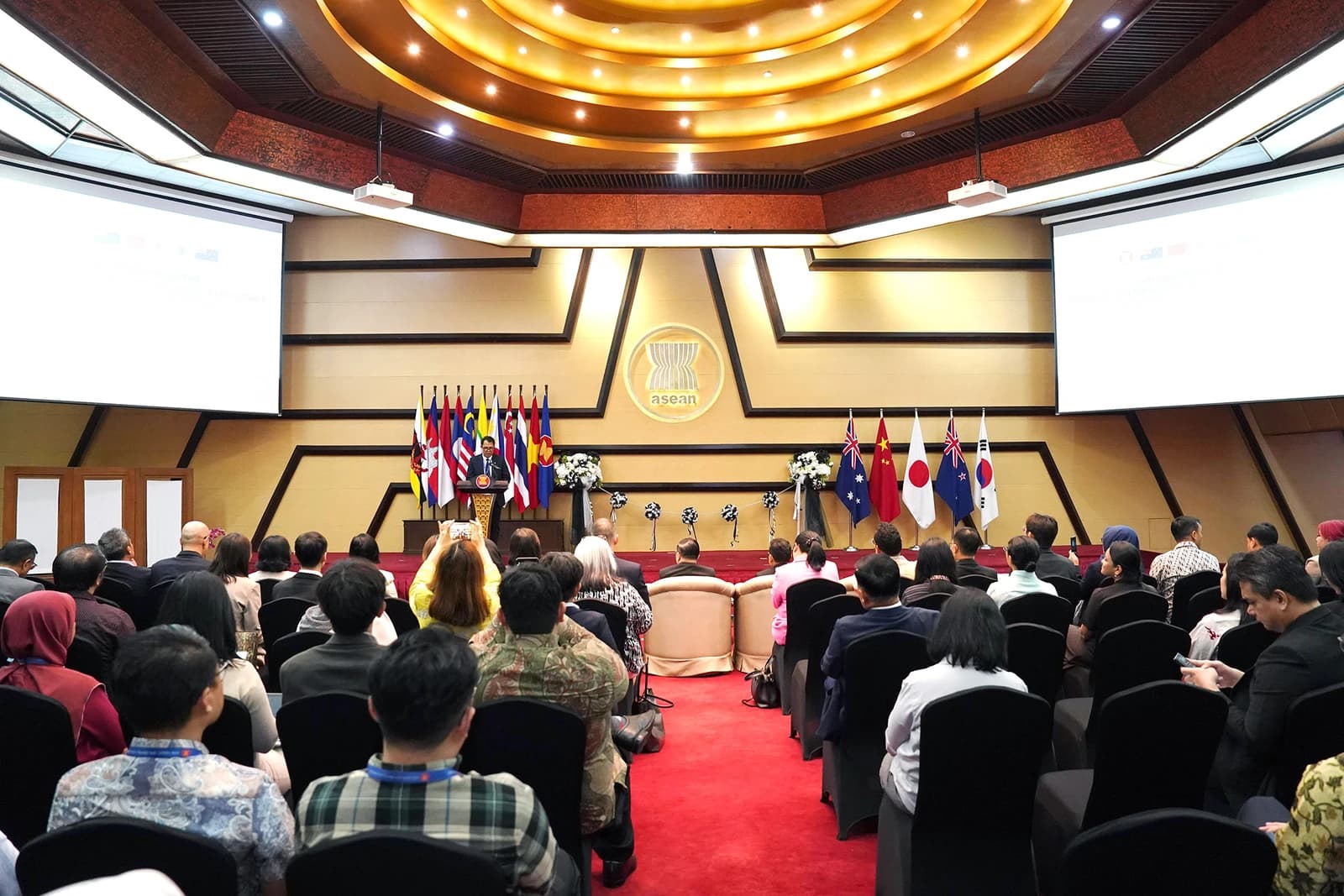
Azerbaijan’s state oil fund has helped launch a China-ASEAN Investment Council, a small headline with a big implication: more cross-border capital is looking for a home in Asia, and investors should pay attention to who gets the first-mover advantage.
Azerbaijan oil fund launches China-ASEAN council
That matters because ASEAN has become one of the clearest beneficiaries of the global push to diversify supply chains, financing and trade relationships away from a single-center model. When a sovereign wealth fund from an energy exporter steps into a regional investment platform linking China and Southeast Asia, it is a signal that capital is chasing long-duration growth themes — infrastructure, logistics, energy, technology and manufacturing — rather than waiting for markets to calm down first.
Sentiment IndicatorsⓘProprietary · adalytica.com · September 13, 2026
This is a snapshot — live sentiment, awareness and momentum for 130+ markets update continuously in the dashboard.Open AlphaPulse
The timing is notable. China’s policy stance toward foreign capital remains open enough to attract regional partnerships, while ASEAN continues to market itself as the fastest-growing, most strategically useful corridor in Asia. Vietnam is positioning itself as a bridge for supply chains and investment flows, Malaysia and Macau are deepening economic cooperation, and European businesses are also looking harder at the region. In other words, this is not an isolated diplomatic gesture. It fits a broader pattern of countries and investors seeking redundancy, resilience and access to growth.
For markets, the story is less about a one-day reaction and more about a slowly compounding allocation shift. The China-heavy FXI has been struggling to hold above its 200-day moving average and recently slipped back toward the mid-$34 area, while the broader emerging-markets ETF EEM has been firmer, trading near $68 and above both its 50-day and 200-day moving averages. That kind of relative strength suggests investors are still willing to own Asia exposure, but they are being selective about where the growth is easiest to underwrite.
The macro backdrop helps explain why. U.S. 10-year Treasury yields remain near 4.95%, keeping global capital relatively expensive and reinforcing the appeal of regions that can promise stronger growth per unit of valuation. Oil around $97 a barrel also keeps the energy story alive, which matters for a sovereign fund like Azerbaijan’s that is effectively recycling commodity wealth into long-term strategic exposure. When energy money moves into investment partnerships, it can accelerate development capital in sectors that traditional lenders often underfund.
For long-term investors, the real takeaway is that ASEAN is increasingly becoming an investable theme in its own right, not just a manufacturing footnote. The beneficiaries are likely to include infrastructure builders, logistics providers, banks, ports, industrials and companies tied to the region’s digital and energy buildout. The losers are the countries and companies that assume capital will stay trapped in old trade lanes.
This is not the kind of story that pays off in a week. It is the kind that compounds over years as institutions, sovereign funds and private capital keep building the pipes through which trade and investment flow. For patient investors, that makes ASEAN worth watching — and, in a diversified portfolio, worth owning for the long haul.
| Entity | Gains | Losses |
|---|---|---|
| ASEAN economies | ▲More foreign capital | ▼Slower capital inflows elsewhere |
| China-linked investors | ▲New regional access | ▼Less exclusive deal flow |
| Azerbaijan state oil fund | ▲Strategic diversification | ▼Concentration in oil revenues |
| Competing markets | ▲Some spillover interest | ▼Reduced attention from Asia capital |