Bangladesh’s most important foreign-policy choice is not whether to align with one power or another, but how to preserve room to maneuver in a world that is getting more competitive, more fragmented and more transactional.
Bangladesh First Policy and Investor Implications
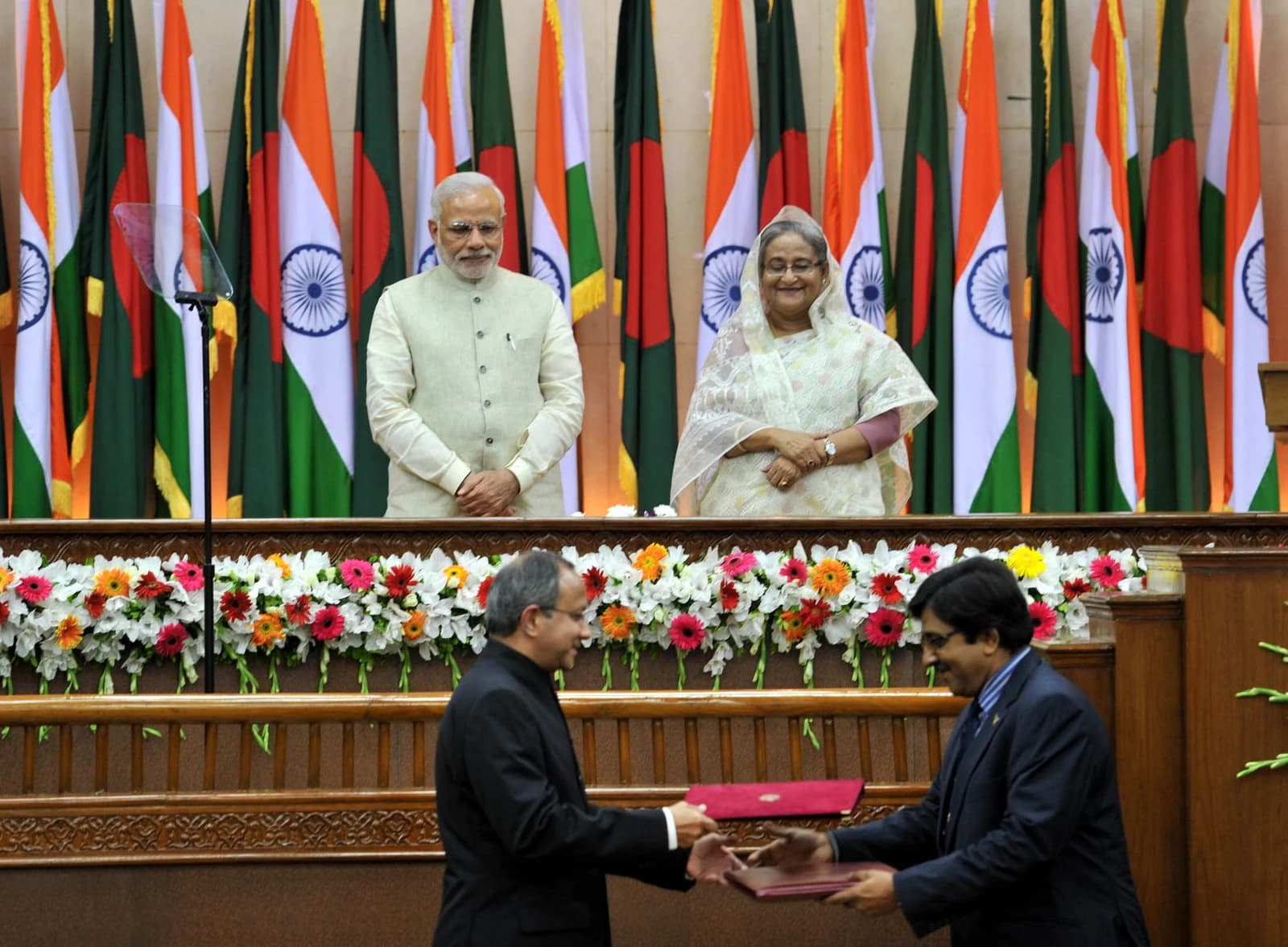
That is the real message behind the growing call for a “Bangladesh First” doctrine. For investors and businesses, it matters because foreign policy is no longer just about flags and speeches. It is about investment, export access, energy security, technology transfer and the stability of the rules that determine whether an economy can keep compounding over time.
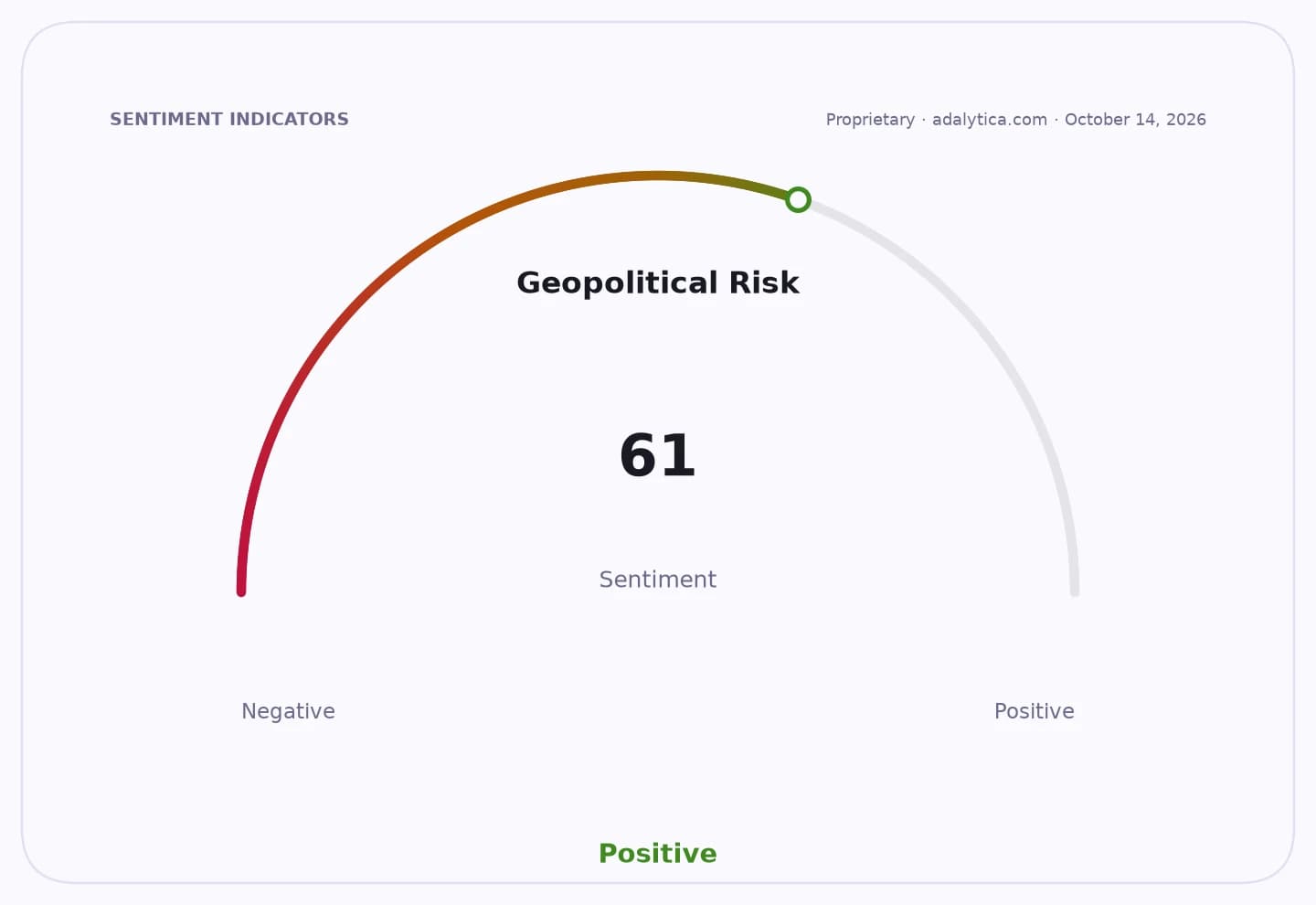
Sentiment IndicatorsⓘProprietary · adalytica.com · October 15, 2026
This is a snapshot — live sentiment, awareness and momentum for 130+ markets update continuously in the dashboard.Open AlphaPulse
For Bangladesh, that means diplomacy has to become more results-oriented. Embassies should be judged less by ceremony and more by whether they help win capital, open markets and attract skills. In practical terms, the country needs a foreign policy that supports economic growth first — not isolationism, but strategic autonomy.
That is especially important now because Bangladesh sits at the intersection of several major pressures. Great-power rivalry is reshaping trade and infrastructure financing. Supply chains are being redrawn. Energy markets remain sensitive. And the country’s own domestic environment is volatile, with political tensions, security concerns and institutional strain making predictability more valuable than ever.
The economic case for a “Bangladesh First” approach is straightforward. Heavy dependence on any single external partner can narrow policy choices and create leverage for others. A more diversified strategy would keep India as a critical neighbor, China as an important source of infrastructure finance, Japan as a supplier of technology and higher-quality investment, and the U.S. and European Union as essential export markets. That balance is not a luxury; it is a safeguard.
It is also where the upside for long-term investors begins. Bangladesh has one of the clearer geographic advantages in Asia, sitting on the Bay of Bengal at a time when Indo-Pacific connectivity is becoming more important. Better ports, logistics, customs and regional transport links could turn that location into real economic value. If the country can pair external engagement with domestic reform, it could become a more important hub for trade between South Asia and Southeast Asia.
The opportunity set goes beyond geography. A genuinely national foreign policy would also support export diversification. Ready-made garments will remain central, but pharmaceuticals, information technology, digital services, electronics, agro-processing, shipbuilding and light engineering are the kinds of sectors that can deepen resilience. Those industries need stable policy, reliable institutions and better skills — exactly the kind of foundation that an economic-first foreign policy is supposed to reinforce.
Climate diplomacy is another underappreciated angle. Bangladesh already has credibility on adaptation and resilience, and that gives it a chance to attract climate finance, green investment and cleaner technology. For a country exposed to climate risk, that is not just a moral argument; it is a competitive one. Sustainability is increasingly part of how capital decides where to go.
Still, the risks are real. A more independent posture only works if it is backed by strong institutions, good governance and enough domestic consensus to survive political turnover. A slogan cannot do the job of state capacity. And in a region where tensions over borders, water and trade can flare quickly, Bangladesh will need pragmatism, not rhetoric, to preserve flexibility.
For investors, the takeaway is encouraging but conditional. A Bangladesh that broadens its partnerships, upgrades its infrastructure and improves policy reliability becomes a better long-term compounder. A Bangladesh that remains overdependent, under-reformed and politically distracted will struggle to convert its strategic location into economic value. The idea is worth watching closely — and, if policymakers deliver, could become a genuine long-term investing story.
| Entity | Gains | Losses |
|---|---|---|
| Bangladesh | ▲More autonomy, stronger growth options | ▼Dependence on single partners |
| Investors | ▲Better policy predictability | ▼Geopolitical concentration risk |
| Exporters | ▲Wider market access | ▼Narrow trade exposure |
| Major powers | ▲Stable, pragmatic engagement | ▼Exclusive influence over Dhaka |