Government warehouses in Bangladesh are full of rice and wheat, but that is doing little for families who cannot afford to buy food at market prices.
Bangladesh Grain Stocks Rise, Food Aid Lags
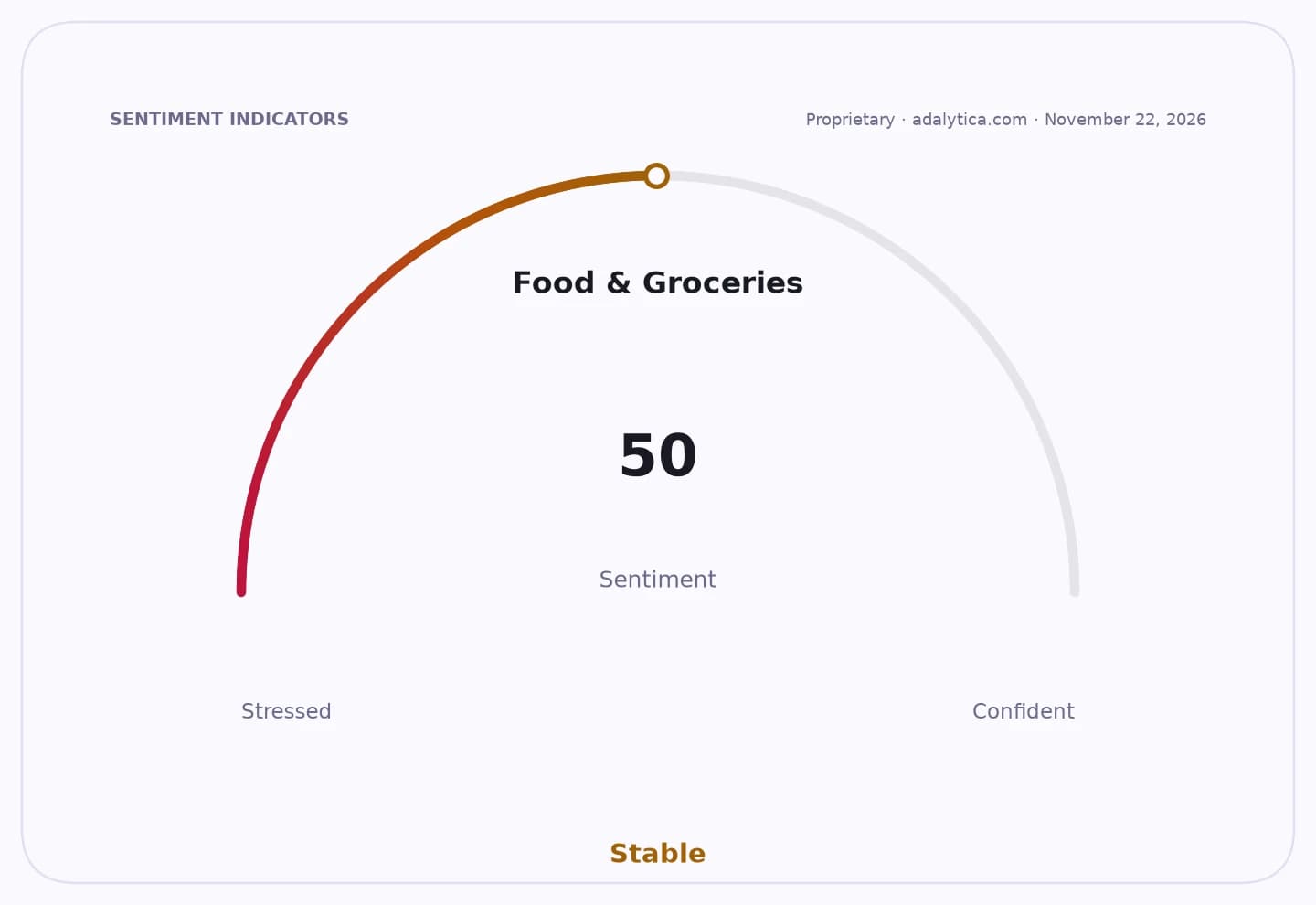
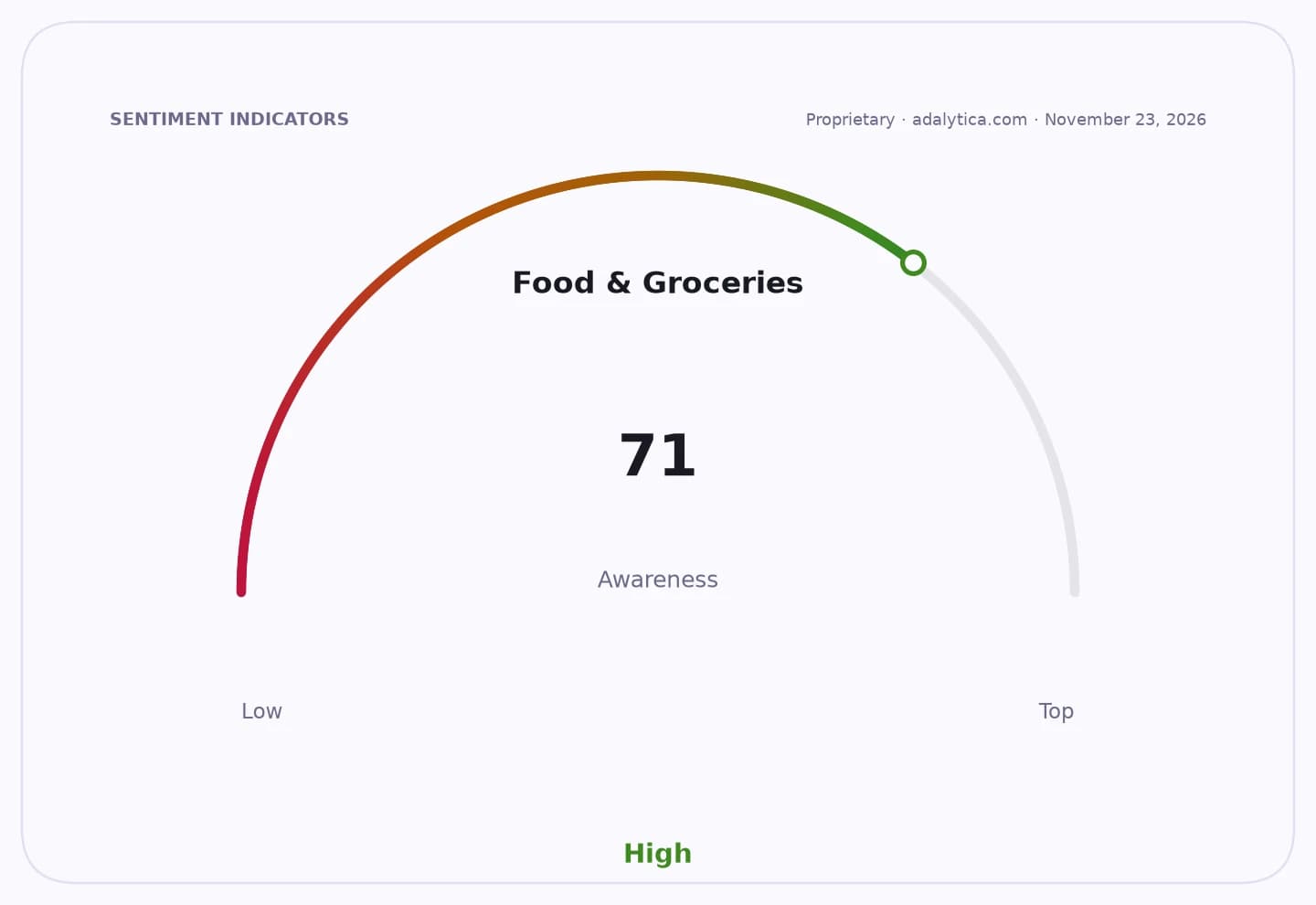
Food & Groceries
That is the real economic story here: the country has inventory, but its safety net is not reaching enough of the people most exposed to four years of stubborn inflation and falling real wages. For investors, policymakers and anyone watching emerging-market stability, that gap matters more than the headline stockpile number. When staples are abundant in storage but scarce in poor households’ budgets, social pressure rises, consumption weakens and the case for broader subsidy support gets stronger.
Sentiment Indicators
By mid-November, Bangladesh’s food ministry said public grain stocks stood at 2.08 million tons, including 1.73 million tons of rice and 312,000 tons of wheat. That is comfortably above the 1.47 million tons on hand in June 2024 and even the 2.18 million-ton peak reached in August under the interim government. In other words, supply is not the immediate problem.
The distribution problem is. From July 1 to Nov. 12, government agencies distributed about 1.204 million tons of grain, nearly 8% less than in the same period a year earlier. The drop was driven mainly by reduced supplies under the Food Friendly Program and Open Market Sales, the two channels most lower-income households depend on. In the first four months of the current fiscal year, the state-run Trading Corporation of Bangladesh received no rice allocation at all, according to the food ministry.
That matters because these programs are not minor adjustments around the edges. The Food Friendly Program supports 5.5 million families with 30 kilograms of rice a month for six months of the year at 15 taka a kilogram. Open Market Sales, meanwhile, offers rice and flour year-round at subsidized prices. For a family living on a few hundred taka a day, the difference between 30 taka and 50 taka rice, or 24 taka and nearly 50 taka flour, can determine whether dinner happens at all.
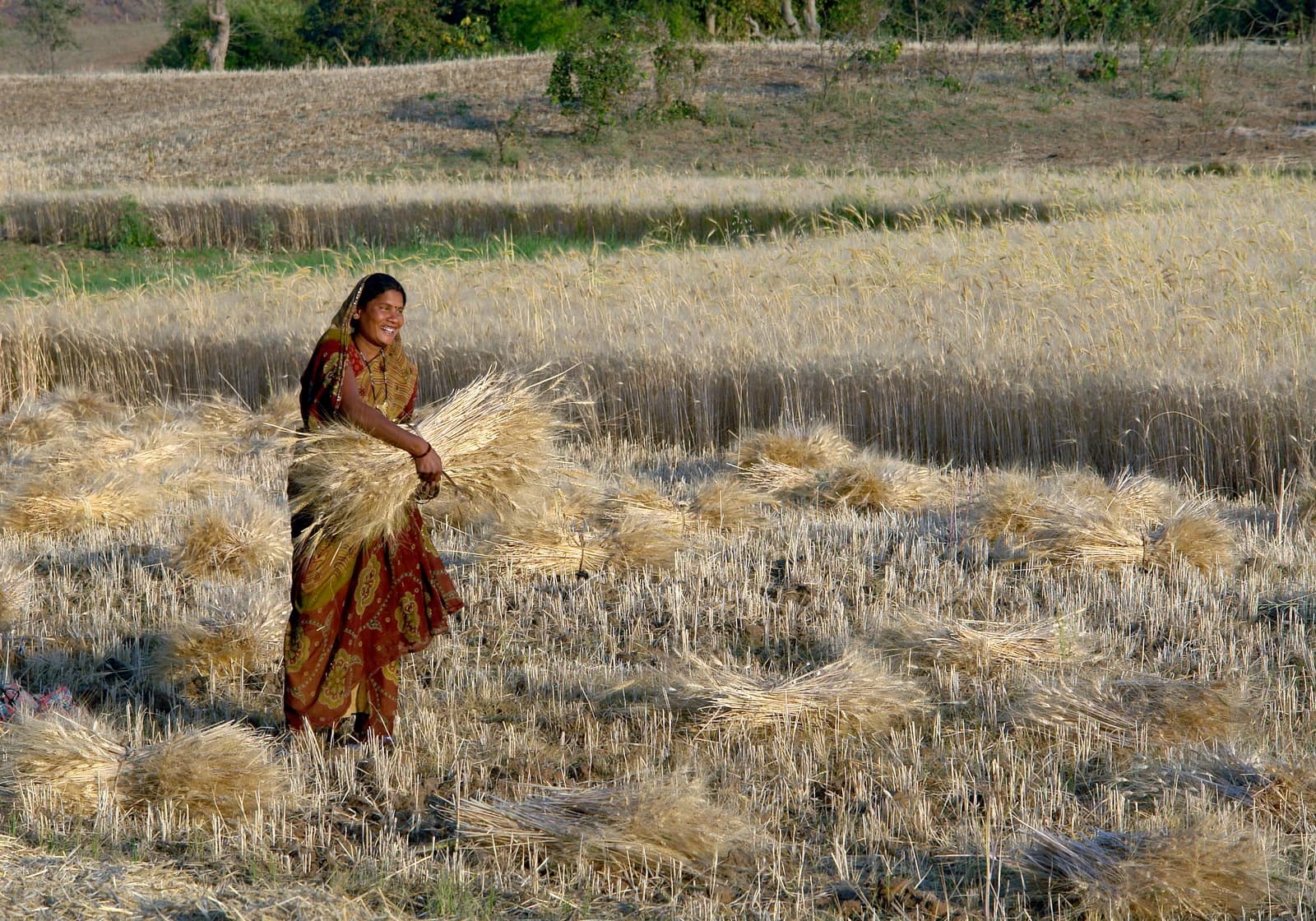
Bangladesh has spent years wrestling with inflation that has eroded purchasing power faster than many households can adjust. Food inflation was 10% in fiscal 2024-25 and still ran at 8.7% in 2025-26, while average inflation in September was 8.66%, official data showed. The World Bank has warned that prolonged inflation and a severe energy squeeze are wiping out earlier economic gains, with about 62 million people at risk of falling below the poverty line if another shock hits. It also said national poverty could rise to 22.5% in 2026 from 18.7% in 2022.
That is why the warehouse figures alone can be misleading. Food stocks do not feed anyone unless the state moves them into the hands of the people who need them. As economist Fahmida Khatun of the Centre for Policy Dialogue put it, plenty in storage means little if the benefits do not reach the most vulnerable families.
For investors, the key implication is not a direct market trade but a broader risk reading. Persistent food stress can deepen demand weakness, strain fiscal policy and keep pressure on the government to expand subsidies or emergency support. It also raises the political cost of any misstep in distribution. Bangladesh’s challenge is no longer simply producing or importing enough grain; it is ensuring that real wages, access programs and retail distribution keep pace with the cost of living.
The next few months will show whether the government’s promise to allocate 300,000 tons of rice to the state trading corporation starts to close that gap. If it does, poor households get relief and domestic stability improves. If it does not, the country may keep reporting comfortable stocks while millions continue to live one price shock away from hunger.
| Entity | Gains | Losses |
|---|---|---|
| Low-income households | ▲Cheaper grain access | ▼Continued food stress |
| Bangladesh government | ▲Higher stocks on paper | ▼Pressure to expand aid |
| Subsidy programs | ▲Bigger allocations ahead | ▼Earlier undersupply |
| Retail food sellers | ▲Stronger demand at market prices | ▼Margin pressure from subsidized sales |