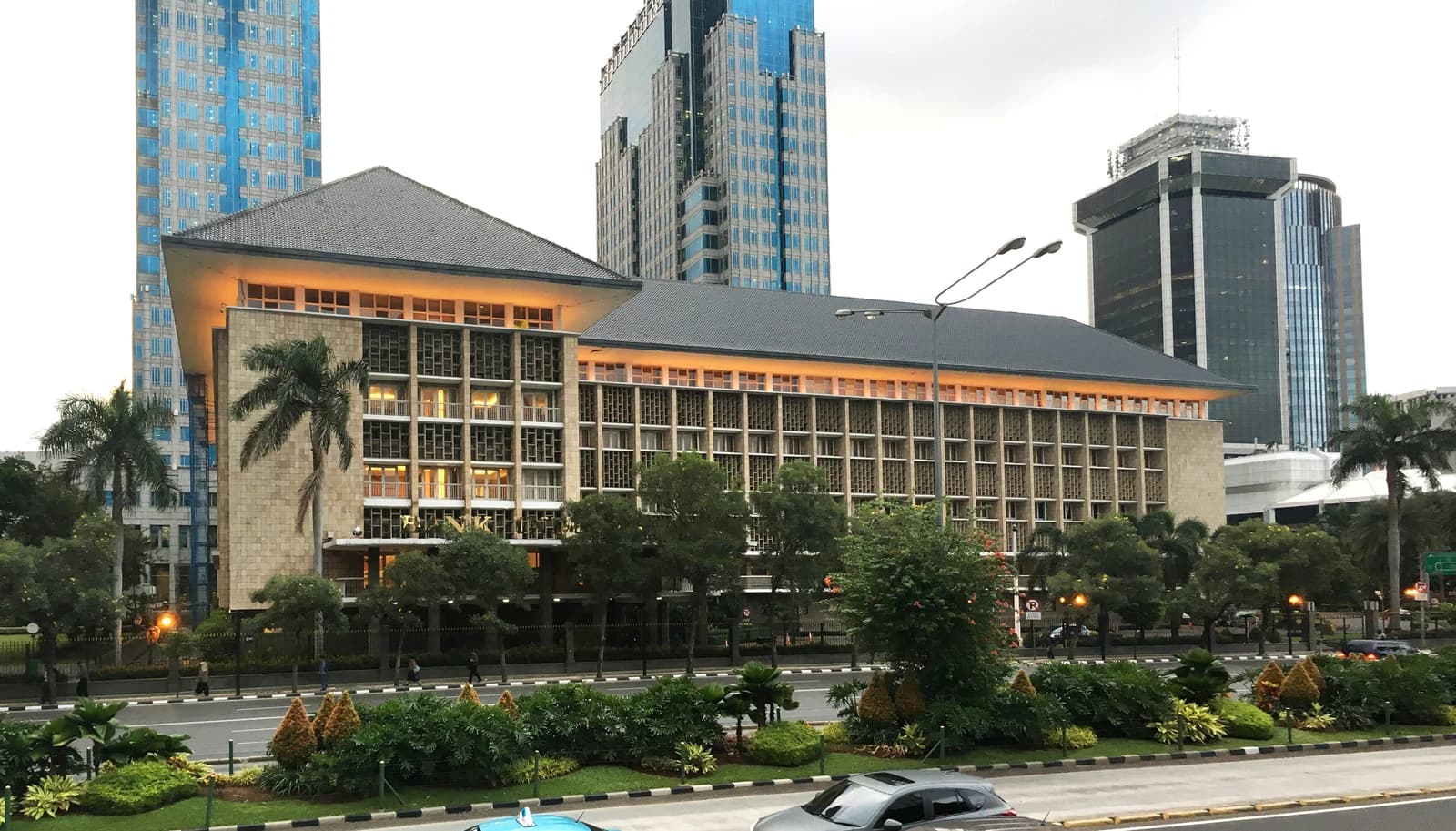
Bank Indonesia left its benchmark interest rate at 5.75% and turned to bank liquidity tools to support growth, underscoring how a stronger US dollar and a still-tight global rate backdrop are limiting the room for emerging-market easing.
Bank Indonesia Holds 5.75% Rate, Cuts Reserves

The central bank’s decision on Wednesday was economically important because it signals a policy bias toward stability rather than aggressive stimulus at a time when imported inflation, capital-flow sensitivity and currency weakness remain key constraints. By holding rates steady while cutting the statutory reserve requirement, BI is trying to ease domestic credit conditions without putting additional pressure on the rupiah.
Sentiment IndicatorsⓘProprietary · adalytica.com · October 28, 2026
This is a snapshot — live sentiment, awareness and momentum for 130+ markets update continuously in the dashboard.Open AlphaPulse
Governor Destry Damayanti said the global outlook remained “higher for longer,” citing the likelihood of further tightening by the Federal Reserve and elevated commodity prices after Middle East tensions pushed up oil. BI also pointed to limited investor appetite for emerging-market assets, which has helped keep the US dollar strong against both developed and emerging-market currencies.
That matters for investors because a firm dollar tends to tighten financial conditions across Asia, raises the cost of servicing foreign currency liabilities and can force central banks to protect exchange-rate stability even when domestic growth softens. BI’s move suggests policymakers are prioritizing liquidity support for banks over a rate cut that could have accelerated capital outflows or added to currency volatility.
The timing is also notable. BI moved a week before the Fed’s Oct. 27-28 meeting, when markets mostly expect no change, though traders are still pricing a 25-basis-point increase in December. Against that backdrop, Indonesia’s central bank is effectively warning that the external environment may stay restrictive for longer, leaving little scope for a straightforward easing cycle.
For Indonesia’s economy, the reserve requirement reduction should help release funds into the banking system and support lending, but it is not a substitute for broader monetary accommodation. The benefit is likely to be incremental unless credit demand improves and the rupiah steadies enough to give BI more flexibility.
The bull case is that BI has created a limited but useful growth cushion without compromising credibility. The bear case is that if the dollar remains strong and the Fed stays hawkish, the central bank may have to keep policy tight for longer, leaving domestic growth more reliant on liquidity measures and fiscal support than on lower borrowing costs.
| Entity | Gains | Losses |
|---|---|---|
| Indonesian banks | ▲More liquidity | ▼Lower reserve buffers |
| Borrowers | ▲Easier credit access | ▼No rate cut relief |
| Bank Indonesia | ▲Policy flexibility | ▼Faster growth support |
| Rupiah bulls | ▲Stability focus | ▼Dollar-driven pressure |