Russia’s central bank is facing a growing credibility test as top lenders warn that expensive credit and tax changes are pushing households and businesses toward cash, informal payments and investment “outside” the core economy.
Bank of Russia Faces Deposit Outflow Concerns
The concern matters because it cuts to the heart of Moscow’s anti-inflation strategy: the Bank of Russia wants tight monetary conditions to keep prices contained, but banks say the same policy mix is altering behavior in ways that can weaken tax collection, distort credit demand and slow long-term capital formation.
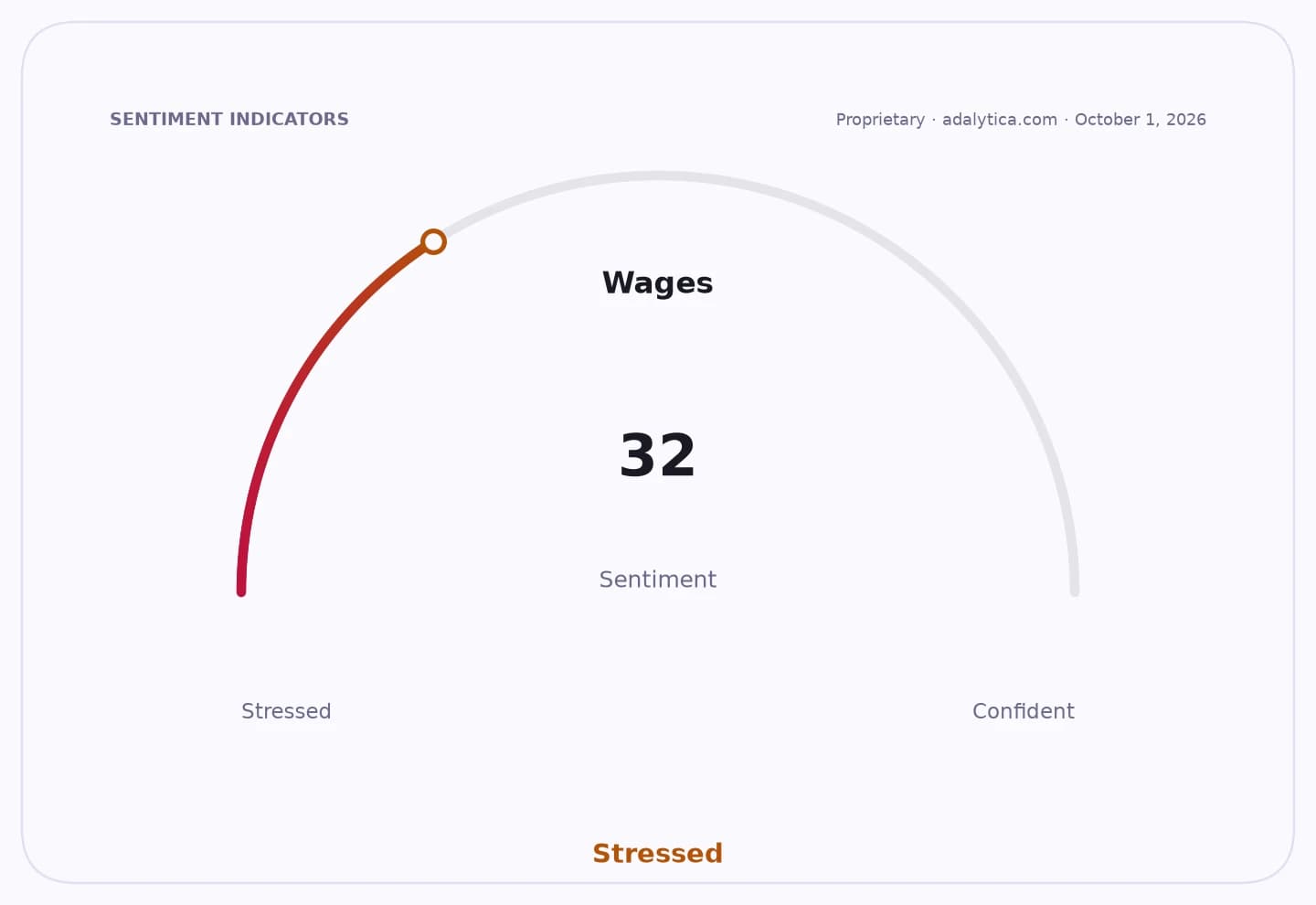
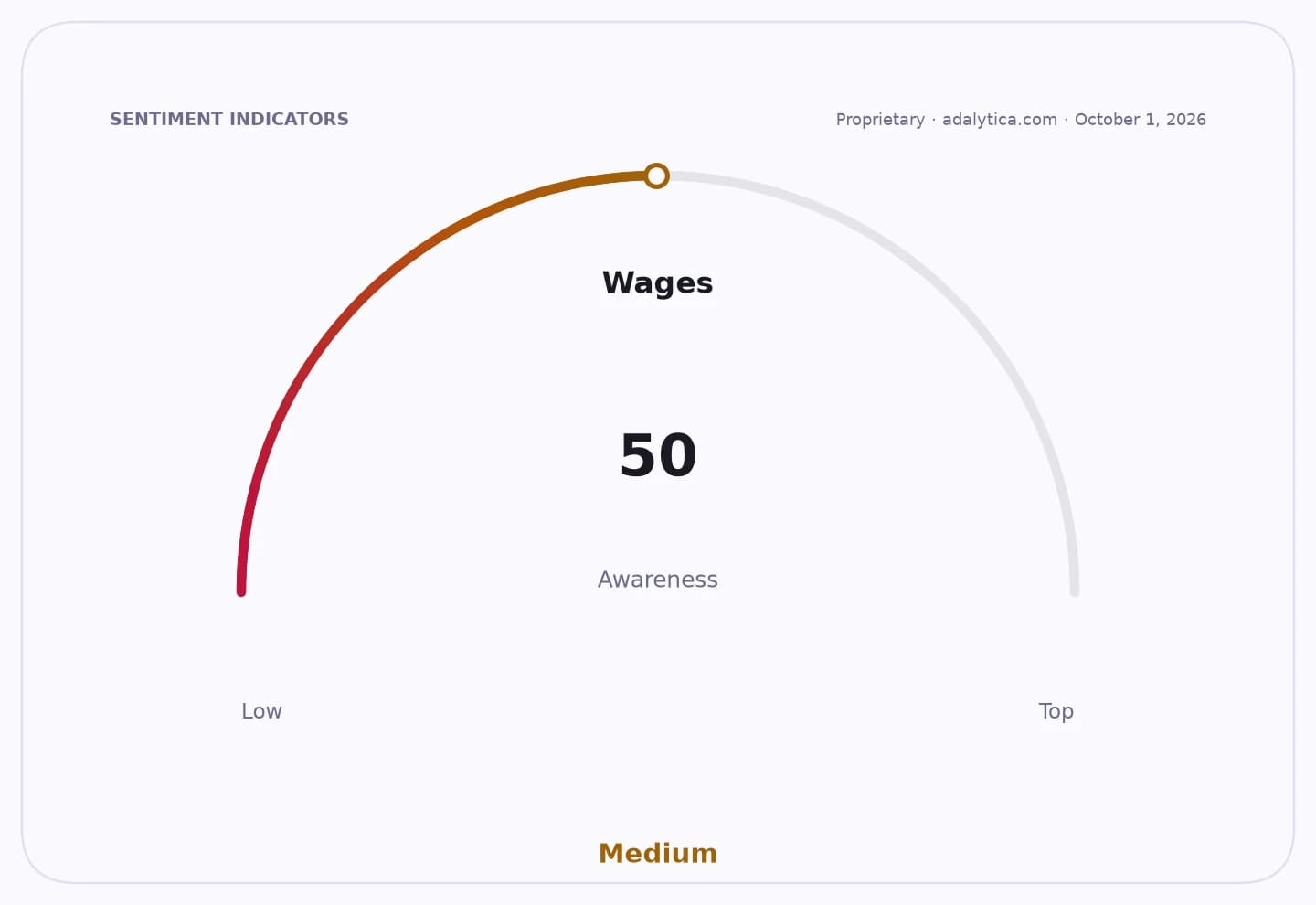
Sentiment IndicatorsⓘProprietary · adalytica.com · September 30, 2026
This is a snapshot — live sentiment, awareness and momentum for 130+ markets update continuously in the dashboard.Open AlphaPulse
At the annual banking forum in St. Petersburg, Alfa Bank said people are withdrawing about half a trillion rubles a month from deposits, a pace it linked to a rise in “gray” settlements. VTB warned that some entrepreneurs are shifting capital away from their main businesses because of rising worries over property rights, a sign that the real constraint may be not just the key rate but confidence in the rules of the game.
Central Bank Governor Elvira Nabiullina pushed back, saying the data do not show macroeconomic stress and that some increase in cash demand is consistent with the end of a period of unusually high deposit rates. She said the share of corporate spending devoted to interest payments is only about 5% of total costs for major firms, arguing that labour, raw materials and other inputs are a much bigger burden. Even so, she acknowledged corporate borrowers are in weaker shape than in 2023-24 and that the economy has fallen back to around its 2019 level.
The policy takeaway is that the central bank is not preparing a broad easing cycle. Nabiullina reiterated that Russia will keep a moderately tight monetary stance, saying softer policy now would risk reigniting inflation. The one area where regulators may ease is lending tied to critical infrastructure protection, including restructuring for companies hit by external attacks.
For investors, the story is less about a short-term deposit outflow than about the medium-term implications for bank funding, loan growth and asset quality. Cash withdrawals on the scale cited by Alfa Bank can pressure deposit franchises if they persist, even if the banking system as a whole remains liquid. At the same time, slower formal investment and a larger informal economy tend to reduce transparency, weaken credit visibility and complicate risk pricing for lenders.
VTB’s comments also highlight a second-order risk: if wealthy owners decide to keep capital offshore, in passive assets or in structures outside their operating companies, domestic investment could stay subdued even if the banking system still has funds to lend. That would leave the economy more dependent on state spending and war-related demand, with fewer private-sector drivers to sustain growth.
The broader narrative is one of economic fragmentation. Banks say the system is still functioning, credit is still expanding and there is no immediate balance-sheet crisis. But the combination of tight policy, tax pressure, weak confidence and property-rights concerns is encouraging some participants to move into cash, delay investment or shift money away from the formal economy.
For the central bank, the next test is whether it can keep inflation under control without deepening those distortions. For lenders and investors, the key question is whether current behaviour proves temporary or marks a more durable turn toward a smaller, less transparent and less investable economy.
| Entity | Gains | Losses |
|---|---|---|
| Bank of Russia | ▲Lower inflation risk | ▼Deposit growth, private investment |
| Large banks | ▲Higher lending discipline | ▼Faster cash leakage, weaker confidence |
| Households holding cash | ▲More flexibility | ▼Deposit income, banking protection |
| Formal economy/tax base | ▲Greater scrutiny if flows normalize | ▼Gray payments, investment outside the system |