Bulgaria’s central bank has warned that a proposed extra tax on bank profits could make loans more expensive, curb private investment and lift the state’s borrowing costs, turning a politically easy revenue measure into a broader economic risk.
Bulgaria Bank Tax Could Raise Borrowing Costs

The warning from Bulgarian National Bank Governor Dimitar Radev goes to the heart of how the tax would be transmitted through the economy. While the levy would be collected from banks, Radev argued the burden would not necessarily stay there: lenders could respond by widening loan margins, trimming deposit rates, tightening underwriting standards or reducing balance-sheet risk. That would matter most for households and companies already facing a higher cost of capital and for a government that may need substantial new debt financing.
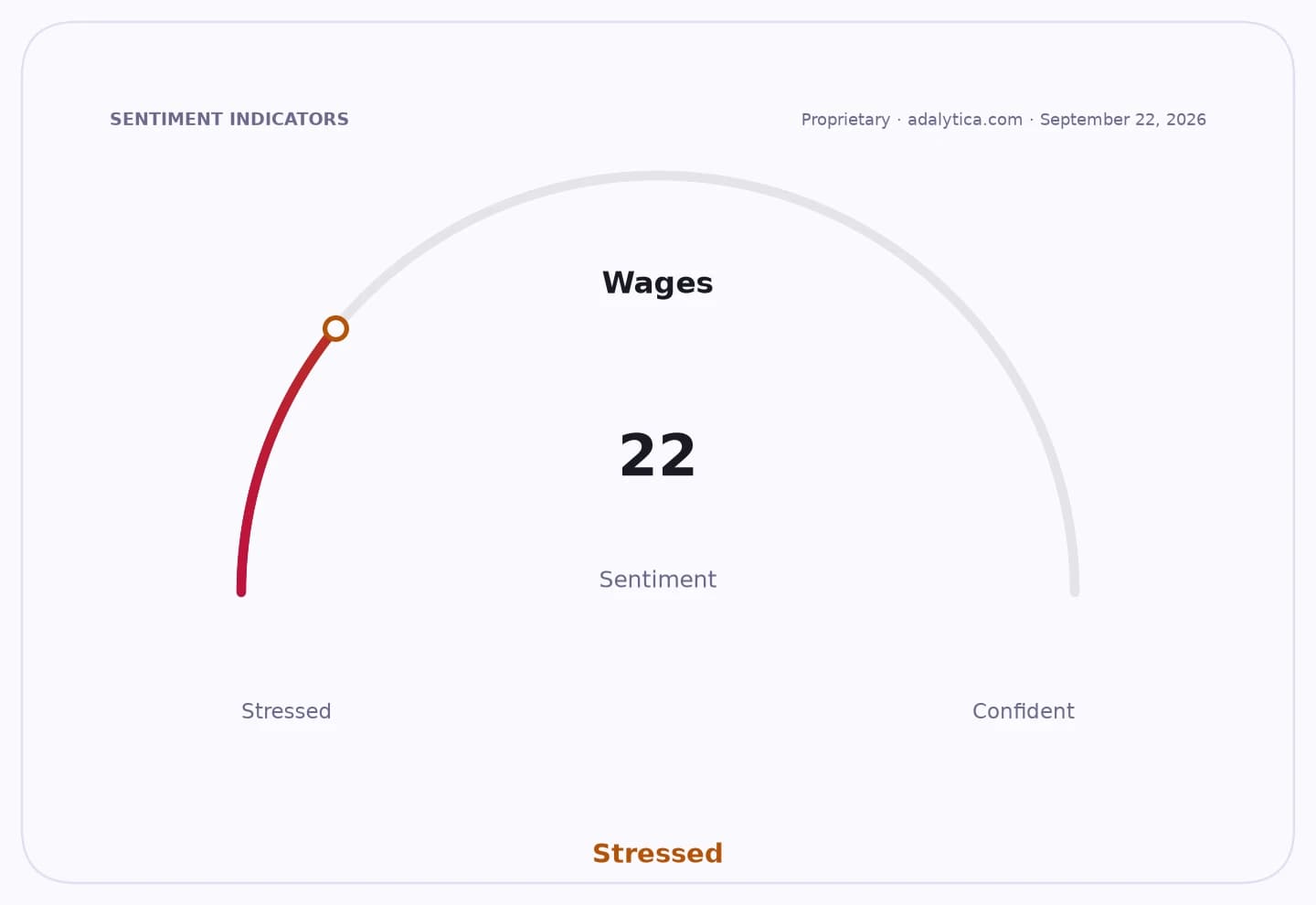
Sentiment IndicatorsⓘProprietary · adalytica.com · October 1, 2026
This is a snapshot — live sentiment, awareness and momentum for 130+ markets update continuously in the dashboard.Open AlphaPulse
Radev’s core point is that bank profits are not just distributable income but a key source of internal capital. In a system where profits help build buffers, a levy on earnings can weaken the capacity to absorb losses and keep lending through stress. He pointed to 2020, when banks’ stronger capital and liquidity positions allowed them to grant payment relief and support borrowers during the pandemic. Stripping away part of that recurring earnings pool, he said, could leave the system less flexible in the next shock.
The macroeconomic stakes are larger than the immediate fiscal take. Bulgaria is preparing for euro area entry, which increases the emphasis on predictable taxation, investment and financial stability. Radev said the relevant question is not whether the state can raise one-off revenue, but whether the measure improves the net economic outcome once secondary effects are included. Those effects include slower credit growth, lower investment, weaker consumption and potentially smaller receipts from VAT, corporate tax, income tax and social contributions.
The policy trade-off is especially sensitive because Bulgarian banks are major buyers of government securities. If the tax pushes lenders toward lower-risk sovereign paper instead of private credit, firms and households could see less financing. If it instead makes banks less willing to absorb government debt, the state may face a higher cost of funding. Either way, the measure could end up raising the price of capital across the economy rather than simply extracting excess profit from banks.
Markets are likely to focus on whether the proposal is narrowed, delayed or paired with a broader impact assessment. Radev said any final decision should be based on scenario analysis covering capital, lending, rates, investment and growth, including how fiscal policy interacts with monetary and macroprudential settings. For investors, the immediate issue is not financial-stability stress, which the governor said is not the case today, but whether policy uncertainty in a still-profitable banking system starts to feed into spreads, credit availability and sovereign financing costs.
| Entity | Gains | Losses |
|---|---|---|
| Bulgarian budget | ▲One-off tax revenue | ▼Higher long-term financing costs |
| Banks | ▲Lower profit-sharing pressure if measure is softened | ▼Capital generation and lending margins |
| Households and firms | ▲Possible none | ▼Higher borrowing costs, tighter credit |
| Bulgarian sovereign debt market | ▲Potential demand if banks buy more bonds | ▼Potentially higher yields if banks reduce demand |