AI is no longer just a productivity tool for Wall Street — it is becoming a workforce shock that is forcing banks to rethink hiring, training and even the shape of entry-level careers.
Banks Face AI Hiring and Training Disruption
That is the real message from a fresh PwC survey of financial services employees: 40% said they feel overwhelmed by the pace of change, while 80% expect their organizations to cut headcount by 20% in the next few years. For investors, that matters because the industry’s AI spend is no longer just about software efficiency or faster back-office processing. It is about whether the biggest banks can translate automation into higher margins without damaging morale, retention and the pipeline of future talent.
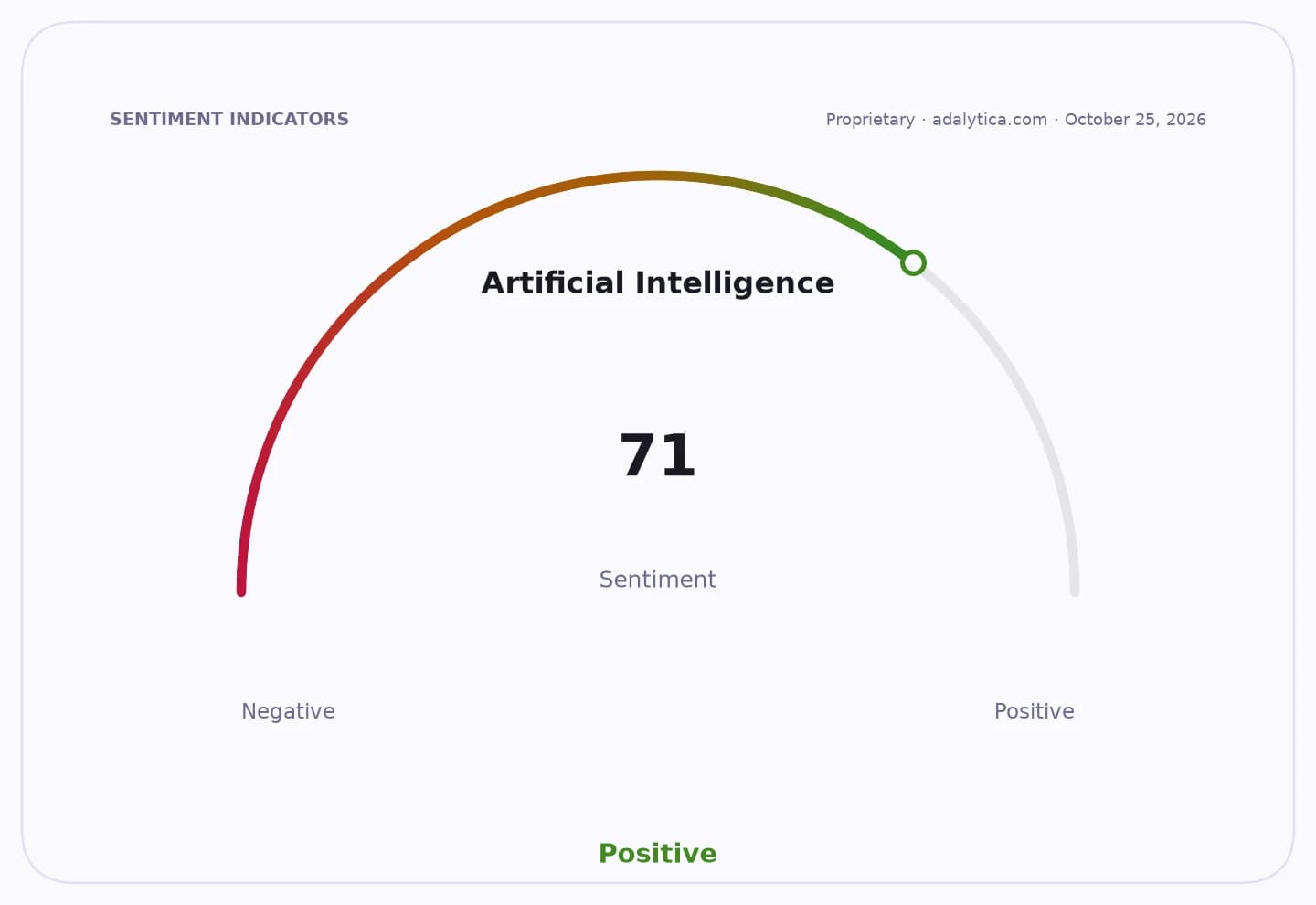
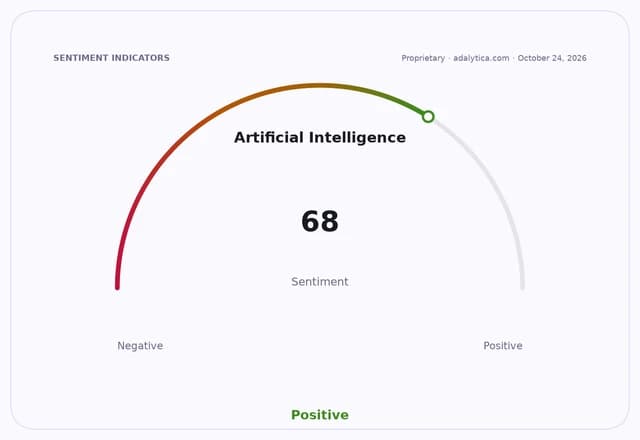
Sentiment IndicatorsⓘProprietary · adalytica.com · October 24, 2026
This is a snapshot — live sentiment, awareness and momentum for 130+ markets update continuously in the dashboard.Open AlphaPulse
The tension is easy to see. Firms are pushing workers to move faster, standardize processes and redesign operations around AI, even as only 22% of survey respondents said they use generative AI daily on the job. That gap suggests the technology is advancing faster than most employees can absorb it. It also explains why 44% of respondents said they do not trust senior management. In a sector built on judgment, risk management and client relationships, distrust is not a small issue — it can slow implementation and reduce the payoff from expensive AI investments.
The pressure is spreading beyond sentiment and into job design. At BNY, which said it has more than 300 AI-enabled offerings in production and nearly 150 digital employees, executives argue the bank has little choice but to keep adapting. But even there, the message is not simply “replace people with machines.” Leaders say they are bringing workers into redesign efforts so they understand how their roles will change. That approach matters because the real economic dividend from AI in banking will come from reengineering workflows, not just trimming payroll.
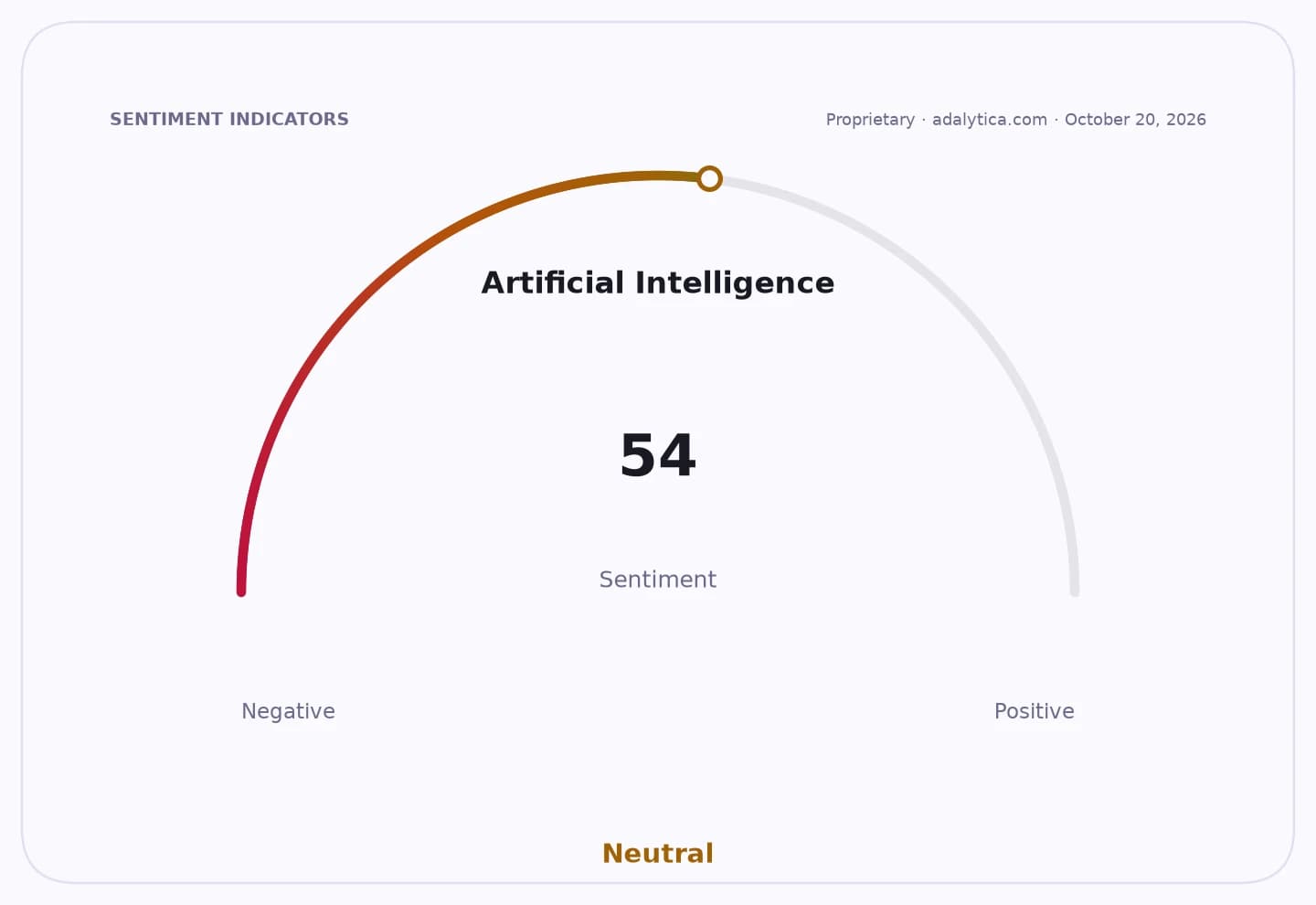
Artificial Intelligence — 30-day sentimentadalytica.com
Explore this data interactively — full history, time series and cross-market comparisons.Open AlphaPulse
There is also a more practical problem: AI is eliminating the grunt work that used to train junior bankers and analysts. Spreadsheets, slide decks and repetitive tasks once taught newcomers how the business worked. If those tasks disappear, firms have to replace them with apprenticeships, coaching and earlier client exposure. That requires time from senior staff, which is expensive and slows the short-term savings story. But it may be the only way to protect institutional knowledge and avoid hollowing out the talent base that banks need over the long term.
For investors, the takeaway is straightforward. AI can still be a powerful profit engine for banks and technology vendors, but the winners will be the firms that pair automation with credible workforce planning. Microsoft and Nvidia remain central to the AI buildout, yet the next phase of the story is not just who sells the chips and cloud tools. It is which financial institutions can keep employees engaged while using AI to raise productivity, control costs and defend client service. That makes the AI labor transition worth watching closely over the next several years, not just the next quarter.
| Entity | Gains | Losses |
|---|---|---|
| Large banks adopting AI | ▲Higher productivity, lower costs | ▼Near-term morale and trust issues |
| Employees and junior staff | ▲Better training if firms invest | ▼Routine tasks and job security |
| Microsoft and Nvidia | ▲More AI demand and infrastructure spend | ▼Pressure if adoption stalls |
| Investors | ▲Long-term margin upside if execution works | ▼Short-term uncertainty from workforce disruption |