Managers are being judged less on how many people they oversee and more on whether they can turn AI use into better decisions, better execution and reusable results.
Managers and AI skills reshape enterprise workflows
That is the core argument behind a new management playbook that says “using AI” is only the starting point. The more valuable test is whether a manager can identify the right problem, design how humans and AI should split the work, bring others along and then prove the improvement can be repeated in a different setting. In other words, the scarce asset in the AI era is not prompt fluency, but what the article calls four forms of “career capital”: problem-setting, execution design, stakeholder buy-in and results that can be replicated.
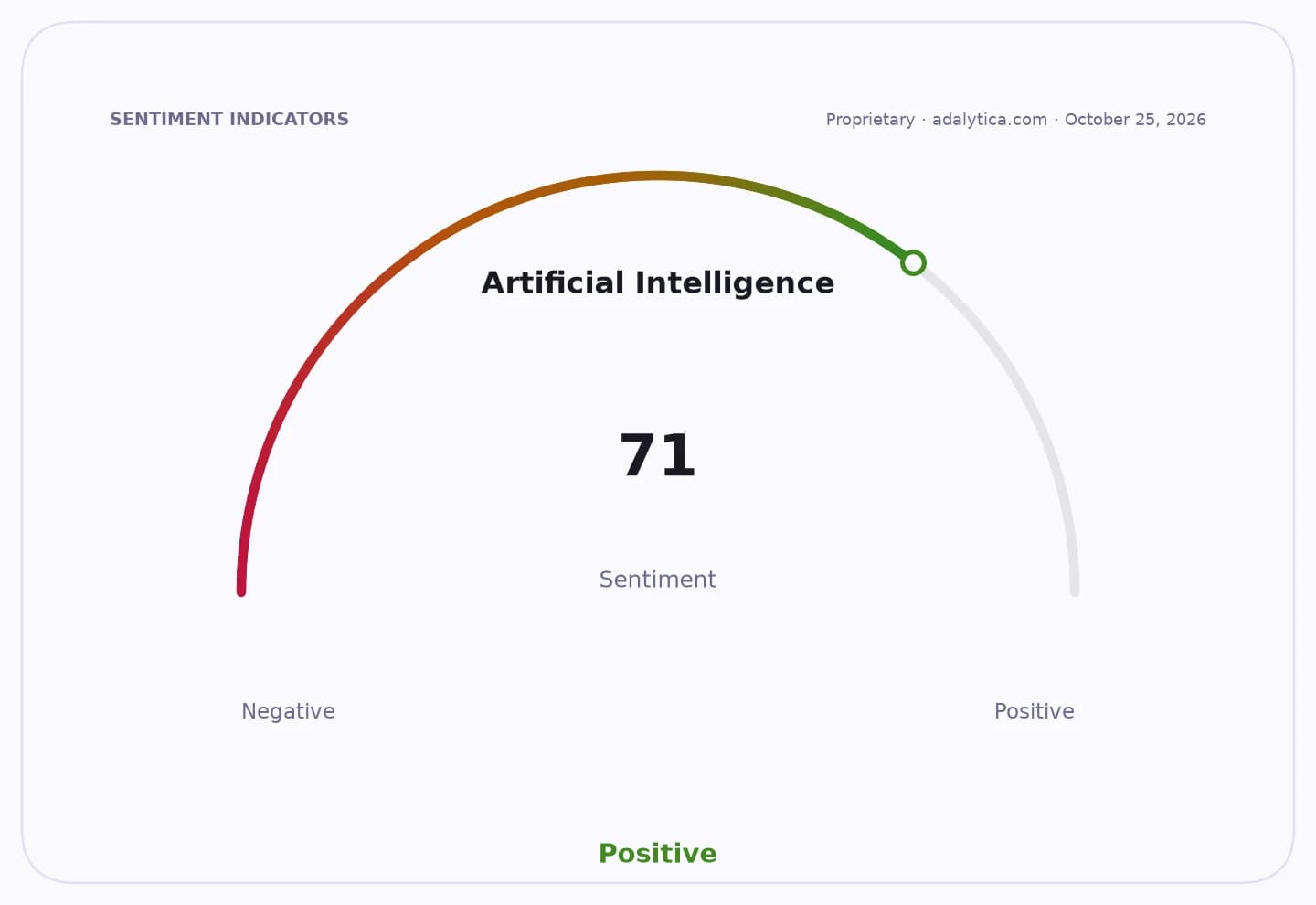
Sentiment IndicatorsⓘProprietary · adalytica.com · October 25, 2026
This is a snapshot — live sentiment, awareness and momentum for 130+ markets update continuously in the dashboard.Open AlphaPulse
The timing matters because companies are moving quickly from experimentation to operational use, but the talent base is still thin. Japan’s Ministry of Economy, Trade and Industry-backed digital skills standard, due for publication in April 2026, is already pushing beyond basic AI implementation to requirements analysis, KPI design and hypothesis-testing cycles. That shift suggests employers are no longer satisfied with workers who can simply generate output with AI. They want managers who can judge whether the output is right, whether it solves the business issue, and whether it can be carried into the next project.
Microsoft’s 2026 Work Trend Index gives a glimpse of how fast expectations are changing. In a 10-country survey of 20,000 knowledge workers, 58% said AI enabled them to do work they could not do a year earlier, while 86% said they treat AI output as a starting point rather than a final answer. Those figures are self-reported, not proof of productivity gains, but they do point to a structural change: AI is expanding the scope of work, and managers are increasingly expected to supervise the judgment around it.
Artificial Intelligence — 30-day sentimentadalytica.com
Explore this data interactively — full history, time series and cross-market comparisons.Open AlphaPulse
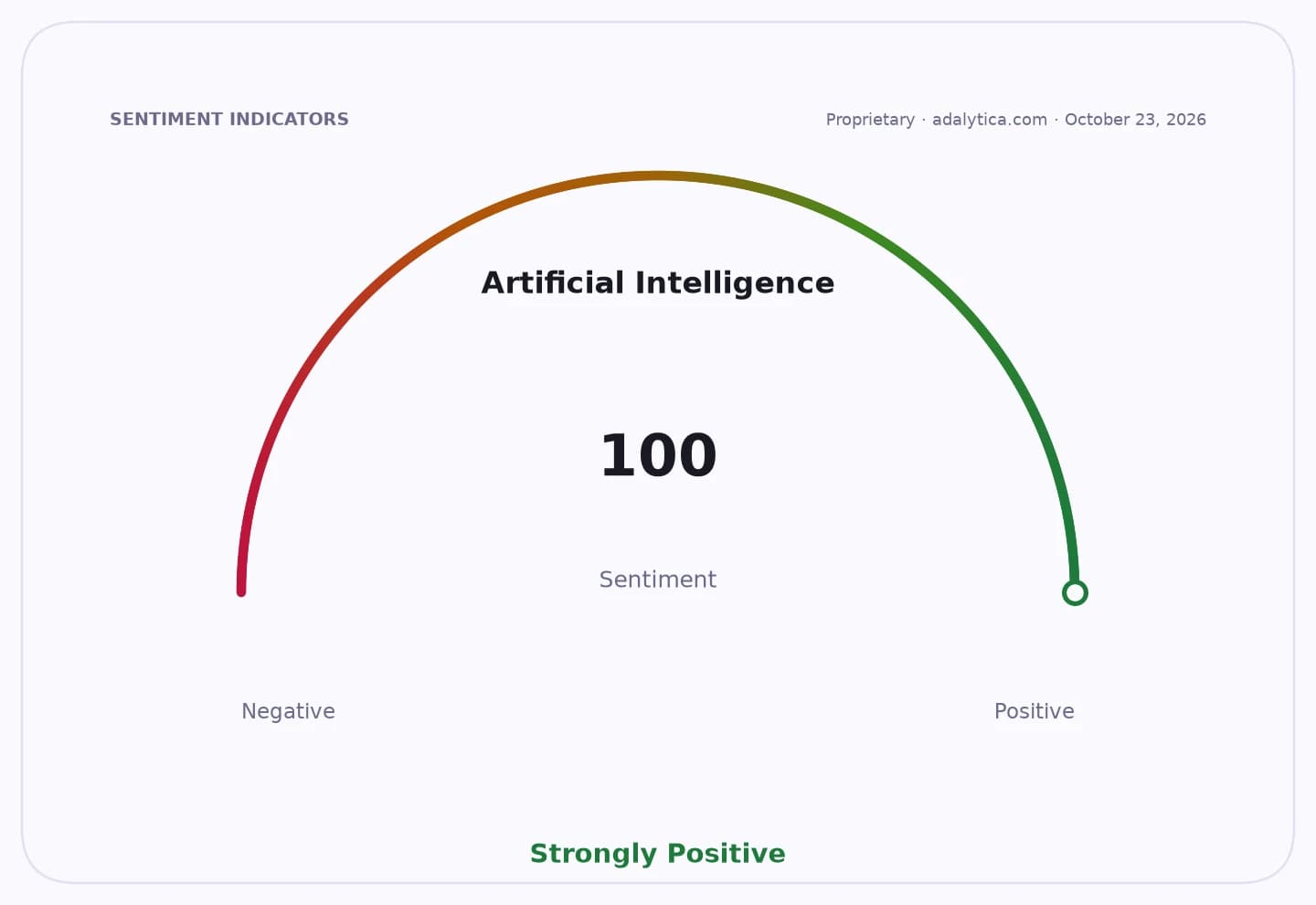
For investors, the implication is broader than a career advice piece. The companies most exposed to enterprise AI spending — from Microsoft to Nvidia — are not only selling tools; they are also benefiting from a race by employers to rebuild workflows and train staff to use them effectively. Microsoft shares recently climbed to $524.51 after touching $532.95 this week, while Nvidia closed at $210.96 on Oct. 23 after a sharp pullback from higher levels earlier in the year. Microsoft’s earnings sentiment on Adalytica.com sits at 100, or “Extreme Greed,” while Nvidia’s is 75, or “Greed,” reflecting continued investor interest even as both stocks have become more technically stretched or volatile.
But the more important investment question may be whether firms can actually convert AI adoption into operating leverage. The article argues that too many workers can create AI-generated material without being able to explain why they chose a task, how they verified the output or what would happen if the method were used elsewhere. That distinction matters because companies that only automate document production may see limited gains, while those that redesign decision-making and accountability around AI could unlock real productivity.
The framework is also a warning against overpaying for superficial AI capability. A manager who can produce slides faster is not necessarily ready to take on a harder mandate. The real premium skill is the ability to define the problem correctly, choose which parts to hand to AI, test the results, adjust the design when it fails and show that the same approach works under slightly different conditions. That is the kind of capability that supports promotion, larger budgets and broader responsibility.
The bull case is that this shifts AI from a productivity toy to a management discipline, creating a new layer of demand for platforms, training and consulting. The bear case is that many organizations will mistake tool adoption for capability building, leaving adoption rates high but measurable productivity gains modest. For now, the market appears willing to bet that the first group will matter more.
What to watch next is whether employers start measuring managers on the quality of their problem framing, workflow design and reproducibility — not just on AI usage rates. If they do, the winners will be the workers and companies that can turn AI output into repeatable business results. If they do not, AI adoption may keep driving awareness and spending, but not enough operating improvement to justify the hype.
| Entity | Gains | Losses |
|---|---|---|
| Managers with design and verification skills | ▲Bigger roles and trust | ▼Routine task-focused managers |
| Microsoft and enterprise AI vendors | ▲Deeper workflow adoption | ▼Tools seen as mere copilots |
| Nvidia | ▲Continued AI infrastructure demand | ▼Investors if AI spend slows |
| Employers that measure outcomes | ▲Better productivity leverage | ▼Firms treating AI as a checkbox |