Barclays has widened mortgage access for limited company directors, a move that could help offset a tightening housing market as borrowing costs stay elevated and affordability remains stretched.
Barclays widens mortgages for limited company directors

The lender said it will now consider profit after tax, or PAT, in affordability checks for qualifying directors regardless of property value, giving some applicants a fuller assessment of their income rather than relying more narrowly on salary and dividends. For a market where mortgage costs have climbed to a one-year high and buyers are already showing signs of hesitation, the change matters because it can expand borrowing capacity at the margin without requiring a rate cut.
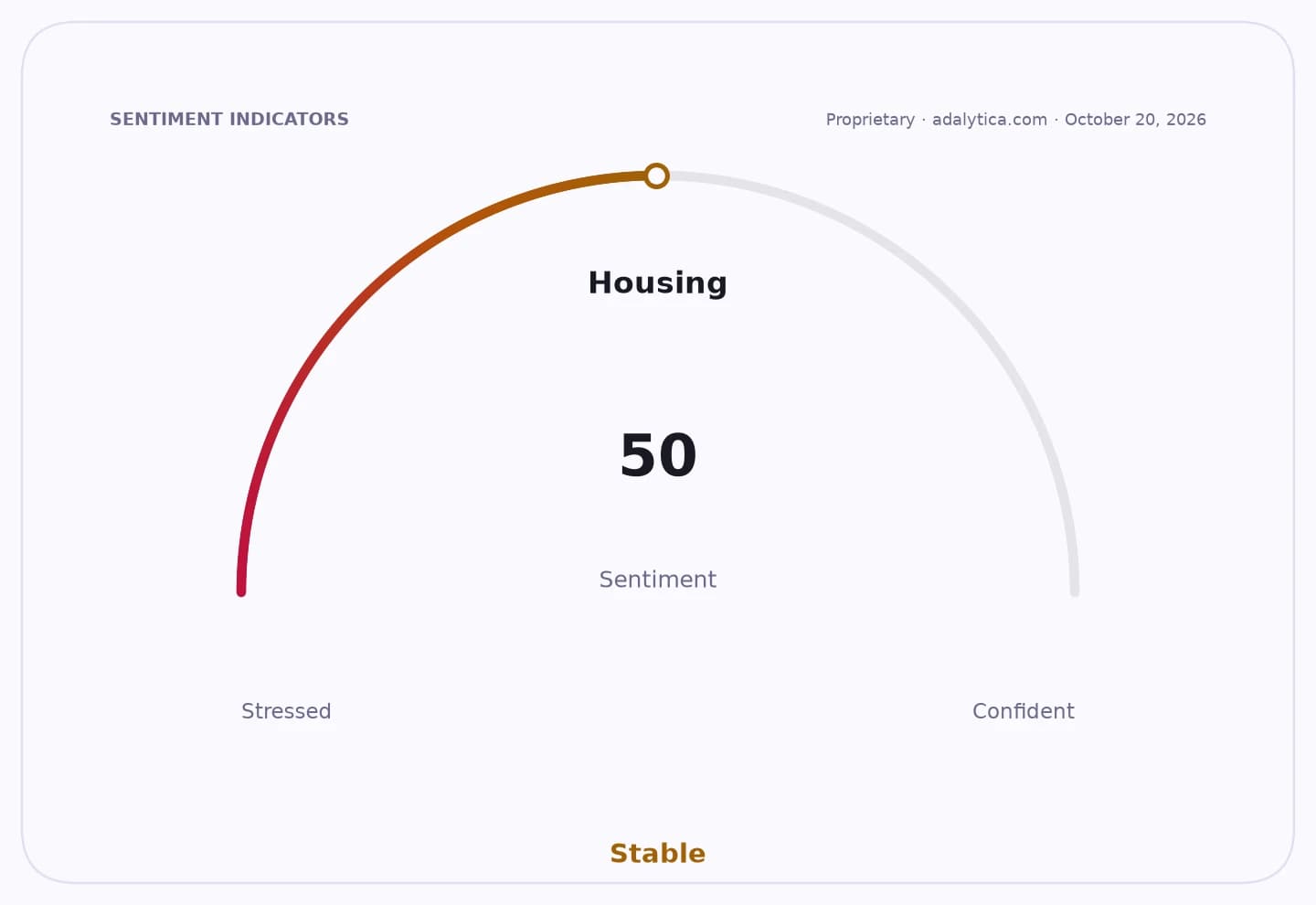
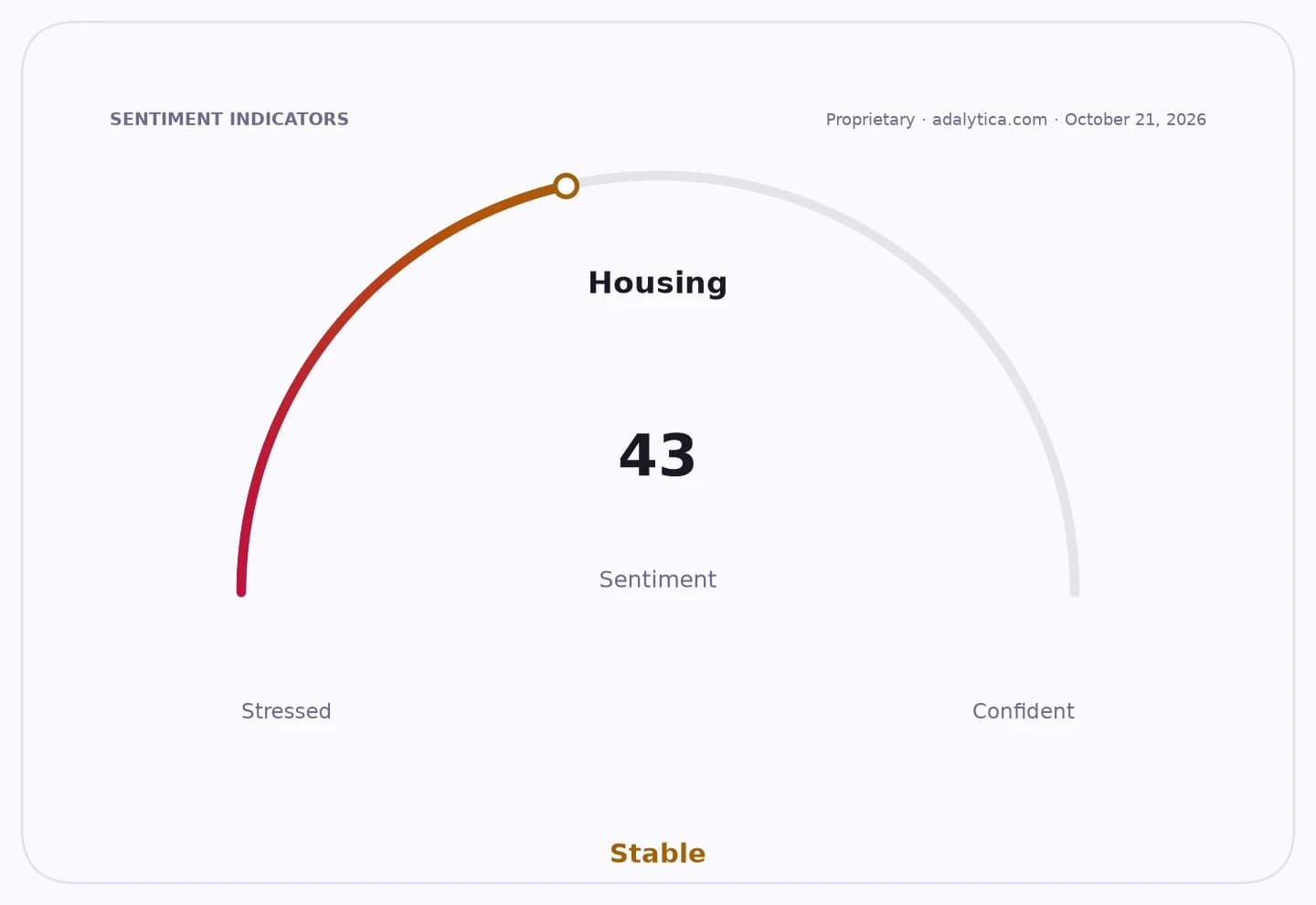
Sentiment IndicatorsⓘProprietary · adalytica.com · October 22, 2026
This is a snapshot — live sentiment, awareness and momentum for 130+ markets update continuously in the dashboard.Open AlphaPulse
The policy shift is aimed at company directors who own more than half of their business, either alone or jointly, and who meet minimum gross annual income thresholds of £75,000 for sole applications or £100,000 for joint applications. Barclays will assess PAT in proportion to shareholding, meaning directors with a 60% stake could have up to 60% of company PAT counted. Where both PAT and dividends are declared, only PAT will be included to avoid double counting.
Economically, the move is a micro-level easing in a market still constrained by high mortgage costs and fragile sentiment. Mortgage rates have reached their highest level in a year, pushing would-be buyers to the sidelines and freezing activity in parts of the market. Against that backdrop, any lender willing to broaden how it reads borrower income can support transaction volumes, particularly among self-employed and owner-managed business borrowers who often have stronger cash flow than standard affordability tests capture.
For Barclays, the change also fits a broader push to win brokerage business by making lending policy more flexible while keeping underwriting within its risk appetite. Roland McCormack, the bank’s head of intermediaries, said many directors retain profits for growth and investment, and that a standard income assessment may not reflect their full financial position. That argument is commercially important: directors of limited companies are a meaningful pool, with Companies House saying there are more than 5 million limited companies in the UK.
For investors, the significance is less about immediate earnings and more about the quality of mortgage growth Barclays can capture in a stressed market. A looser but still targeted policy could help sustain lending volumes and relationship banking among higher-income borrowers, while limiting credit risk through income thresholds and existing affordability tests. The bull case is that Barclays deepens its share among brokers and business owners without meaningfully loosening standards. The bear case is that the change signals a more competitive mortgage market in which lenders must stretch further for growth just as housing demand remains soft.
Barclays shares, which have been volatile this year, have also been trading against a backdrop of broader market caution around banks and housing-related credit. Standard technical gauges for the stock show it has recently moved back toward its 50-day moving average after a sharp selloff, though momentum remains fragile. That keeps the focus on whether policy changes like this can translate into steadier mortgage origination rather than just a one-off marketing advantage.
The wider implication is that lenders may increasingly tailor underwriting to the realities of modern income structures as high rates keep pressure on the housing market. If mortgage costs stay elevated, more banks are likely to compete on policy nuance rather than price alone, giving borrowers with retained earnings or more complex income profiles a better chance of securing finance.
| Entity | Gains | Losses |
|---|---|---|
| Barclays | ▲More broker business | ▼Tighter margin pressure |
| Limited company directors | ▲Wider mortgage access | ▼Stricter scrutiny on income |
| UK homebuyers | ▲Better borrowing odds | ▼Elevated mortgage rates |
| Rival lenders | ▲Pressure to loosen policy | ▼Share loss in niche lending |