Basecamp Research has landed $140 million in fresh funding at an $800 million valuation, giving the London-based AI drug developer the capital it needs to turn its lab models into medicines that can actually reach patients.
Basecamp Research Raises $140M at $800M Valuation
That matters because drug discovery is not won by clever software alone. The real prize is getting from promising preclinical data to human trials, where success can unlock a far larger market and failure usually ends the story. Basecamp says the new money will train the next generation of its EDEN biological foundation models and move a pipeline of AI-designed therapies toward clinical development, starting with treatments that reprogram cells inside the body.
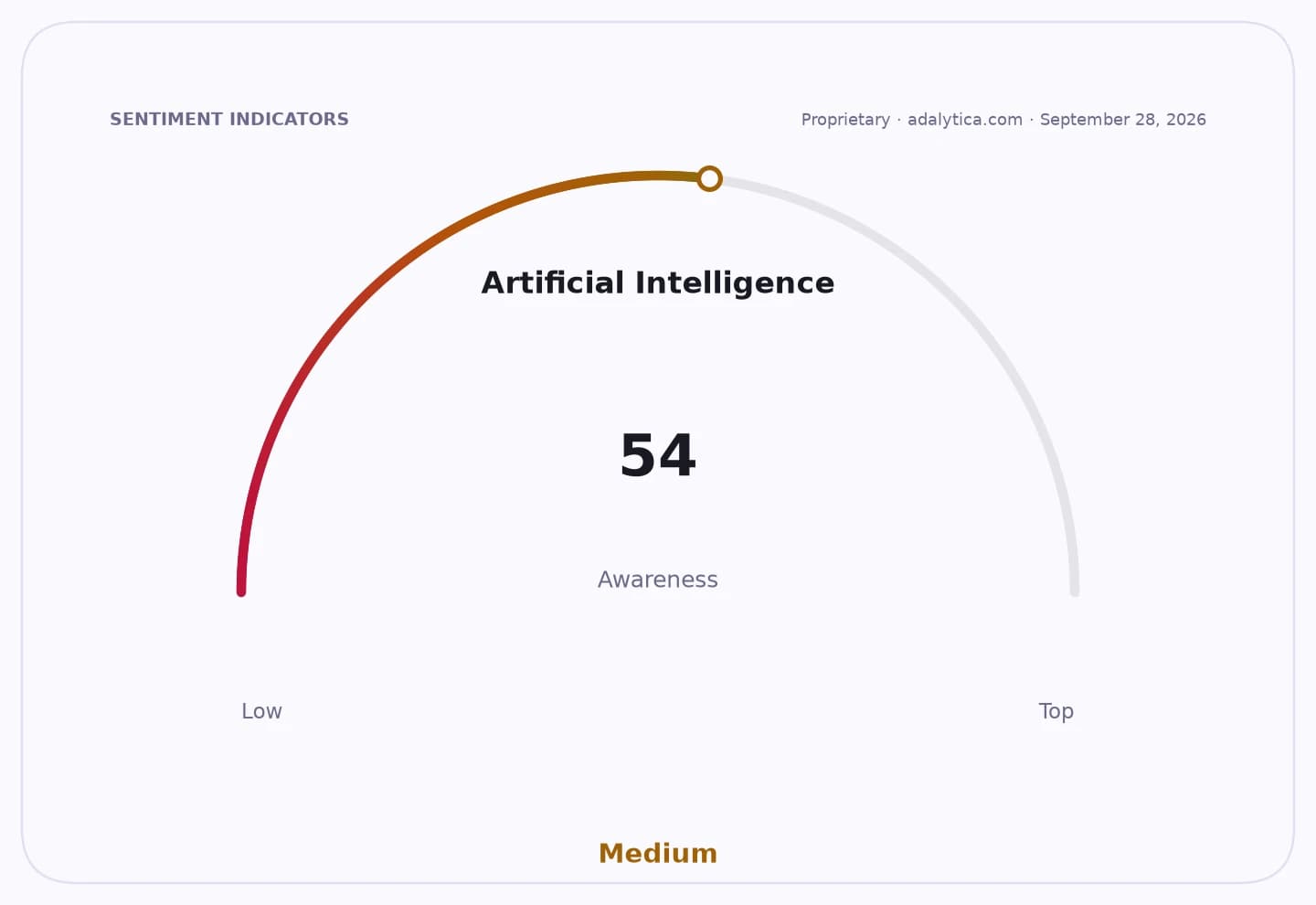
Sentiment IndicatorsⓘProprietary · adalytica.com · September 28, 2026
This is a snapshot — live sentiment, awareness and momentum for 130+ markets update continuously in the dashboard.Open AlphaPulse
For investors, the funding round is another sign that capital is still flowing into AI applied to biology, even after a wave of enthusiasm has made the space feel crowded. The oversubscribed deal was led by S32 and drew Nvidia, Anthropic’s Anthology Fund, Catalio Capital Management, the NATO Innovation Fund, the Rockefeller Foundation and Singular. That investor list is a useful clue: this is not just a biotech bet, but a wager that AI infrastructure and scientific data can combine to create a new drug-discovery engine.
Basecamp is trying to build that edge around its proprietary genomic dataset, assembled through partnerships in more than 30 countries. The company says EDEN can generate potential drug candidates from disease information, which could, in theory, help produce more customizable and easier-to-administer cell therapies for cancer and autoimmune diseases than today’s treatments that can cost hundreds of thousands of dollars per patient. If Basecamp can translate that promise into clinical proof, the economics could be compelling: lower development friction, broader use cases and a platform that can serve multiple programs rather than a single drug.
The challenge, of course, is that preclinical strength is not the same as clinical success. Basecamp has not given a timeline for trials, and that leaves investors with the usual biotech risk profile: long timelines, regulatory uncertainty and plenty of ways for even elegant science to disappoint. That is why the appointment of former Biogen executive Richard Pearce as chief business officer matters too. In this market, scientific ambition only goes so far; companies also need pharmaceutical partners, development discipline and a path to commercialization.
For long-term investors, the bigger story is that AI in drug discovery remains one of the more credible secular opportunities in the broader AI trade. The technology may not replace wet-lab science, but it can compress search, improve targeting and make experimentation smarter. If Basecamp’s EDEN platform keeps producing useful candidates, today’s $800 million valuation could look modest in hindsight. If not, it will be another reminder that in biotech, the funnel from data to drugs is still brutally narrow. Either way, this is one to watch rather than chase.
| Entity | Gains | Losses |
|---|---|---|
| Basecamp Research | ▲Funding and runway | ▼Near-term dilution |
| Investors | ▲Exposure to AI-biotech upside | ▼Clinical-trial risk |
| Pharma partners | ▲Faster discovery engine | ▼Reliance on unproven platform |
| Competing drug developers | ▲Sector validation | ▼Harder fundraising optics |