BottleCap AI has released a second language model that slashes “thinking” token usage by 37% versus the standard Qwen base model while holding accuracy essentially flat, a development that could matter far beyond a small Czech startup. In an AI market still being defined by how much compute it burns, every percentage point of efficiency is a direct lever on margins, inference costs and the economics of deploying models at scale.
BottleCap AI releases ThinkingCap-Qwen3.8-27B
The new ThinkingCap-Qwen3.8-27B is a free model built on Alibaba’s open Qwen 3.8-27B and is available on Hugging Face under an Apache 2.0 license. BottleCap says the model keeps accuracy within 0.86 percentage points of the original on average, with token reductions ranging from 11% to 66% across benchmarks, while also improving context retention. It comes in GGUF, FP8 and NVFP4 formats, and the startup is pairing the open release with paid services.
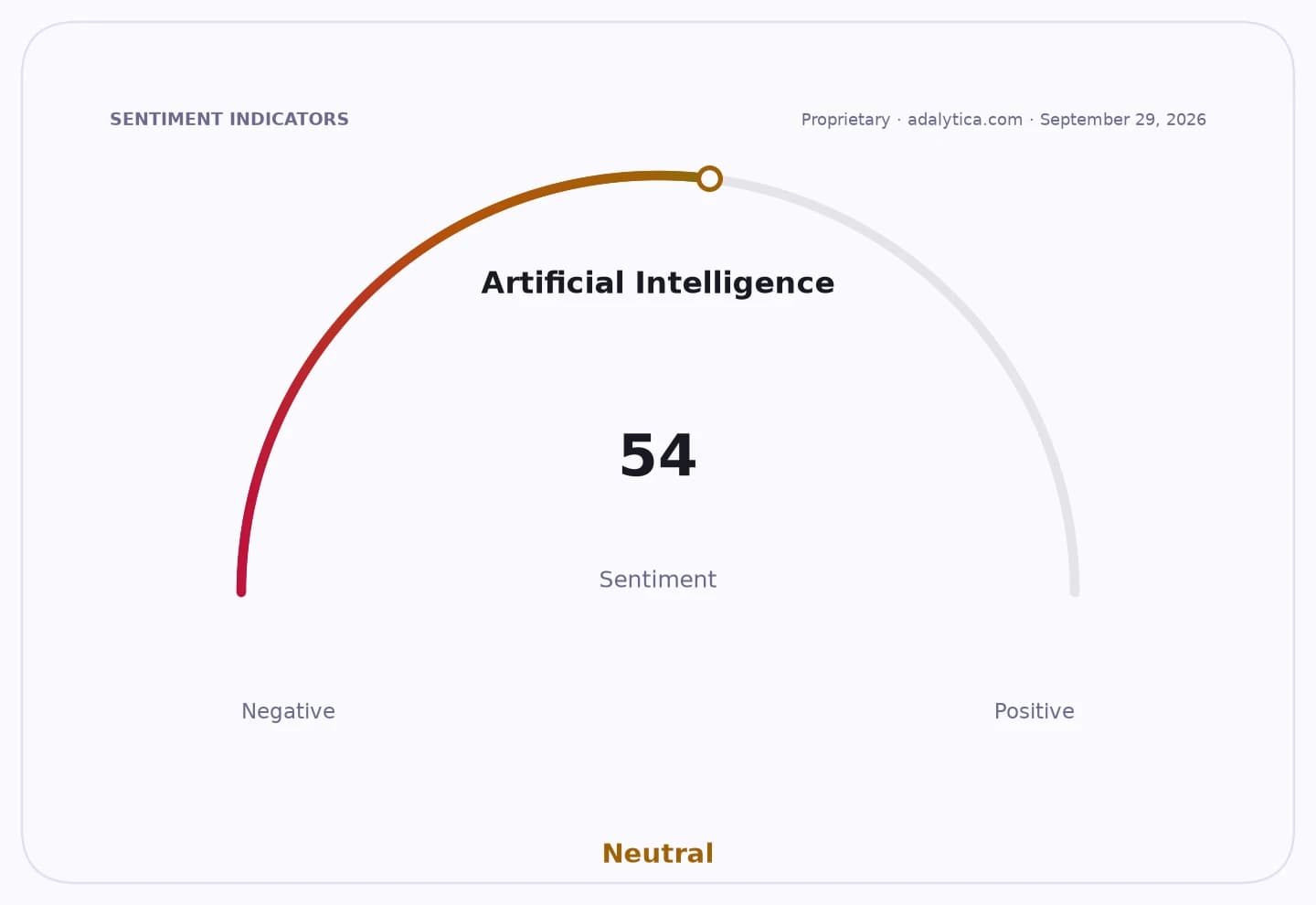
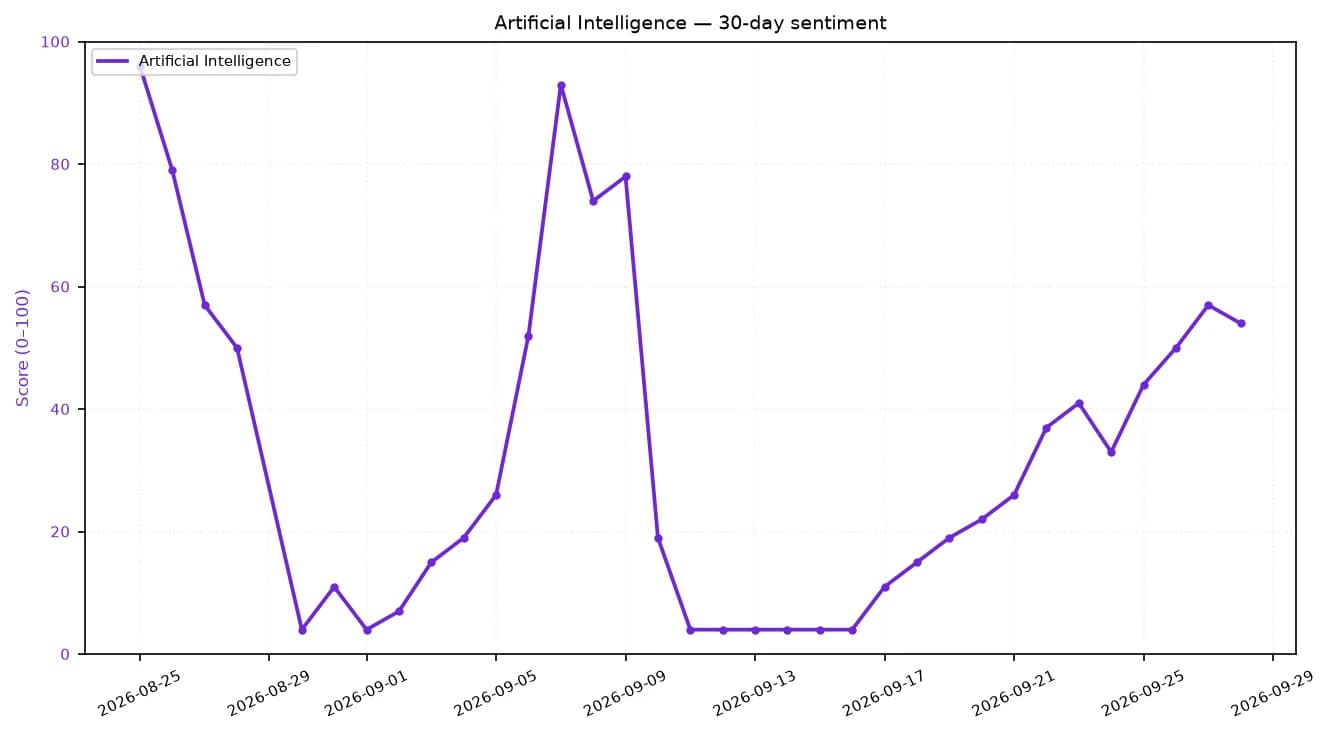
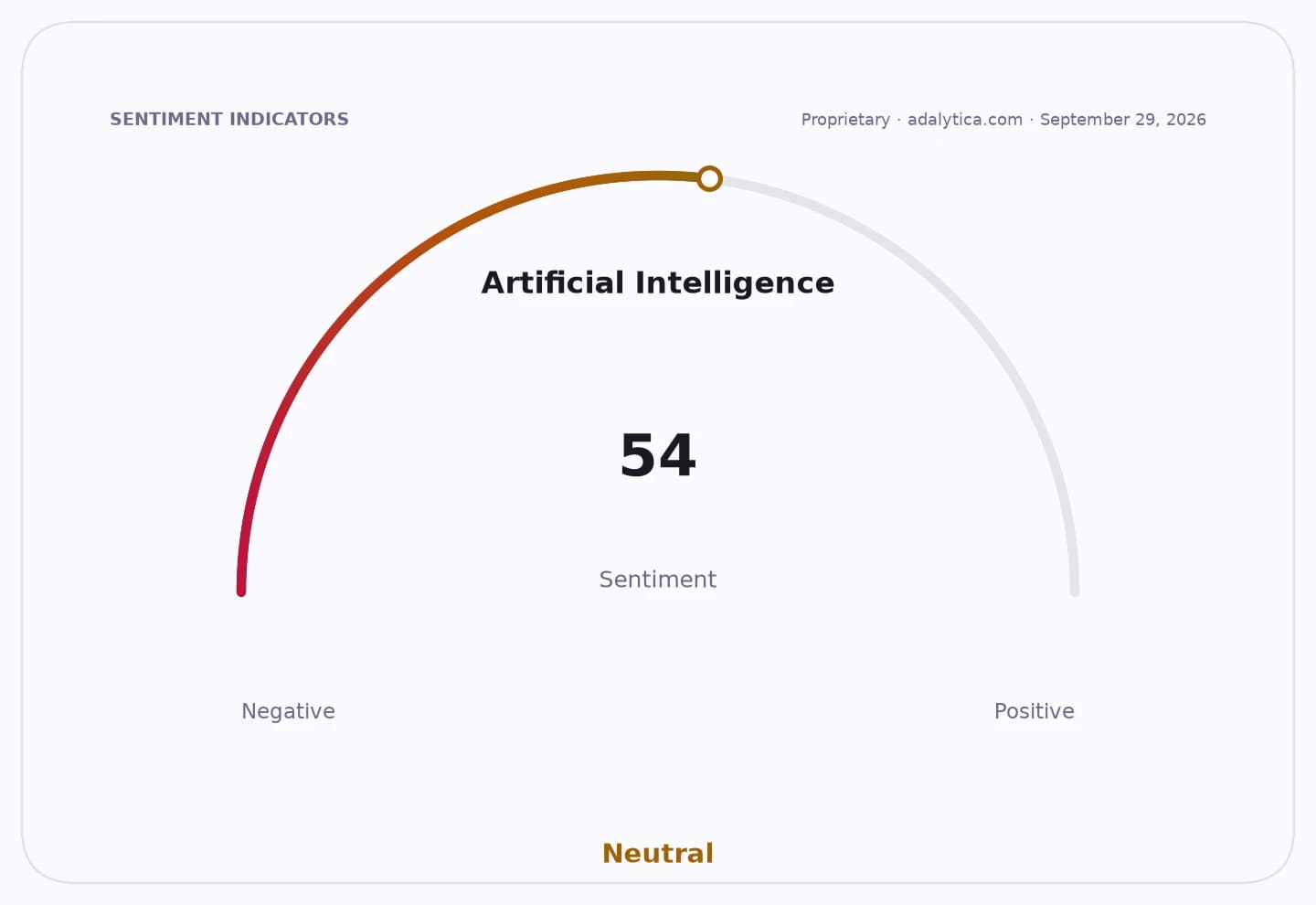
Sentiment IndicatorsⓘProprietary · adalytica.com · September 29, 2026
This is a snapshot — live sentiment, awareness and momentum for 130+ markets update continuously in the dashboard.Open AlphaPulse
That combination is the real story. AI is no longer just a contest for larger models; it is increasingly a contest for cheaper ones. If a model can deliver nearly the same output with far fewer reasoning tokens, it lowers the cost per query, stretches scarce GPU capacity, and makes it easier to deploy AI in products where margins would otherwise be too thin. That matters for cloud providers, enterprise software vendors and the hardware suppliers building the underlying stack.
Investors should read this as another sign that the market’s AI thesis is broadening from raw model size to efficiency, orchestration and inference economics. Nvidia remains the obvious beneficiary of rising AI demand, but the next leg of the trade may be more nuanced: the winners are likely to be the firms that can either sell more compute or use less of it per task. That includes chip makers like Nvidia, cloud and software giants such as Microsoft, and smaller infrastructure plays that help customers run models more efficiently.
The timing also matters. OpenAI recently paused release of a new model over safety and security concerns, a reminder that frontier AI is becoming harder, slower and more expensive to ship. That creates room for a different class of players: builders who focus on optimization rather than scale. BottleCap’s approach sits squarely in that lane, and it aligns with a broader industry shift toward models that are cheaper to run, easier to license and more practical for commercial deployment.
For investors, the takeaway is simple: the AI boom is entering an efficiency phase, and that is where some of the best asymmetric opportunities usually appear. The market still prizes compute, but it will increasingly reward companies that turn compute into profit. BottleCap is not yet a public-market story, but its second model is another warning shot that the next wave of AI value creation may come from doing more with less.
| Entity | Gains | Losses |
|---|---|---|
| BottleCap AI | ▲Product credibility; paid-services upside | ▼Narrower moat if copied |
| Nvidia | ▲More AI workloads overall | ▼Lower compute per query |
| Microsoft | ▲Cheaper AI deployment economics | ▼Margin pressure from usage efficiency |
| OpenAI | ▲Competitive pressure to improve efficiency | ▼Slower, costlier model rollouts |