Germany’s fight over “kalte Progression,” or bracket creep, is back in focus as Bavaria backs a plan to soften the inflation hit on households, a move that could reshape disposable income, wage bargaining and the fiscal debate heading into next year.
Bavaria backs German bracket creep relief plan
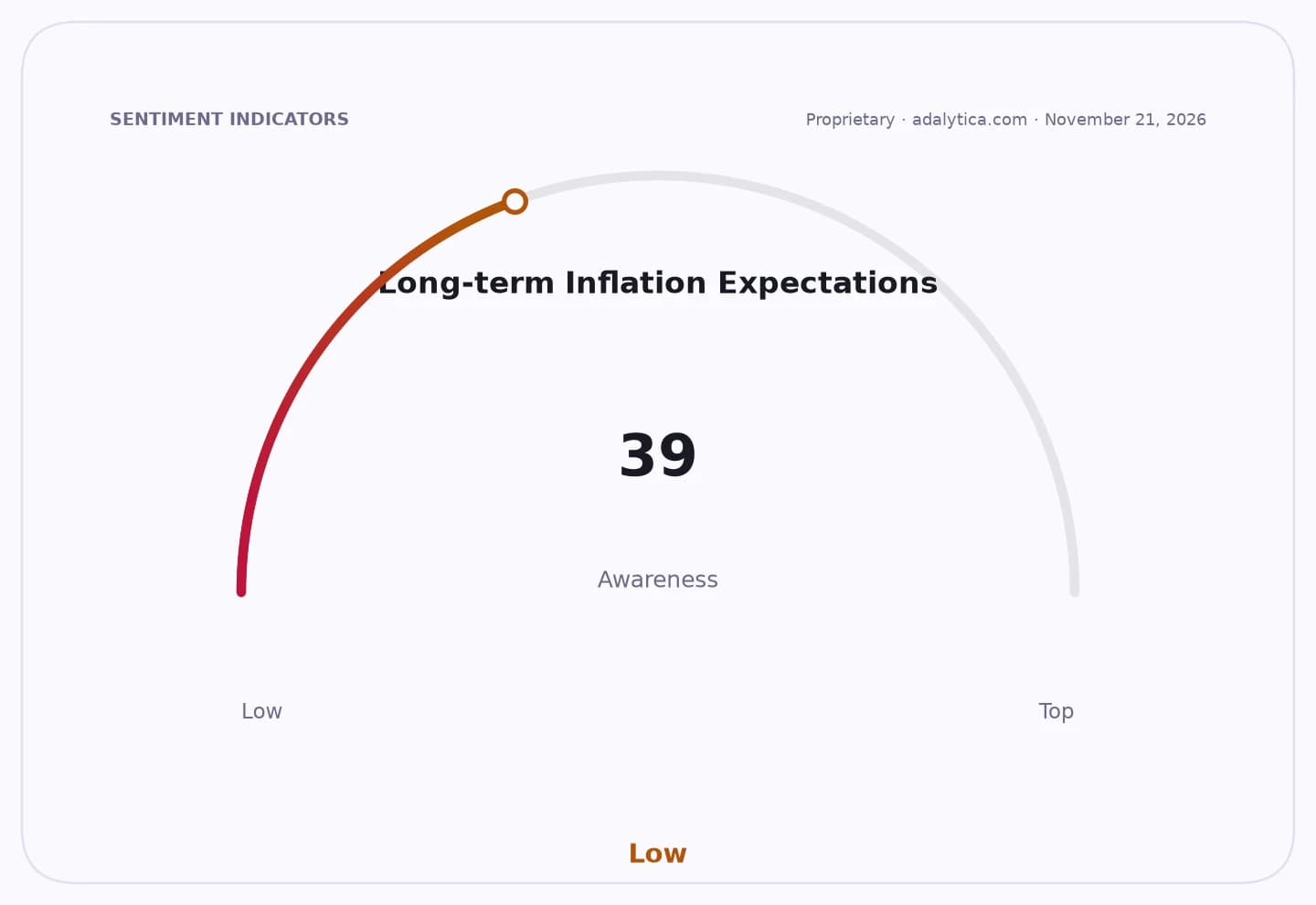
Long-term Inflation Expectations
The economic significance is straightforward: when prices rise faster than tax thresholds, workers can end up paying more even if real purchasing power is flat or falling. That makes inflation stickier in the household budget, weakens consumption and turns nominal wage gains into a political issue. Markus Söder’s pledge that Bavaria would share the cost of relief signals that Germany’s largest state is willing to help offset a tax drag that has become more visible as inflation has eroded pay increases.
Sentiment Indicators
The timing matters because markets are already pricing a world in which inflation is no longer the emergency it was, but still enough to keep policy sensitive. U.S. consumer prices remain elevated by historical standards, with headline CPI at 337.476 in October and core CPI at 339.9, while the latest inflation-expectation gauges in Adalytica’s data show sentiment around the Fed’s 2% target and long-term inflation expectations both at neutral readings but with “extreme fear” awareness. Wage inflation sentiment is still elevated. In that environment, any tax relief tied to inflation can amplify consumption at the margin, even if it also complicates fiscal discipline.
For investors, the bigger message is that governments are increasingly being pushed to cushion households from the hidden tax of inflation rather than rely on central banks alone. That supports domestic-demand names more than exporters, and it keeps pressure on bond markets if relief is funded through looser budgets rather than spending cuts. It also reinforces a broader theme: inflation may be cooling in headline terms, but its after-effects are still rearranging cash flows, politics and valuation multiples.
The investable angle is to watch the second-order winners. Consumer-facing stocks, retail, travel and leisure names can benefit if households keep more of each paycheck. Bond-sensitive sectors could lag if fiscal relief adds to deficit concerns, while inflation-protected assets remain a hedge if policymakers end up validating a stickier price backdrop. The market underestimates how often “tax relief” becomes a de facto stimulus channel when real wages are under pressure.
In short, Söder’s move is not just a local German tax story. It is another sign that inflation is now being fought on the household balance sheet, and that creates opportunities in domestic consumption while keeping pressure on fixed income and policy credibility.
| Entity | Gains | Losses |
|---|---|---|
| Bavarian households | ▲Higher take-home pay | ▼Bracket creep |
| Domestic consumer stocks | ▲Stronger spending power | ▼Slower demand growth |
| German fiscal purists | ▲Political relevance | ▼Budget discipline |
| Bondholders | ▲None | ▼Higher deficit risk |