The Biden administration is still urging millions of borrowers to apply for student debt relief even as a legal battle with Republican-led states has frozen a newly launched forgiveness program, underscoring the policy and market stakes around one of Washington’s most expensive household interventions.
Biden student debt relief push lifts lender risk
The clash matters because student debt relief affects consumer balance sheets, monthly cash flow and the credit performance of lenders that sit closest to the U.S. education finance market. If the program ultimately survives, it could accelerate delinquency cures and reduce repayment burdens for stressed borrowers; if it is struck down, households that had counted on relief may face longer periods of financial strain, with spillover effects for servicers, private student lenders and consumer credit quality more broadly.
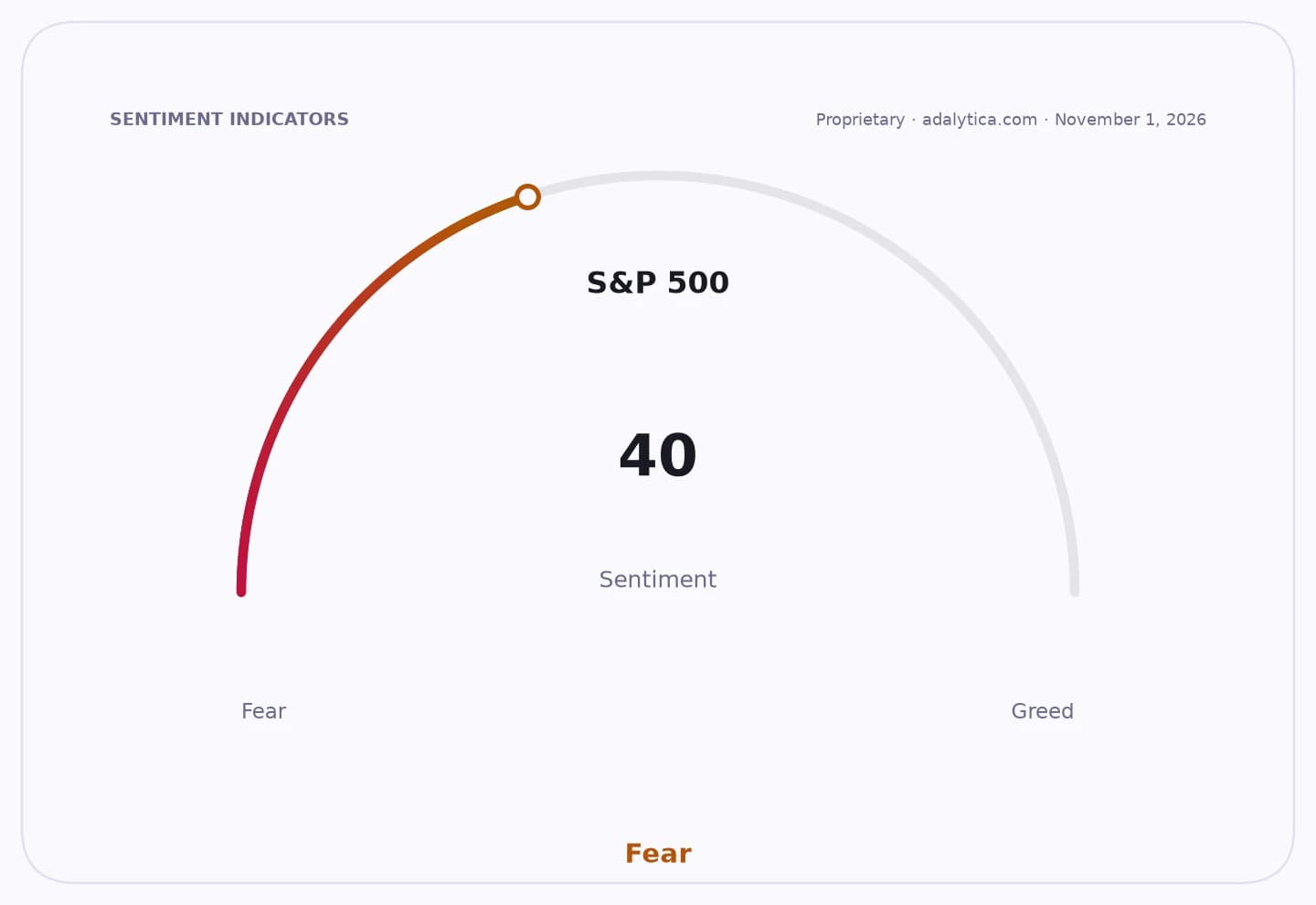
Sentiment Indicators
The administration’s push to keep applications flowing reflects a calculation that the program remains politically and economically important even while its fate is uncertain. Officials have framed the effort as a way to reach borrowers who may be eligible for discharge or other relief, despite the pause imposed by litigation from six conservative states. For borrowers, the message is to keep filing paperwork in case the courts eventually allow the program to proceed. For policymakers, it is an attempt to preserve the infrastructure of relief while the legal process plays out.
The uncertainty is arriving at a sensitive time for credit markets. Rising household borrowing costs and tighter lending conditions have already made consumers more dependent on relief from existing debt burdens. That dynamic has been evident across the broader credit landscape, where borrowers have increasingly sought cheaper or more flexible financing alternatives as rates remain elevated. In that setting, student debt relief is not just a social policy question; it is a factor that can change the amount of disposable income households have to spend, save or service other obligations.
That is why the issue resonates with investors in companies tied to student lending. Sallie Mae, the most direct public proxy, has seen its shares swing sharply in recent months, reflecting the market’s sensitivity to federal policy risk and repayment expectations. The stock traded at $17.80 in late October, down from $25.72 in August, after a period of heavy volatility that pushed its RSI into deeply oversold territory before a partial rebound. SoFi, which also has exposure to student lending, has shown similar volatility, with its shares falling to $16.76 on Oct. 30 from $29.72 at the end of November the year before, before recovering from earlier lows. Navient, another lender and servicer linked to the student debt ecosystem, has likewise remained under pressure, with its stock at $9.30 after trading as low as $7.16 in June.
The bull case for lenders is that court delays can prolong the status quo, allowing servicing and repayment assumptions to remain intact for longer than the market initially fears. The bear case is that the administration’s continued encouragement of applications keeps alive the possibility of broader forgiveness or administrative relief, which could weaken cash collections, increase policy uncertainty and cap valuations for companies exposed to federal student loan flows.
For investors, the key question is not just whether the program ultimately survives, but how long the legal limbo lasts. A drawn-out fight can keep student lenders trading on headlines rather than fundamentals, while any ruling that restores the program would likely force a reassessment of earnings sensitivity, book value stability and credit assumptions across the sector.
| Entity | Gains | Losses |
|---|---|---|
| Borrowers | ▲potential debt relief | ▼policy uncertainty |
| Biden administration | ▲keeps relief pipeline alive | ▼legal setbacks |
| Sallie Mae, SoFi, Navient | ▲status quo repayment visibility | ▼forgiveness risk |
| Republican-led states | ▲court leverage | ▼political blowback |