Bitcoin’s sharp swings and a wave of crypto fraud cases are reinforcing a new reality for traders: the market is becoming harder to read, more vulnerable to enforcement actions and less forgiving of speculative excess.
Bitcoin, Coinbase Slip as Crypto Fraud Scrutiny Grows
That matters economically because crypto prices, exchange activity and related equity valuations remain tightly linked to retail participation, risk appetite and confidence in the integrity of the market. When fraud headlines intensify and regulators signal tougher scrutiny, trading volumes can shift, liquidity can thin and capital migrates toward assets and platforms perceived as safer or more compliant.
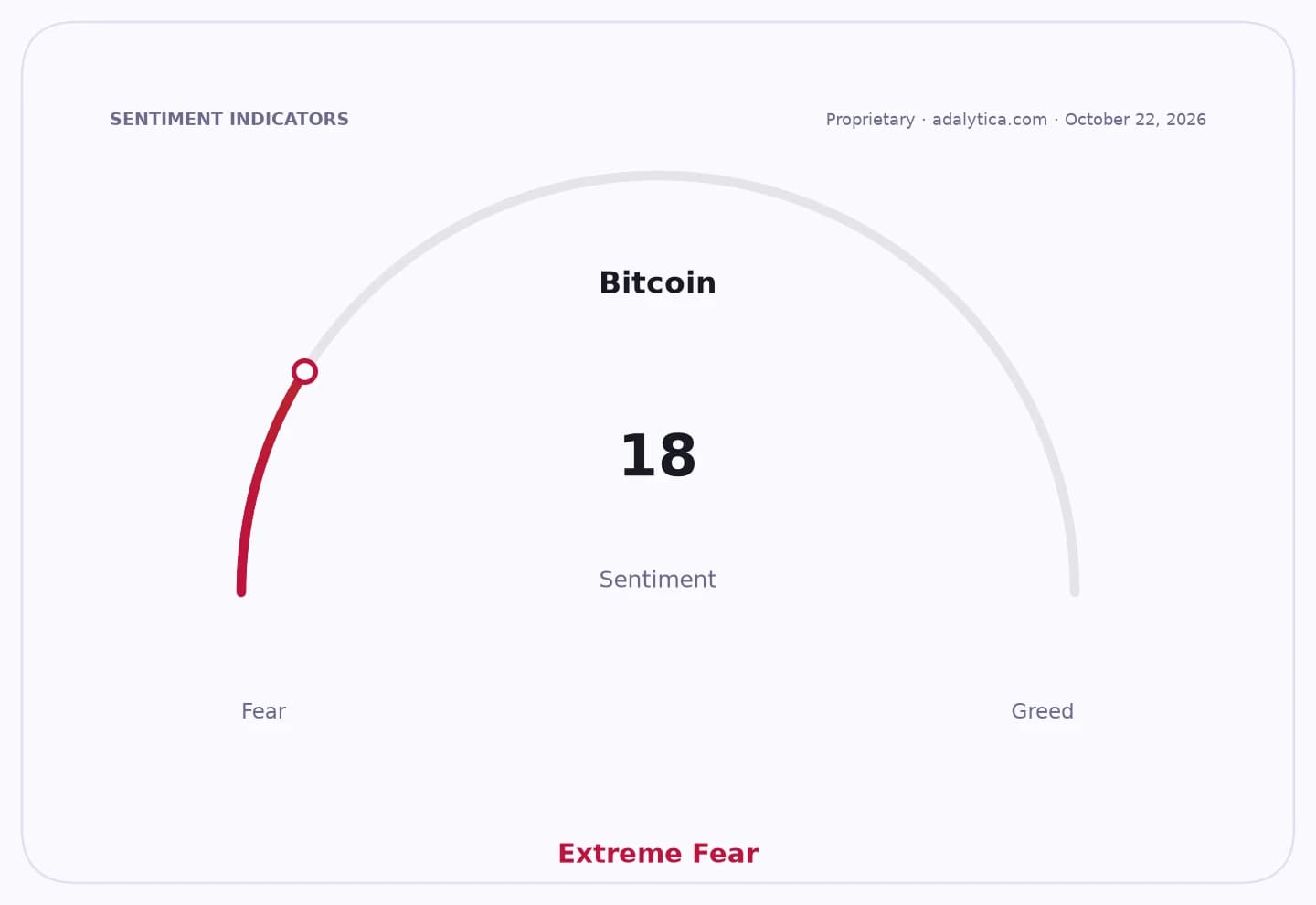
Sentiment IndicatorsⓘProprietary · adalytica.com · October 22, 2026
This is a snapshot — live sentiment, awareness and momentum for 130+ markets update continuously in the dashboard.Open AlphaPulse
Bitcoin closed at $81,453.47 on Oct. 22, down from $82,941 two days earlier, while the 50-day moving average stood at $81,785.13 and the 200-day average at $72,796.23, underscoring a market that is still supported by longer-term trend strength but lacking clear near-term momentum. The 14-day RSI at 49.2 points to a neutral reading, while the MACD has flattened, suggesting traders are waiting for a catalyst rather than committing to a directional bet.
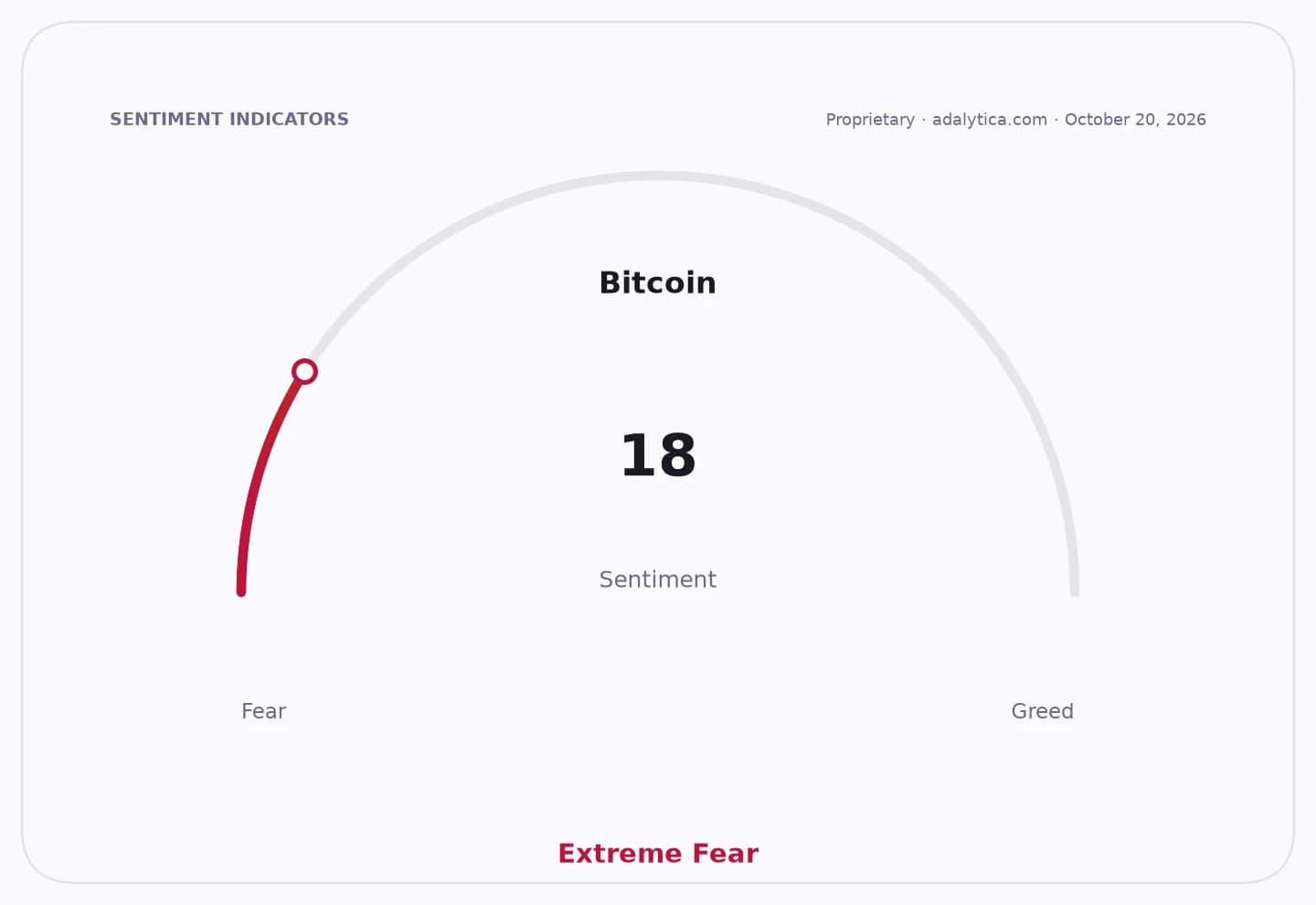
The broader sentiment backdrop is fragile. Adalytica’s Bitcoin Fear & Greed Index was at 18, in “Fear” territory, even as awareness held at a neutral 52. In equities tied to crypto activity, Coinbase closed at $170.18 on Oct. 22, below its 50-day average of $179.36 and just under its 200-day average of $180.91, reflecting investor caution around trading revenue and transaction volumes. MicroStrategy, now Strategy Inc., ended at $147.30, also below its 50-day average of $138.75 and not far from its 200-day average of $135.34, showing that the stock remains highly sensitive to Bitcoin’s next move.
Bitcoin — 30-day sentimentadalytica.com
Explore this data interactively — full history, time series and cross-market comparisons.Open AlphaPulse
The catalyst is not just price action. Swiss authorities arrested an individual in Menorca on Oct. 20 in connection with a crypto fraud case, while seven others were charged in a separate conspiracy case involving a scam in Forest City. Former President Donald Trump also announced a crackdown on scams targeting American investors, a sign that crypto crime is moving higher on the policy agenda. That comes alongside broader concerns about terrorist financing, AI-enabled wallet attacks and tighter restrictions on peer-to-peer transactions abroad, including Russia’s planned ban starting July 1, 2027.
For investors, the message is twofold. The bull case is that tougher enforcement could eventually clean up the market, improve trust and favor larger, regulated venues such as Coinbase over offshore competitors and bad actors. The bear case is that the same crackdown could further suppress speculative activity, weigh on retail flows and keep valuations under pressure until confidence returns.
The key question now is whether enforcement and compliance become a tailwind for institutional adoption or a drag on trading intensity. For crypto investors, the next leg of the market will likely be determined less by hype and more by whether regulators can curb fraud without choking off liquidity.
| Entity | Gains | Losses |
|---|---|---|
| Coinbase | ▲More compliant flow | ▼Smaller speculative trading pool |
| Bitcoin holders | ▲Cleaner market structure | ▼Near-term volatility |
| Regulators | ▲Political credibility | ▼Less market exuberance |
| Fraud operators | ▲None | ▼Tighter enforcement |